



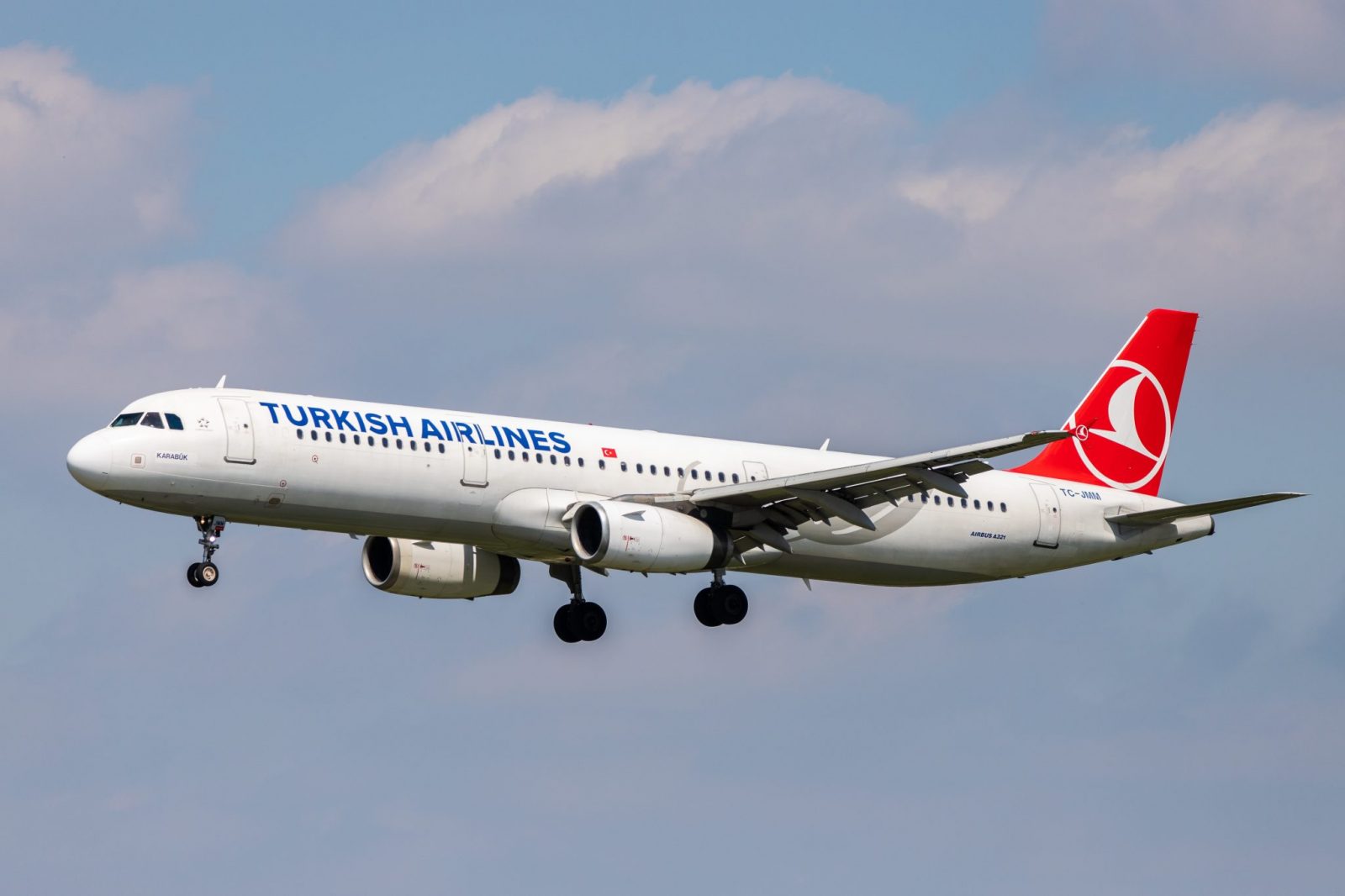
Fighter jets from both France and Spain were scrambled to intercept a Turkish Airlines flight to Barcelona on Thursday morning after a bomb threat was detected via a network name created via the in-flight Wi-Fi service.
Turkish Airlines flight TK-1853 departed Istanbul at around 9:20 am on January 15 for what should have a routine three-and-a-half-hour flight to the capital of the semi-autonomous region of Catalonia in southern Spain.
Most of the flight aboard the Airbus A321 passed off without incident, but as the plane was in its initial descent towards Barcelona, a passenger noticed an alarming network name in the list of available Wi-Fi connections.
The network name read: “I HAVE A BOMB. EVERYONE WILL DIE.”
The flight crew was immediately alerted, and the pilots declared an emergency, advising air traffic control of a possible bomb threat against the plane.
Emergency protocols were activated with fighter jets deployed from both France and Spain, given that the plane was flying over the Mediterranean Sea in French airspace at the time the alert was declared.
After being ordered into a holding pattern off the coast of Barcelona, the pilots were cleared to land, and the plane was then directed to a remote part of the airfield where Spain’s Guardia Civil police service swarmed the aircraft.
Spanish airport operator Aena said in a statement that emergency protocols had been activated while the police carried out a search of the plane, including the passenger cabin and cargo holds, although operations continued as normal.
In the end, the all-clear was given, and the aircraft was released back to the control of Turkish Airlines.
Unfortunately, the return flight to Istanbul on the same plane was delayed by four hours while the search was conducted.
A Turkish Airlines spokesperson explained:
“During the approach of our flight TK-1853 (Istanbul to Barcelona), it was detected that a passenger had set up an in-flight internet access point and configured its network name to include a bomb threat.”
“Accordingly, the necessary procedures have been immediately initiated in accordance with flight safety protocols. Following the aircraft’s safe landing, the checks are being conducted by the relevant country’s competent authorities. The process is being carried out within the framework of international aviation security rules.”
The spokesperson added that the airline was working with local law enforcement to identify the culprit and press criminal charges.
Unfortunately, this isn’t the first time that passengers have posted bomb threats in the form of in-flight Wi-Fi network names. What might seem like a harmless but crude joke can result in severe penalties, including the threat of being sent to prison.