



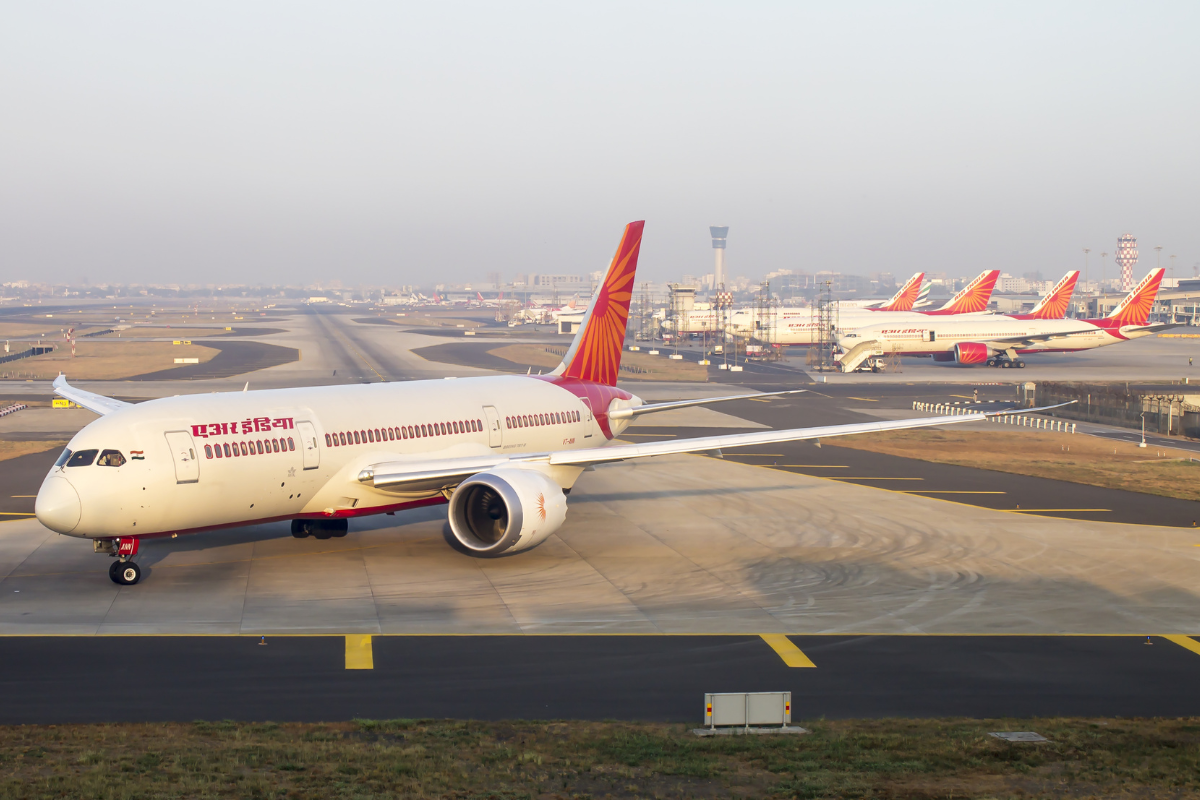
British aviation regulators have given Air India one week to explain what engineering checks were completed before one of its Boeing 787-8 Dreamliners was allowed to take off from London Heathrow Airport on Sunday night after the pilots noted an issue with one of the fuel cut-off switches.
Air India Boeing 787 Dreamliner took off despite issue
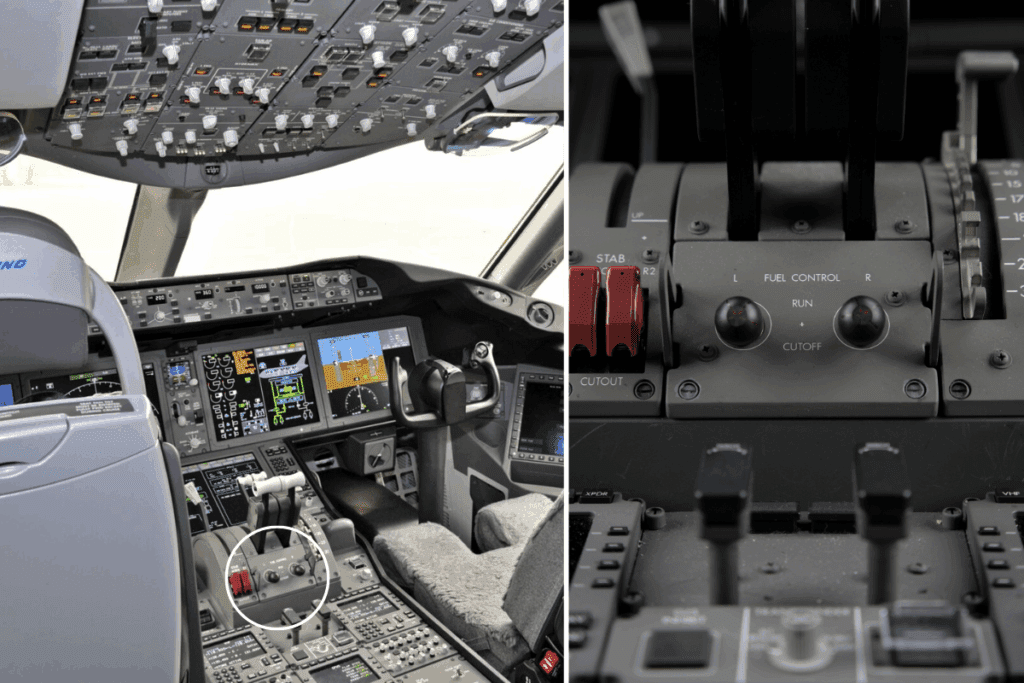
On Sunday night, the pilots of Air India flight AI-132, bound for Bengaluru, operated by a nine-year-old Boeing 787-8 (registration: VT-ANX), reported an issue with the left fuel cut-off switch, which, as the name suggests, controls the fuel supply to the left-hand engine.
As the flight was preparing to depart London Heathrow Airport, the pilots commenced engine start-up but reported that one of the fuel cut-off switches slipped from the RUN position to the CUTOFF position on two occasions.
Writing in the aircraft’s official maintenance log after the plane had landed in India, one of the pilots noted: “Left fuel control switch slips from run to cut off when pushed down slightly. It does not lock in its position.”
The design of fuel cut-off switches on Boeing aircraft is designed to prevent uncommanded movement. To move the switch from one position to the next, the pilot has to first lift the switch, move it over a ‘gate’, and then lower it so that it locks in position.
Accidentally touching the switch should not make it move or slip from one position to the other.
Despite this incident, however, the aircraft was still allowed to depart London Heathrow, but on arrival in Bengaluru it was immediately grounded, and is yet to return to service.
Civil Aviation Authority sends letter to Air India demanding answers
The UK Civil Aviation Authority (CAA) has now written to Air India, and has ordered the beleaguered airline to provide a “detailed account of all maintenance actions performed to ensure the continued airworthiness of the aircraft and to support its release to service (before departure to India).”
The CAA has given Air India one week to hand over its response and has warned that regulatory action could be taken if the account from the airline is not received within the required timeframe.
In a statement following the grounding of the plane, India’s Directorate General of Civil Aviation (DGCA) said the plane departed after a “physical verification was performed by the crew to confirm that the switch was fully and positively latched in the RUN position.”
The statement added that the crew was briefed about the situation, that “unnecessary contact” with the switch was avoided, and flight systems were monitored for the duration of the flight.
The DGCA also noted that once the plane landed, maintenance checks were completed and the switches were found to be satisfactory. However, it also noted that “applying external force in an incorrect direction caused the switch to move easily from RUN to CUTOFF.”
Fuel cut-off switches are at center of fatal Air India Dreamliner crash
The fuel cut-off switches are at the center of an ongoing investigation into the first-ever fatal crash of a Boeing 787 Dreamliner, which involved Air India flight AI-171 that had just taken off from Ahmenehad on June 12, 2025.
Data recovered from the plane’s Black Box flight data and cockpit voice recorders, that both fuel cut-off switches on the plane had seemingly been moved from RUN to CUT-OFF just moments after takeoff.
The pilots quickly moved the switches back to the RUN position, but by this point, it was already too late. The engines had lost too much power, and the plane plummeted into a building at the end of the runway in Ahmenehad.
Several major international carriers, including Persian Gulf airline Etihad, ordered checks of the fuel cut-off switches on their Boeing 787 Dreamliners in the wake of the disaster, but no defects were ever found.
Pilots say they have never heard of issues with Boeing fuel cut-off switches
What’s perhaps so interesting about this incident is that it yet again involves an Air India aircraft, especially given the fact that issues with Boeing fuel cut-off switches are incredibly rare.
Professional pilots have taken to social media to express their surprise that a fuel cut-off switch could ‘slip’ so easily, if at all, and the incident has raised some alarming questions.
Although the investigation into Flight AI-171 is still very much ongoing, pilots seem to be split over the potential cause. In India, there are widespread concerns that blame for the incident will be pinned on one of the pilots to coverup for a flaw with the Boeing 787, and have called for the aircraft to be grounded worldwide for urgent safety checks.
Elsewhere, however, pilots wonder whether India could push a narrative that the plane was faulty, through no fault of the pilots or the airline.