



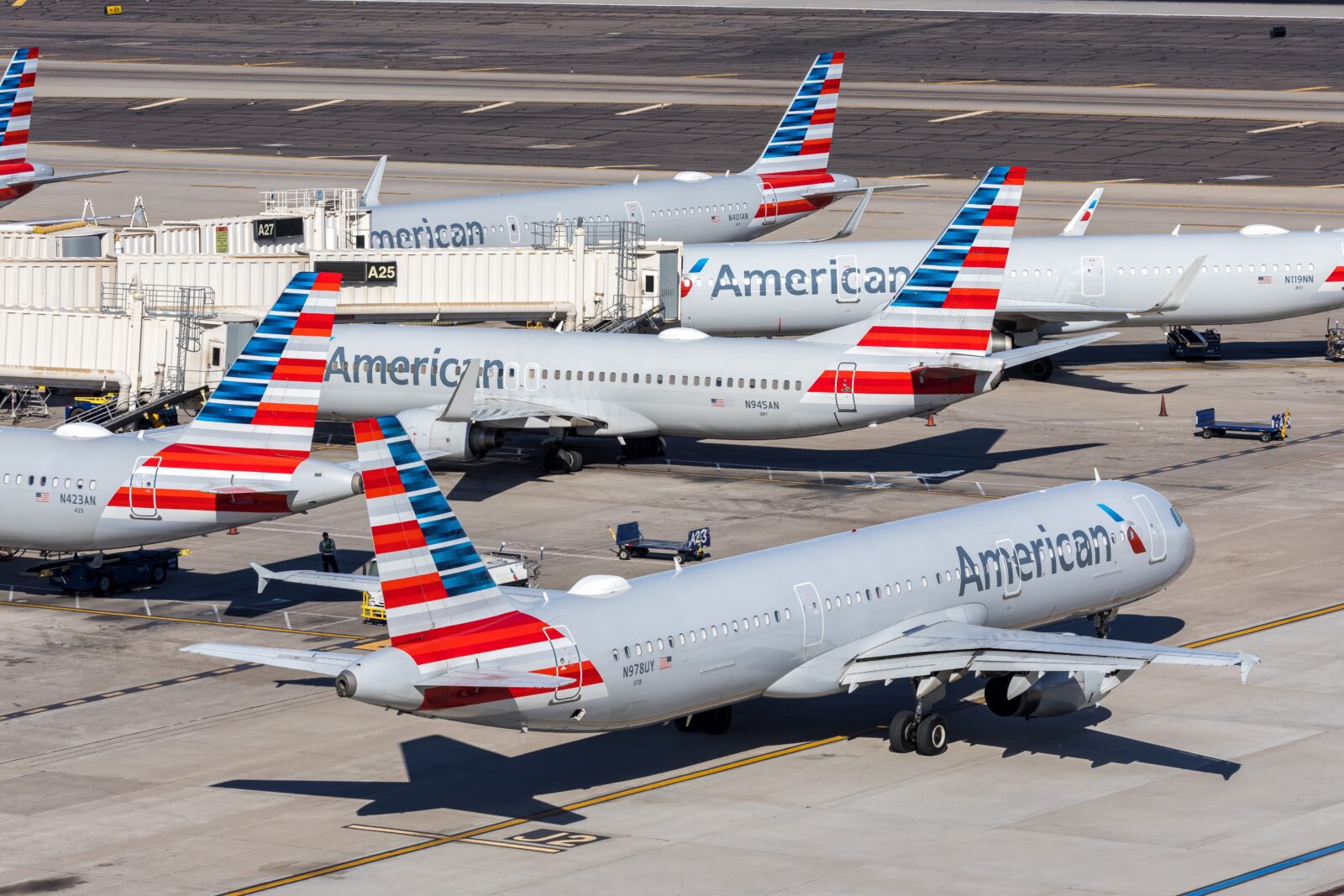
Less than two weeks after the official flight attendant union of American Airlines’ mainline crew members issued a unanimous vote of no confidence in the carrier’s embattled chief executive, Robert Isom, another union, which also represents flight attendants wearing the same uniform, voiced its support of Isom.
That support came from Sara Nelson, President of the Association of Flight Attendants (AFA-CWA), who is often described as ‘the most powerful flight attendant in the world.’
While mainline flight attendants at American Airlines are represented by an independent union called the Association of Professional Flight Attendants (APFA), Nelson’s AFA represents many of the carrier’s regional crew members who work at wholly owned subsidiaries.
One of those regional subsidiaries, Charlotte-based PSA Airlines, just secured a new tentative contract agreement after roughly three years of bargaining, and while Nelson admits the negotiations had been “extremely difficult,” she took the time on Thursday to thank Isom for the role he played in securing a deal.
“American CEO Robert Isom demonstrated his longstanding commitment to recognize the work of frontline employees who make it possible for American to fly. We appreciate his direct engagement to make this agreement possible.”
Without naming names, Nelson also appeared to contrast Isom’s approach to labor relations with that of his old coworker and now chief executive of a rival airline, United, where AFA-represented flight attendants are still fighting for a contract after nearly five years of bargaining.
Nelson noted that Isom’s intervention in negotiations “stands in stark contrast to other carriers who are succeeding on the backs of their underpaid workers.
“It is also extremely notable that American agreed to a shorter-term contract that ensures workers can continue to bargain for their fair share of the profits they help create.”
PSA Airlines has agreed to a tentative three-year contract, which is being described as setting a new industry standard, given that contract lengths normally run for around five years, giving the union more opportunities to negotiate and build upon improvements already secured.
If regional flight attendants vote in favor of the tentative agreement, they’ll secure an immediate 10% pay rise, which will be followed by a rise of 1.5% in March 2027 and March 2028.
PSA crew members will also receive ‘boarding pay’ for the first time, paid at 50% of that normally hourly pay rate, although this will only become active in the second year of the contract.
The union told members in an internal memo reviewed by PYOK that: “It is no secret that American Airlines is having financial difficulties, and negotiations over economics this past year were challenging to say the least.”
“We prioritized improving upon the economics that impact us the most, like wages and boarding pay.”
Once the boarding pay element of the agreement kicks in, AFA claims flight attendants will be enjoying an average pay rise of between 20% to 30% compared to current levels.
The disparity in pay between regional flight attendants and mainline crew members who are effectively doing the same job is, however, still very evident.
A new hire regional flight attendant at PSA will start on an hourly flying rate of $29.77, should the tentative agreement pass, whereas new hire mainline crew members earn more than $5 more per hour.
That disparity becomes more acute with length of service. The mainline flight attendant pay scale tops out after 13 years at just over $82 per hour, whereas a regional PSA crew member with the same length of service will earn just $45.62 per hour.
On February 9, the mainline flight attendant union slammed Isom in a withering statement that blasted that the “time for excuses” is over.
“Our airline is falling dangerously behind its competitors, and the current leadership has failed to change course,” the statement added.
Led by national union president Julie Hedrick, the APFA board presented their reasoning in simple terms: After profit plunged by 84% in 2025 from the preceding year, they fear that the airline’s finances will continue to nosedive unless radical action at the very top is taken.
“Many of us have already lived through bankruptcies, wage and work rule concessions, and years of instability at American and its predecessor airlines. We know how this works,” a statement from the union explained.
“We are not interested in being asked, yet again, to sacrifice or bail out a company that continues to reward failed leadership while falling further behind.”
Days after the vote of no confidence from APFA, Isom made it clear that he had no plans to step down and was committed to a turnaround program that entailed the airline doubling down on a strategy that the union had rejected.
Isom claims American Airlines has a plan to be “solidly profitable” in 2026. APFA has urged the American Airlines board of directors to intervene, but Isom said in a video message to staffers that the board was behind his strategy, and that both he and the rest of the senior leadership team were committed to seeing it through.


American Airlines isn’t doing horrible and from my experience flying them, i saw improvements from previous years. Mr. Isom had been working to improve Americans product and ratified the labor contracts with pay improvements among other things. This could be why there has been a dip in profits but that is no reason to say he is doing a bad job. He’s doing a good job and the flight attendants should recognize and be more helpful with the company they are vested in to reach the goals. Tell the leader of the APFA to change course and promote love instead of hate.
I think there’s definitely an argument to say to the mainline flight attendants, okay, you won a contract that you’re happy with, now service levels need to improve. This was never a part of the contract though… a way to measure and monitor on board service, I think that was a mistake.
HUH? How about staffing? How about service training? How about incentivizing FAs instead of leading with discipline first? Recently AA has rolled out and HYPED several new products including the 787-9 Flagship Suites and the 321XLR (what a cheap piece of trash that is) WITHOUT ONE BIT OF FLIGHT ATTENDANT TRAINING!!! AA and Isom constantly over-promise and under-deliver but NEVER give the front line employees the training or the tools to do their jobs better. And as a supposed industry “expert” blogger, that should be apparent to you.
A lack of training is a massive issue and, quite frankly, is inexcusable. What I would say, though, is that linking an element of pay to performance isn’t unusual.
So good job for PSA. I’m still not a fan of Sara Nelson the only reason she came out in support is Mr. Isom is because of the United Airlines flight attendants contract negotiations hold up and the CEO Scott Kirby having worked with Isom at American Airlines, took a little jab at Mr. Kirby.
Oh, absolutely! Hard not to see this as a dig at Kirby
She is praising Isom only to discredit Kirby…AA mainline FAs have an incredible contract now…impossible without the intervention of the Dept of Labor and the Dept of Trans. at the last minute in DC. Isom was FORCED to relent. However, AA flights are terribly understaffed and the FAs receive NO SERVICE TRAINING ever!! NONE. So they roll out products like the 787/9 with 52 Flagship Suites WITH NO FA TRAINING. Then they launch the 321XLR and jam so many seats on it, shrink the galleys to nothing, and take off Lavatories and still say they want to be a ‘premium airline” Isom needs to GO!! Needs to go NOW.