



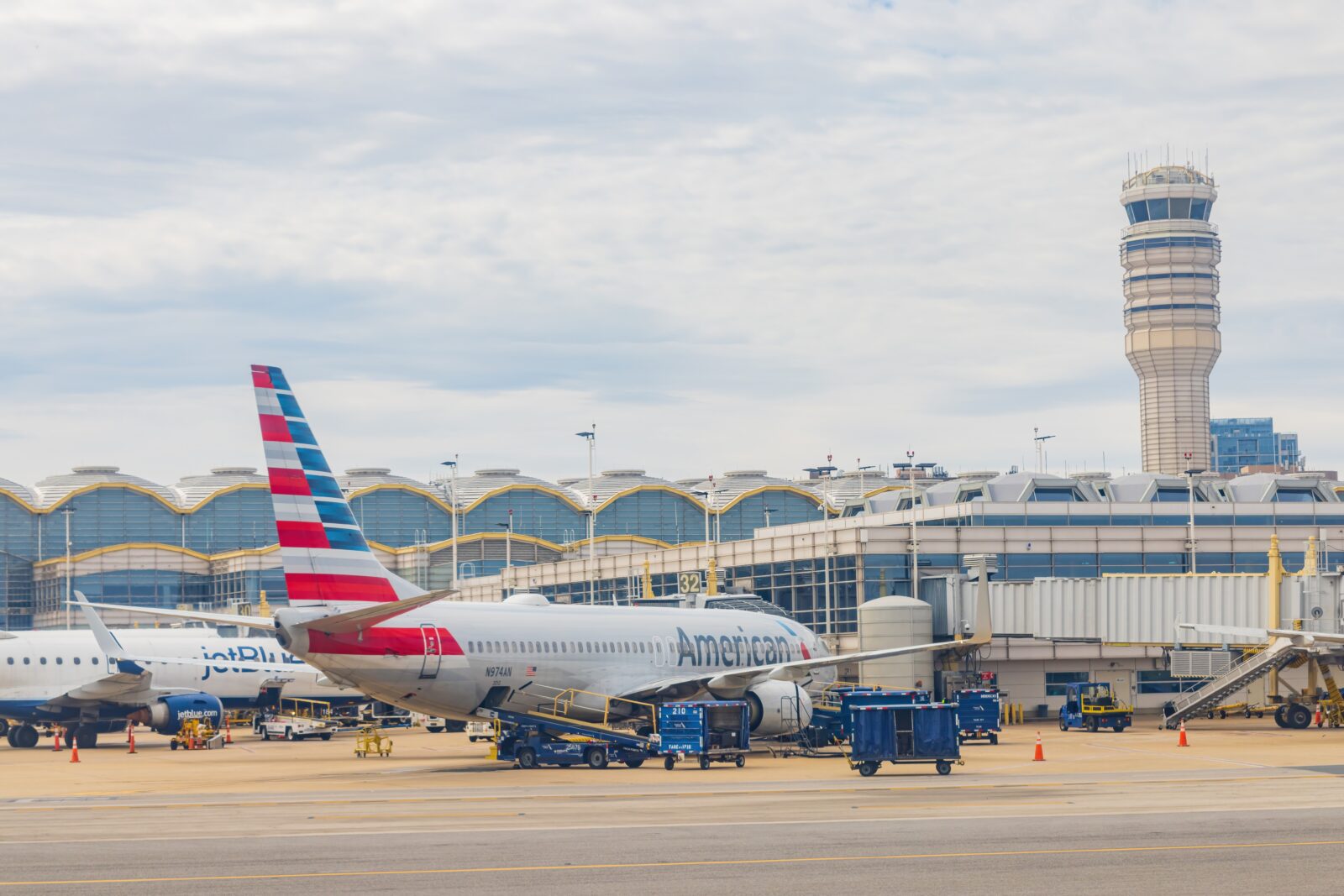
Washington Reagan National Airport (DCA) has just activated a new flight control system in the air traffic control tower, which finally replaces an antiquated ‘paper strip’ system that has been used for decades to manage plane movements on the tarmac.
Officially known as Flight Progress Strips, air traffic controllers use these paper strips as a concise record of a flight’s operational information, helping to keep track of planes as they are guided from the departure gate for takeoff.
While air traffic control services around the world have long transitioned from paper strips to electronic systems, the Federal Aviation Administration (FAA) is now spending billions of dollars to finally upgrade the US National Airspace System.
In the United States, paper strips still dominate – not only for managing ground-based movements, but also en route traffic, as well as arrivals into many airports across the country.
Making the ground movement Flight Progress Strip system digital is just one part of a much bigger project, although it’s an achievement that Transportation Secretary Sean Duffy was celebrating earlier this week when he visited the control tower at DCA.
Washington National is one of 15 airports to have upgraded to the new system, which was supplied by Leidos.
As part of the FAA’s Terminal Flight Data Manager project, Leidos was first brought in to upgrade DCA’s ground movement systems in June 2025, and while it would normally take up to 18 months to set up, the system is already up and running.
Rather than managing paper strips inserted in plastic holders, air traffic controllers now get a shared real-time view of all ground activity along with predictive modeling tools.
As well as enhancing safety, the system is also expected to reduce delays and improve ground traffic efficiency.
The FAA has set aside $12.5 billion to upgrade air traffic control services from President Trump’s One Big Beautiful Bill.
Last year, United Airlines chief executive Scott Kirby blasted the state of air traffic control technology in use across much of the United States, claiming that the “FAA spends roughly 92% of its facilities and equipment budget to patch together the old existing towers, centers, radars, and other equipment, rather than to upgrade.”
Canada transitioned from paper to electronic flight strips more than a quarter of a century ago, while the United Kingdom adopted digital systems in 2018.