



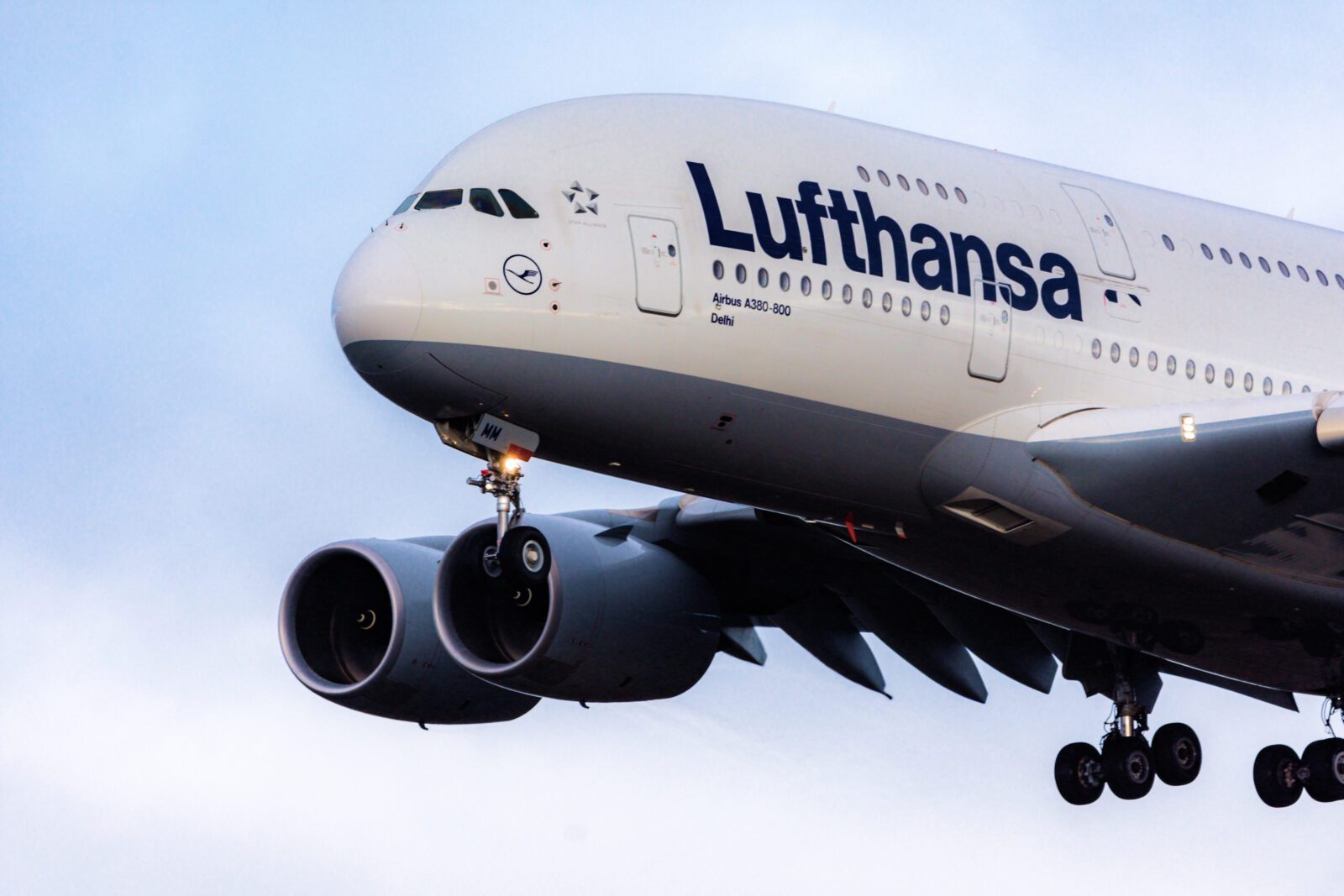
A Lufthansa Airbus A380 superjumbo is currently the most tracked in the world after it became the first airplane to take off from Abu Dhabi International Airport on Monday afternoon, following widespread airspace closures across the Middle East.
The 12-year-old double-deck A380 (registration: D-AIMK) took off from Zayed International Airport at approximately 1:21 pm (local) bound for Munich as flight LH-9851, which is an irregular flight number and indicates that this is not a scheduled departure.
The aircraft had been in Abu Dhabi since November 2025, where it had been undergoing maintenance at Etihad’s A380 workshop, which does work for a number of operators of the giant superjumbo.
On Friday, the aircraft had performed a short test flight, indicating that the maintenance had been completed and it was clear to return to regular service.
In a statement, a spokesperson for Lufthansa told PYOK that only two pilots were on board the aircraft to complete the technical return to Munich.
“A cabin crew of at least 17 people, which is essential for the safety and care of passengers, is not available and cannot be flown in due to the current massive restrictions on air traffic in the United Arab Emirates,” the statement continued.
“Without flight attendants, passenger transport is legally and safety-wise impossible.”
The statement added: “In addition, due to the current dynamic situation, the accessibility of Abu Dhabi Airport for potential passengers is unclear and difficult to organize.”
“Passenger transport has been reviewed, but unfortunately, it is not possible.”
Etihad Airways has also taken the surprise decision to restart a limited number of flights on Monday afternoon from its home hub in Abu Dhabi despite the threat of Iranian missiles and kamikaze drones that have already claimed the life of one person close to Zayed International Airport and injured seven others.
According to flight tracking data supplied by Flight Radar 24, the airline has flights scheduled to depart Abu Dhabi to Islamabad, Amsterdam, London Heathrow, Riyadh, Dammam, Jeddah, Mumbai, Karachi, Cochin, Delhi, Bengaluru, Moscow, Paris, Muscat, Frankfurt, and Nairobi.
The first flight set to depart was also an Airbus A380 bound for London Heathrow Airport as flight EY-67, a regularly scheduled service, which took off at around 2:30 pm.
However, the airline later said that it had also taken the decision to suspend all other flights until 2 pm (local) on Tuesday, March 3.
On Sunday, Etihad Airways was given special permission to position some of its airplanes back to Abu Dhabi, including two Airbus A350-1000 widebody airplanes, from Istanbul and Muscat, and one Boeing 787-9 Dreamliner from Cairo.
In a statement, Etihad Airways cautioned that the “situation remains dynamic and schedules may change at short notice.”
Emirates announced earlier on Monday that it had delayed restart plans until 3 pm on Tuesday, while Qatar Airways said it would provide a further update on Tuesday morning.
The Irish embassy in the UAE got wind of Etihad’s plans to resume flights on Monday and sent out an urgent alert to its citizens trapped in the country, warning them not to attempt to get to the airport.
In a statement, the embassy said that it continues to advise its citizens to shelter in place until further notice.