



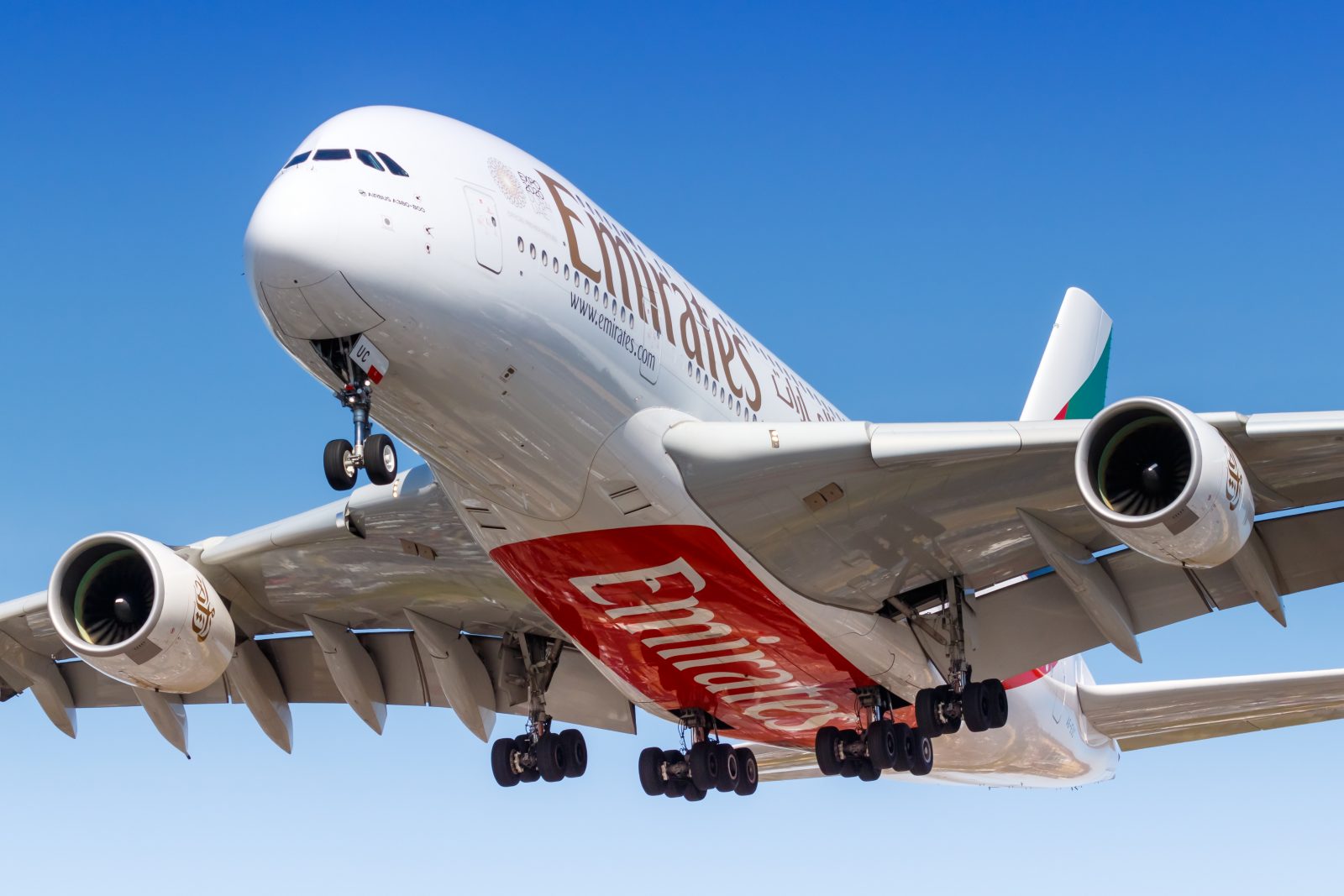
Emirates Airline is reportedly aiming to restore 100% of its international capacity by March 29, just a month after flights were completely grounded when Iran started its terrifying campaign of retaliatory attacks on its Persian Gulf neighbors with ballistic missiles and kamikaze drones.
Unlike its regional rivals, which are faltering amidst the continuing threat of aerial attack, Emirates has pursued an aggressive flight restart program, seemingly against all odds.
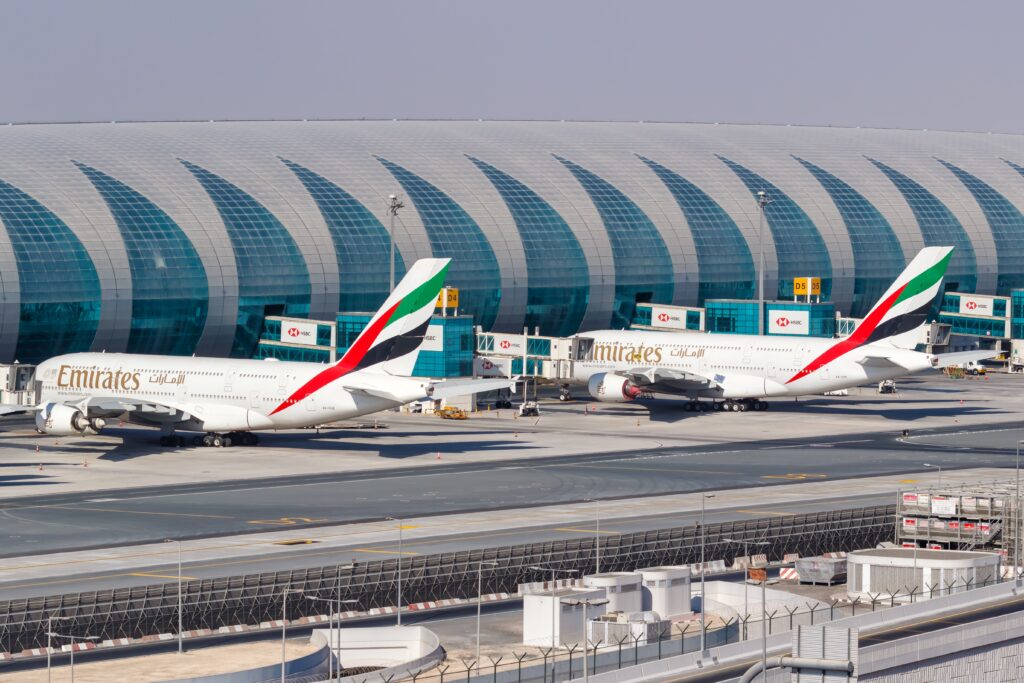
Even though Dubai International Airport (DXB) has apparently been the target of several Iranian attacks, Emirates has continued to rebuild its network and capacity, with the airline currently operating around 61% of its pre-war schedule.
On Friday, Abdulla bin Touq Al Marri, the chairman of the UAE’s General Civil Aviation Authority, said the country had managed the safe resumption of flights “through a responsible approach that places human safety at the forefront of priorities, while ensuring the continuity of the aviation sector in meeting the needs of travellers.”
“The safety of passengers, pilots, flight crews, and all personnel working in the aviation sector remains the absolute priority in all decisions related to airspace and flight operations,” Al Marri added.
In the first 12 days of March, more than 1.4 million passengers passed through the country’s airports, and while still a fraction of pre-war levels, most of these passengers were served by Emirates.
Following the complete closure of civilian airspace on February 28, Emirates was initially given clearance to operate a very small number of repatriation flights on March 2, via so-called ‘safe air corridors.’
Several days later, Emirates was then allowed to start selling tickets and operate regularly scheduled flights, with passengers able to connect through its Dubai hub.
Emirates’ successful flight resumption strategy has not, however, been replicated in neighboring Abu Dhabi, where Etihad Airways is still only operating around 13% of its regular pre-war flight schedule.
There are various theories for this big disparity, with one being the proximity of Al Dhafra Military Air Base to Abu Dhabi, possibly limiting the scope of a safe air corridor for civilian flights to use Abu Dhabi International Airport.
The other is that Abu Dhabi’s government has always been a lot more conservative than Dubai’s and could be deliberately holding off a big increase in flights at its airport.
Emirates has been careful not to publicize its flight resumption timeline after Iran seemingly started to target Dubai International Airport just hours after the airline announced plans to restore capacity to 60% of pre-war levels.
Nonetheless, figures close to Dubai’s government are now actively citing the March 29 target for a return to 100% capacity, while Al Marri has gone on the record to say that the UAE’s aviation sector is “steadily moving toward restoring normal operational levels.”
Attempted attacks against aviation targets do appear to have dissipated in recent days, and while air traffic controllers have been working overtime to manage the airspace over the region, the number and duration of airspace closures seem to be dwindling.
The situation is, of course, dynamic, and some sources have cautioned that the 100% capacity restoration target is a best-case scenario, and plans could be altered should security conditions deteriorate.
And while Emirates is busy adding back capacity, it remains unclear how busy its flights are, amidst reports of travelers putting off vacations to Dubai, and connecting passengers booking away onto other airlines.