




In the last few decades, Dubai International Airport has transformed itself into the world’s busiest international travel hub, connecting East and West through its powerhouse hometown airline, Emirates.
The city has become an important transit destination for Australian citizens traveling between Australia and Europe, but that status was upended on February 28 when the Iran War got underway.
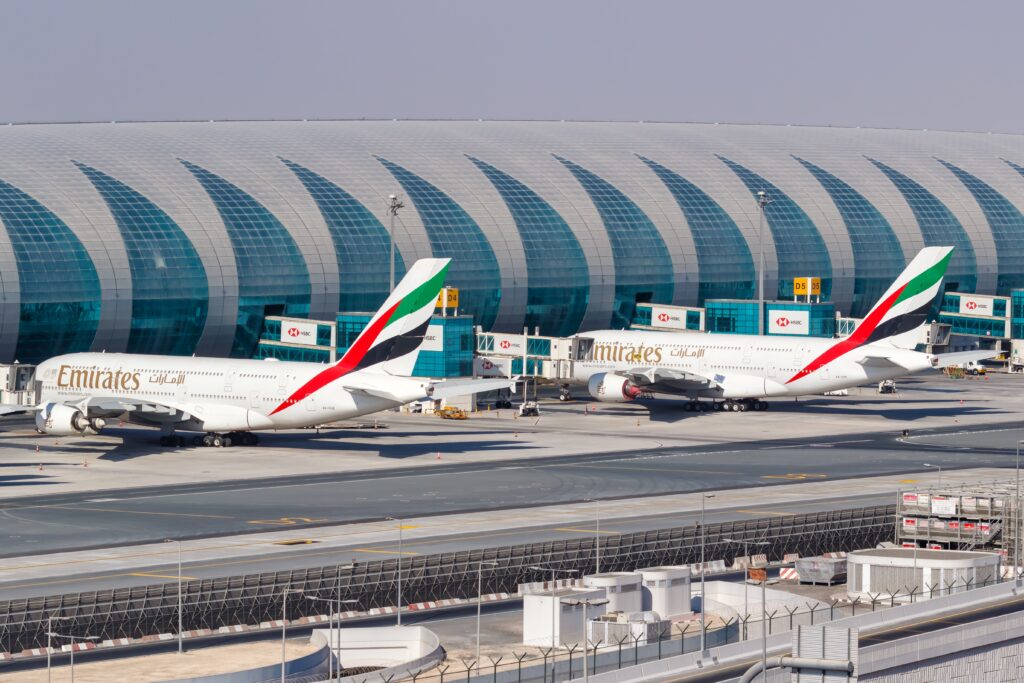
Since then, however, Emirates has pursued an ambitious flight resumption program, going much further than regional rivals to add back flights and reopen bookings for connecting passengers.
In many ways, Emirates is indicating that its ‘business as normal,’ and passengers can confidently use its Dubai hub as a transit point for normal flight bookings.
The Australian government, however, is now saying ‘not so fast’ to its citizens in a new travel advisory to its citizens.
With an ongoing threat of Iranian missile and kamikaze drone attacks, the United Arab Emirates (UAE) is currently subject to a ‘DO NOT TRAVEL’ alert by Australia’s Department of Foreign Affairs, which has warned of a continued threat to civilian infrastructure and the possibility of flights being disrupted with little or no notice.
On Saturday, the government confirmed that this advice still applies to Australian citizens who are simply using Dubai International Airport as a transit point.
“Do not travel advice also applies to transit and layovers in affected locations,” the advisory explains. “Even if you don’t plan to leave the airport, do not transit through these countries.”
“The regional conflict is likely to escalate further,” the advisory continued. “Airports, hotels, roads, bridges and other locations have been struck with missiles. Airspace may close at short notice. Flights can change or stop suddenly. Borders can close.”
In short, the advisory concludes that using airports in a country subject to a ‘DO NOT TRAVEL’ alert could put the safety of Australian citizens at risk.
The current DO NOT TRAVEL advice applies to the whole of the United Arab Emirates, as well as a slew of other countries in the region, including Bahrain, Israel, Kuwait, and Qatar.
For now, however, Emirates is the only airline in the region that is actively offering flights with a layover in the Middle East. Emirates has already rebuilt its flight capacity to around 62% of pre-war levels, while there are reports that the airline is targeting a 100% resumption of flights by March 29.
Australia has taken a far more cautious approach to the unfolding situation in the UAE, compared to some other countries. The US State Department, for example, currently only advises that its citizens should ‘reconsider travel’ to the country, while the British government is advising its citizens to avoid all but ‘essential travel’ to the UAE.
Other recent developments
- On Saturday, officials in Kuwait confirmed that an Iranian drone attack damaged the radar system at Kuwait International Airport. The airport has, however, been closed since the start of the Iran War.
- The UAE ordered Air India to slash the number of flights it planned to operate to and from the country on Sunday. The airline said the short-notice cancellations were due to slot availability.
- Qatar Airways continues to operate only a handful of daily flights to and from its Doha Hamad hub in Qatar due to the closure of airspace across the country.


People who fly to that region think they have multiple life’s like a car does