



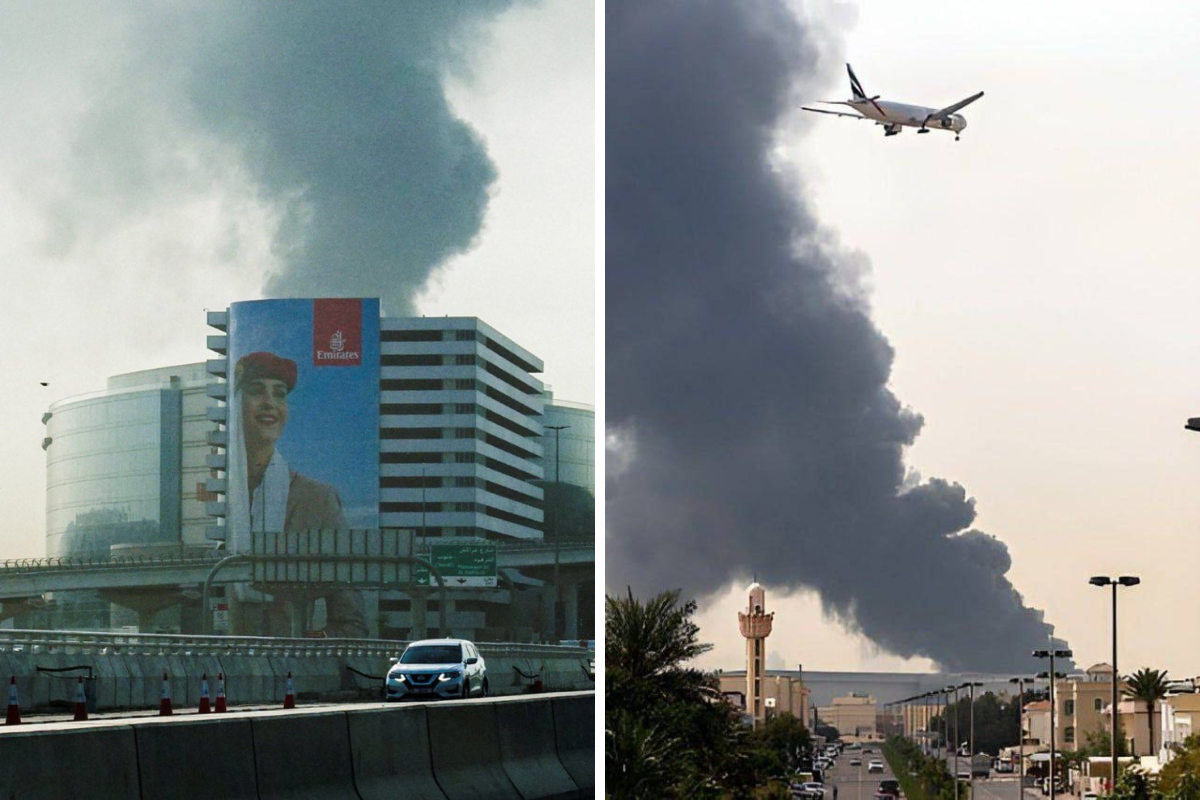
The few remaining foreign airlines that had been operating flights to Dubai since the start of the Iran War on February 28 have now been reportedly banned by the country’s civil aviation regulator following a drone strike on a fuel tank at Dubai International Airport in the early hours of Monday morning.
Emirates and sister airline FlyDubai continue to be allowed to operate limited flights to and from Dubai International Airport (DXB) after airspace over the city was reopened at around 10:00 am on March 16.
Several flights from Dubai (DXB) are diverting to nearby airports, likely to refuel. At this point there is no official NOTAM confirming fuel shortages at DXB.
— Flightradar24 (@flightradar24) March 16, 2026
EK1 DXB–LHR → AUH
EK31 DXB–LHR → DWC
EK75 DXB–CDG → JED
EK121 DXB–IST → DWC
EK131 DXB–DME → AUH
EK151 DXB–CPH →… pic.twitter.com/4GxV63XZgM
The reason behind the flight ban has not been revealed, although it’s likely to be connected with jet fuel supplies at what was, until the end of February, the world’s busiest airport for international flights.
As reported by Flight Radar 24, a slew of Emirates flights departing DXB on Monday evening for scheduled services to Europe and India were forced to make pit stops at Dubai World Central Airport (DWC) towards the south of the city.
It’s presumed that the short layovers at DWC are being made so that the massive Boeing 777s and Airbus A380 jets operating these flights can take on more fuel due to a lack of fuel at DXB.
Also on Monday evening, the Dubai Media Office confirmed that civil defense teams had managed to extinguish the massive fuel tank blaze that sent billowing black smoke high into the sky above the city, even as planes were cleared to land and take off.
The extent of the damage to the fuel tanks and fuel supply system has not been made public.
In a statement, Emirates said it would continue to operate a reduced schedule, but a spokesperson added that the airline was still monitoring the situation and developing its operational plan for the coming days.
The statement added: “The safety and security of our passengers and crew remain our highest priority and will not be compromised.”
Many foreign airlines, including the likes of British Airways, KLM Royal Dutch Airlines, Air France, United Airlines, and Virgin Atlantic, had already suspended all flights to Dubai International Airport.
There were, however, a slew of other carriers that had been operating flights to Dubai, including Air India, Himalaya Airlines, and Royal Jordanian.
In the days leading up to Monday morning’s drone attack at DXB, Emirates had been working to rebuild its regular schedule and was operating around 62% of its pre-war flights to and from Dubai.
It remains unclear whether the fuel tank fire will upend Emirates’ plans to restore some sense of normality to its operations.
The aviation sector is responsible for at least 27% of Dubai’s GDP, providing an economic contribution of US $37.3 billion per year. For every hour that flights are grounded, the Dubai economy is set to lose $4.25 million.