



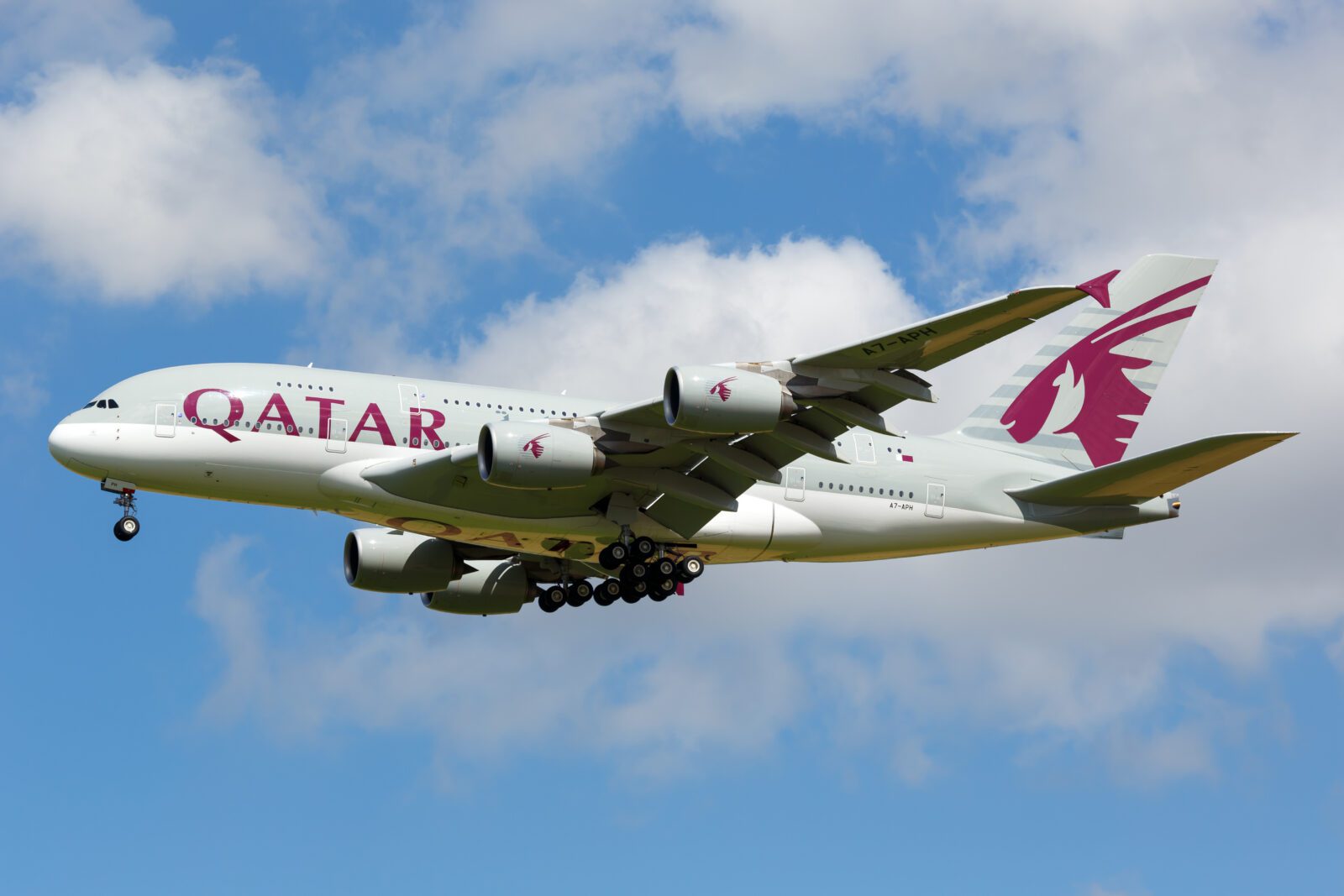
Qatar Airways is sending more airplanes into deep storage at a remote site high in the Aragon Mountains of Eastern Spain, as the airline’s planned flight resumption falters amidst continuing threats from Iranian missiles and kamikaze drones.
On Friday, five more widebody aircraft headed towards Tuerel Airport, the home of Tarmac Aerosave, a specialist aircraft storage, maintenance, and recycling firm with space for 120 aircraft to be put into longterm for months and potentially even years at a time.
The aircraft included an Airbus A380 (registration: A7-APC), which had been sitting on the ground at London Heathrow since February 28, when the US and Israel launched their attack on Iran, plunging the Persian Gulf into crisis.
The four other planes were:
- An Airbus A350-900 (registration: A7-ALL), which had been stranded in Cape Town since February 28.
- An Airbus A350-900 (registration: A7-ALT), which had been stranded in Durban since February 28.
- An Airbus A350-900 (registration: A7-ALG), which had been stranded in Nairobi since February 28.
- A Boeing 787-9 Dreamliner (registration: A7-BHX), which had been stranded in Johannesburg since February 28.
On Wednesday morning, four Qatar Airways Airbus A330 widebody jets departed Doha Hamad International Airport in quick succession, also bound for Tuerel.
Using special flight numbers to indicate that no passengers were onboard, Qatar Airways not only appeared to be evacuating these aircraft out of harm’s way in Doha but also to a deep storage facility.
On March 18, Qatar Airways was given permission to restart scheduled flight operations, including transits through its Doha Homad hub for the first time since the start of the Iran War.
Teruel is in for a busy day. Six aircraft are currently en route to the airport, known for its long-term storage and heavy maintenance capabilities.
— Flightradar24 (@flightradar24) March 20, 2026
🇫🇷 AFR374V – B789 ex CDG → ETA 08:48z
🇶🇦 QR106 – A380 ex LHR → ETA 08:53z
🇶🇦 QR7397 – A350 ex DUR → ETA 13:51z
🇶🇦 QR7311 – A350… pic.twitter.com/S0yjuS6zlV
Qatar Airways planned to quickly ramp up operations, and by Wednesday, the airline operated 135 flights through its hub. On Friday, however, those plans were already faltering, with the number of flights drastically cut back to just 43.
Even if the airline manages to start rebuilding its schedule in the coming days, it appears that it is now preparing for a protracted period of reduced flight demand, which necessitates aircraft being sent into long-term storage.
One reason for sending the aircraft to Tuerel could be to save some money on the massive parking fees that Qatar Airways has been racking up with its planes stranded in airports like London Heathrow.
It could also be that the airline wants to keep multi-million-dollar airplanes out of harm’s way should the Iranian regime target Doha Hamad Airport again.
In contrast to Qatar’s very cautious restart plans, Emirates continues to try to rebuild its pre-war schedule. The mega carrier is now operating more than 350 daily flights through its Dubai hub, although it remains to be seen whether it can restore 100% of its capacity by March 29, has had been touted just a week ago.