



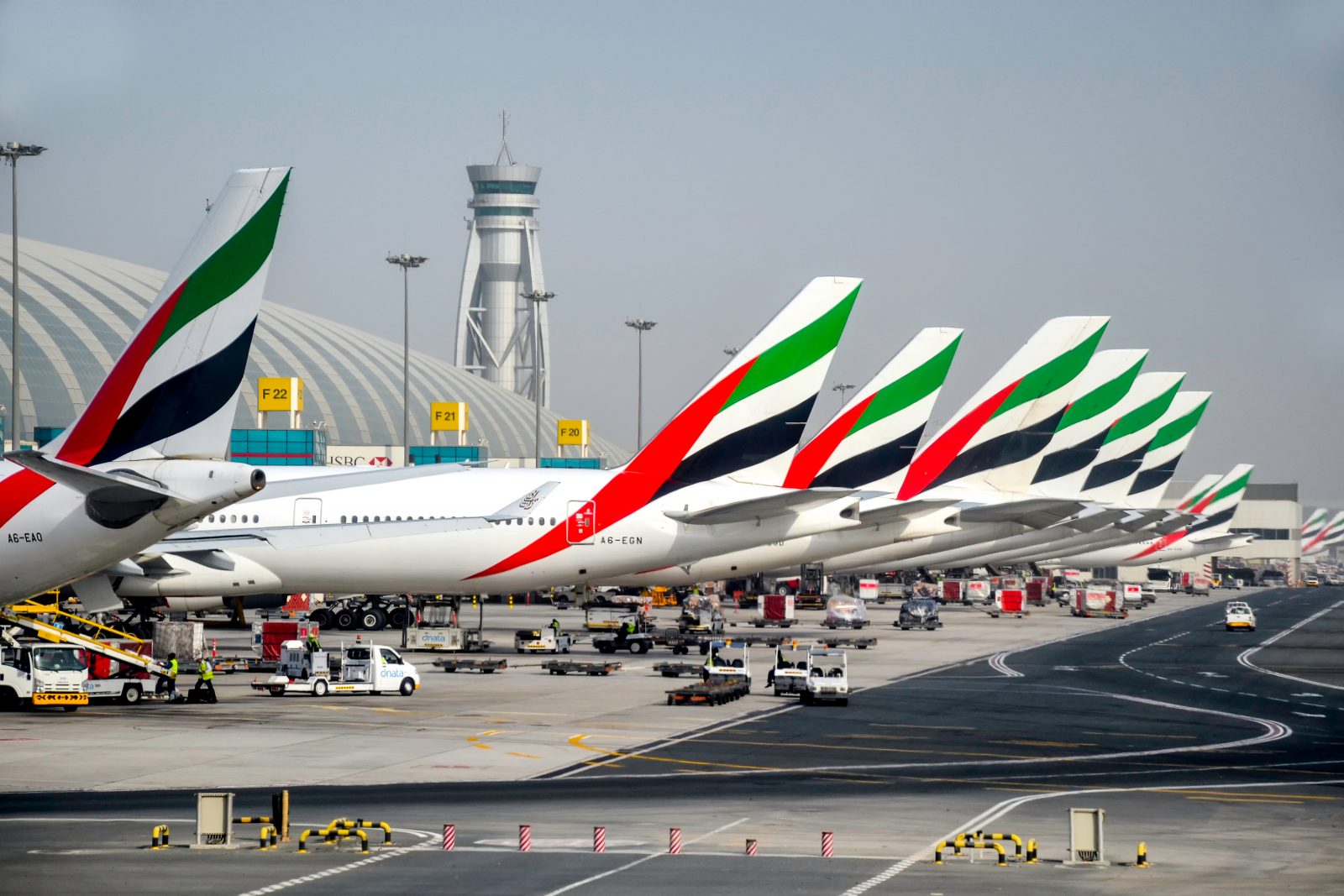
An Emirates Airbus A380 superjumbo was one of two parked planes that were damaged during an Iranian kamikaze drone attack at Dubai International Airport (DXB) in the early days of the Iran War, it has been claimed.
Sources cited by the Wall Street Journal say that, along with the iconic double-deck aircraft that is the flagship of the Emirates fleet, an Airbus A321 narrowbody plane operated by Saudia Airlines was also damaged in the attack.
The date of the attack has not been revealed, although Dubai International Airport has come under apparent attack by Iranian one-way attack drones on several occasions since February 28, when the US and Israel launched military operations in Iran.
The first such attack occurred in the early hours of February 29 when a drone, or at least debris from a drone, penetrated the roof of the airport’s prestigious Terminal 3, damaging the concourse and leaving at least four people injured.
Within days of this attack, however, the government of Dubai and its two airlines, Emirates and FlyDubai, had restarted flights using what it referred to as a ‘safe air corridor.’
The following weekend, a drone appeared to explode on the ground very close to Terminal 3 and several parked airplanes. The attack injured a further four people, but after suspending operations for a few hours, Emirates again resumed flights.
Two days later, in the early hours of March 16, a third drone struck one of DXB’s massive fuel tanks on the edge of the airfield, right next to the airport’s VIP terminal, known as the Royal Airwing. Operations were once again suspended but resumed by 10 am.
Related Story
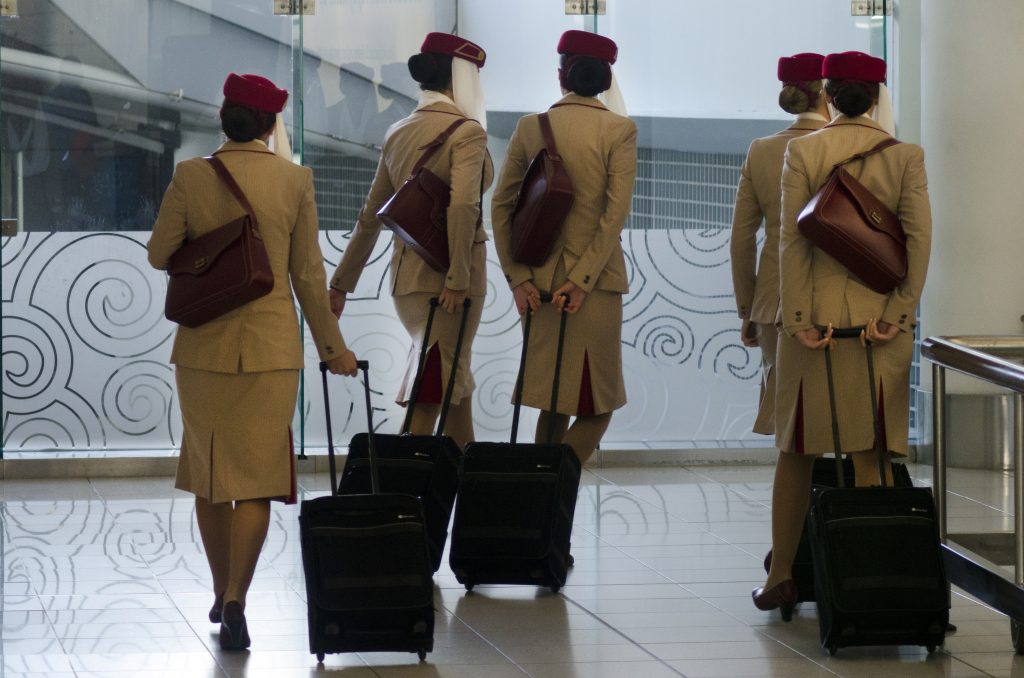
Emirates Flight Attendants Face Tough Choices As Iranian Drone Attacks Fall Near Dubai International Airport
Despite the best efforts of local authorities, images of Emirates planes coming into land while thick black smoke billowed from the smoldering fuel tank quickly went viral.
By Friday, Emirates had restored around 69% of its pre-war schedule at DXB, according to data crunched by flight tracking experts, Flight Radar 24. Sources continue to claim the airline is aiming to restore nearly 100% of its pre-war schedule by March 29.
Meanwhile, FlyDubai has restored more than a third of its pre-war schedule. In contrast, Etihad Airways in neighboring Abu Dhabi has resumed around half of its regular schedule, while Qatar Airways is stuck at around 20% of its pre-war schedule.
Emirates insists that the safety and security of its passengers and crew remain its “highest priority and will not be compromised.”
The Australian government, however, continues to urge its citizens not to use airports throughout the Persian Gulf, including Dubai, warning passengers that their safety could be at risk even if they have only booked a short transit layover.
Following the fuel tank attack, foreign airlines were briefly banned from flying to the UAE earlier this week, but while that ban has been lifted, many airlines have decided to stay clear of the country for the next few months at least.
More European and North American carriers have extended cancellations to Dubai through May, as they wait to see how the security situation develops across the region.
While the pace and ferocity of drone and missile attacks on the UAE appear to be slowing down, the threat is still very much present.
Airspace was briefly shuttered on two seperate occasions on March 22 as the UAE’s armed forces engaged Iranian projectiles fired towards the country. On both occasions, officials at DXB allowed airfield operations to continue as normal.