



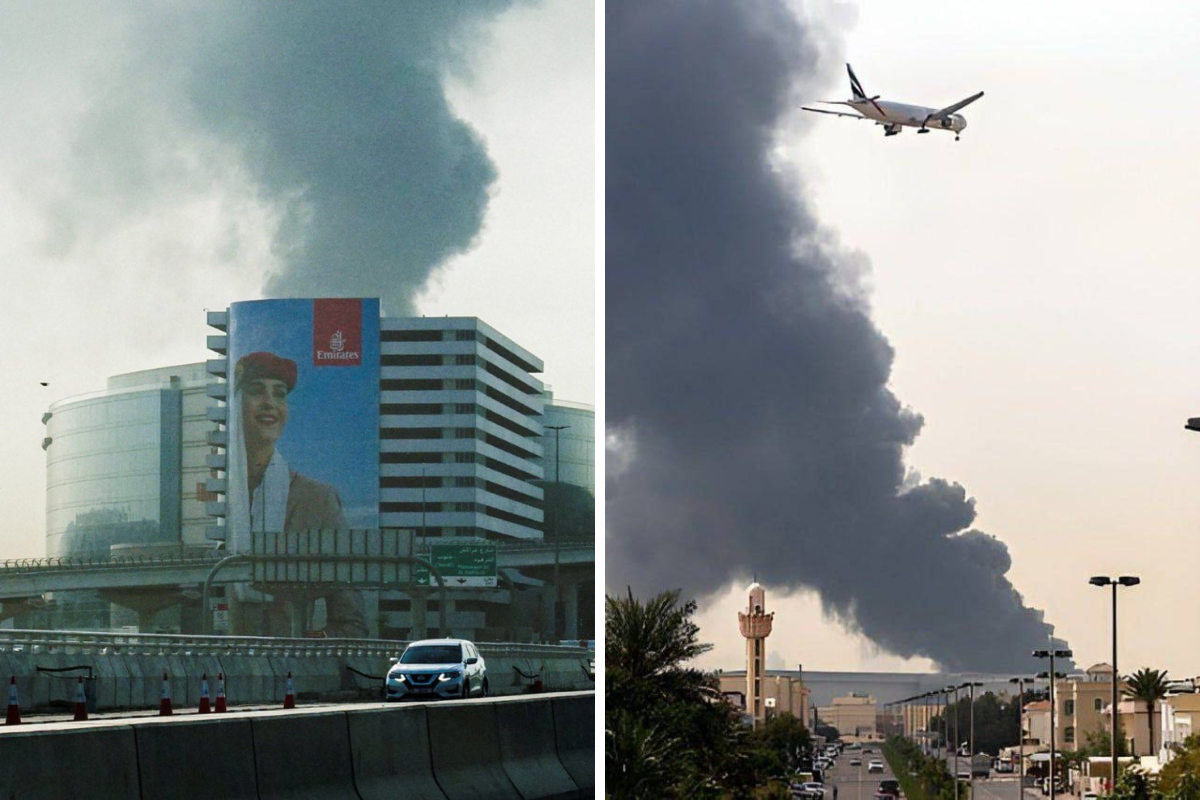
The world is breathing a huge sigh of relief after President Trump announced that he was lifting his threat to wipe out a “whole civilization” after reaching a two-week ceasefire deal with Iran at the eleventh hour on Tuesday night.
Financial markets were buoyant on Wednesday morning, with fuel prices dropping amidst reports that the Strait of Hormuz had finally reopened after nearly six weeks of intense military activity.
But this two-week ceasefire doesn’t necessarily mean that everything goes back to the way it was before the US and Israel launched their military strikes on Iran on February 28.
Many countries will be preparing for a new normal for months to come and that’s most definitely the case for the aviation industry, which remains in a holding pattern despite the ceasefire agreements.
While airlines based in the Persian Gulf were the worst affected by the conflict, the shockwaves are being felt by airlines much further afield.
What happens now in the Middle East?
Even hours after the ceasefire deal was announced, Iran was firing projectiles at neighboring countries, with air raid sirens being sounded in Bahrain and residents urged to seek shelter.
That kind of continuing threat, as well as the dynamic nature of the ceasefire agreement, will mean that airlines in the region are unlikely to immediately return to full pre-war operations.
Watch closely, Dubai-based mega airline Emirates, which is likely to lead any charge to restore flight operations, having already restored more than 60% of its pre-war schedule.
We could finally see Bahrain and Kuwait reopen their airspace and airports, although damage from Iranian kamikaze drones could delay these efforts.
What airlines will be most afraid of is rebuilding operations only for a bump in the road in a couple of weeks’ time to throw everything off course once again.
For international carriers, flight cancellations to the region are likely baked in until June or July at the earliest.
Will airports in Asia and Europe run out of jet fuel?
Over the last few days, there’s been a lot of worried chatter that airports in Asia and Europe could run out of jet fuel should a solution to reopen the Strait of Hormuz not be found, and quickly.
While tankers do now appear to be transiting through the Strait of Hormuz, the threat of jet fuel shortages hasn’t been completely eradicated. It will take weeks for tankers that have been trapped in the Persian Gulf to reach their destinations, even after they clear the Strait of Hormuz.
As a result, it should be expected that some airlines will continue to trim their schedules on low-yield routes.
That being said, the risk of airports running completely dry of jet fuel over the next few months is a lot lower than it was only 24 hours ago.
How will ticket prices be affected over the coming months?
The cost of oil has, thankfully, dropped in response to the ceasefire agreement, but it still remains much higher than it was before the start of the conflict. As a result, rising ticket prices and fuel surcharges are expected to remain for months to come.
This is likely to affect airlines that don’t ‘hedge’ fuel buying the most – whereby an airline locks in fuel prices at a given price for a set time period. When fuel prices go down, an airline loses, but if fuel prices suddenly skyrocket, like now, the fuel companies have to absorb the cost rather than the airlines.
Even if the ceasefire turns into a long-term peace accord, fuel prices and ticket costs are likely to remain elevated for the rest of the summer. Limited capacity is also likely to drive ticket prices still higher.
But are there bargains to be had?
For travelers willing to take the risk of flying through the Middle East, then, yes, there are likely to be bargains to be had, as airlines in the region launch discounted sales to attract passengers back.
We’ve already seen Abu Dhabi-based Etihad Airways offer some amazing deals as it attempts to fill row upon row of empty seats on its planes.
Passengers buying tickets now, though, need to be aware that this remains a very dynamic situation and conditions could change with little notice.