



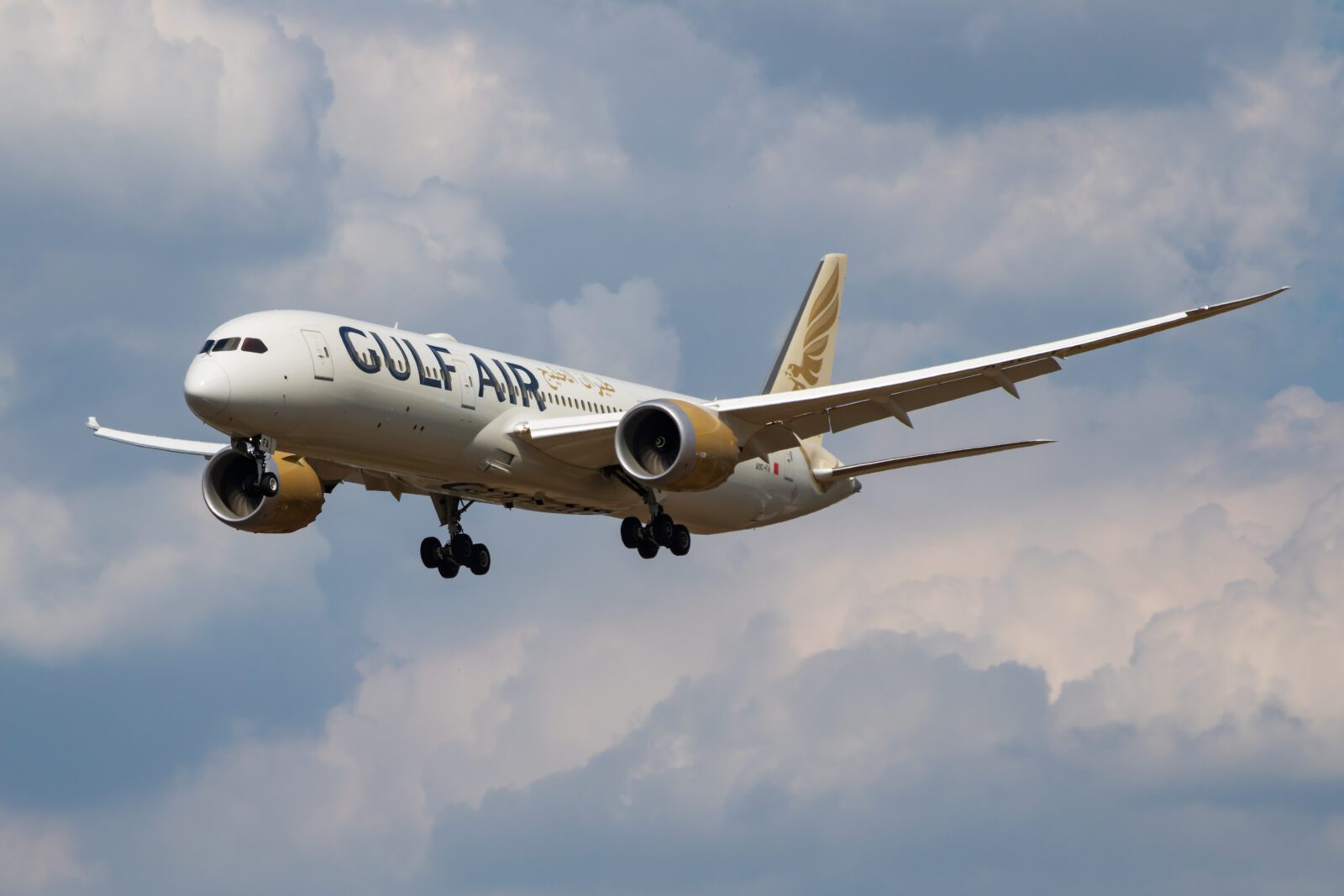
The Kingdom of Bahrain has finally reopened its main international airport on the outskirts of the capital, Manama, after it was shuttered for an unprecedented 39 days following the start of US and Israeli strikes on Iran.
At the outset of the conflict on February 28, Bahrain closed its airspace over the country to all civilian flights as Iran retaliated with the use of ballistic missiles and kamikaze drone attacks against its Persian Gulf neighbors.
Unlike nearby countries like Qatar and the United Arab Emirates, however, Bahrain decided to keep its airspace shut down until a ceasefire deal had been agreed with Iran.
Within hours of the deal taking effect, Bahraini officials announced that operations would be allowed to resume from Bahrain International Airport (BAH).
The decision was taken despite the fact that Bahrain’s air defences engaged projectiles fired from Iran hours after the ceasefire had supposedly taken effect. Officials later explained that this was expected as Tehran worked to contact military operators in remote areas cut off from regular communications.
The reopening of Bahraini airspace will be a huge relief for the country’s national airline, Gulf Air, which had been forced to temporarily relocate its operation to Dammam in neighboring Saudi Arabia, where it was operating a very limited schedule to key gateway cities.
Late on Wednesday, Gulf Air repositioned its first aircraft from Dammam back to Bahrain.
Gulf Air also announced that it planned to immediately resume scheduled flights from Bahrain to 13 international destinations, including Delhi, Mumbai, London Heathrow, and Lahore.
Some international airlines are also expected to resume flights to Bahrain in the coming days, but the likes of British Airways are likely to hold off on resuming flights.
In comparison to the likes of Emirates and Qatar Airways, Gulf Air is a very small airline in the region, but there was a time when Gulf Air was the airline of the Persian Gulf.
Founded in 1950 by a British pilot and then bought by British Overseas Airways Corporation (BOAC) a year later, Gulf Air grew into the de facto flag carrier of Bahrain, Qatar, Oman, and the United Arab Emirates.
In the 1970s, the four Gulf states took ownership of Gulf Air, and for several decades, the airline operated hubs in Manama, Doha, Abu Dhabi, and Muscat.
The years of Gulf Air’s dominance began to change, however, in 1985 when the government of Dubai decided to start its own airline: Emirates.
Having witnessed Emirates’ rapid growth, Qatar decided to found its own airline in 1993, followed by Abu Dhabi with the creation of Etihad Airways in the early 2000s, and finally, Oman Air became the national carrier of Oman in 2007.
Also on Wednesday, Israeli authorities gave the green light for the resumption of normal air traffic from Tel Aviv Ben Gurion Airport after heavily restricting the number of flights allowed to take off and land due to the threat of Iranian missile attacks.
Kuwait is, however, yet to reopen its international airport after it came under heavy attack from Iranian missiles, resulting in damage to the airport terminal building and fuel tanks.