



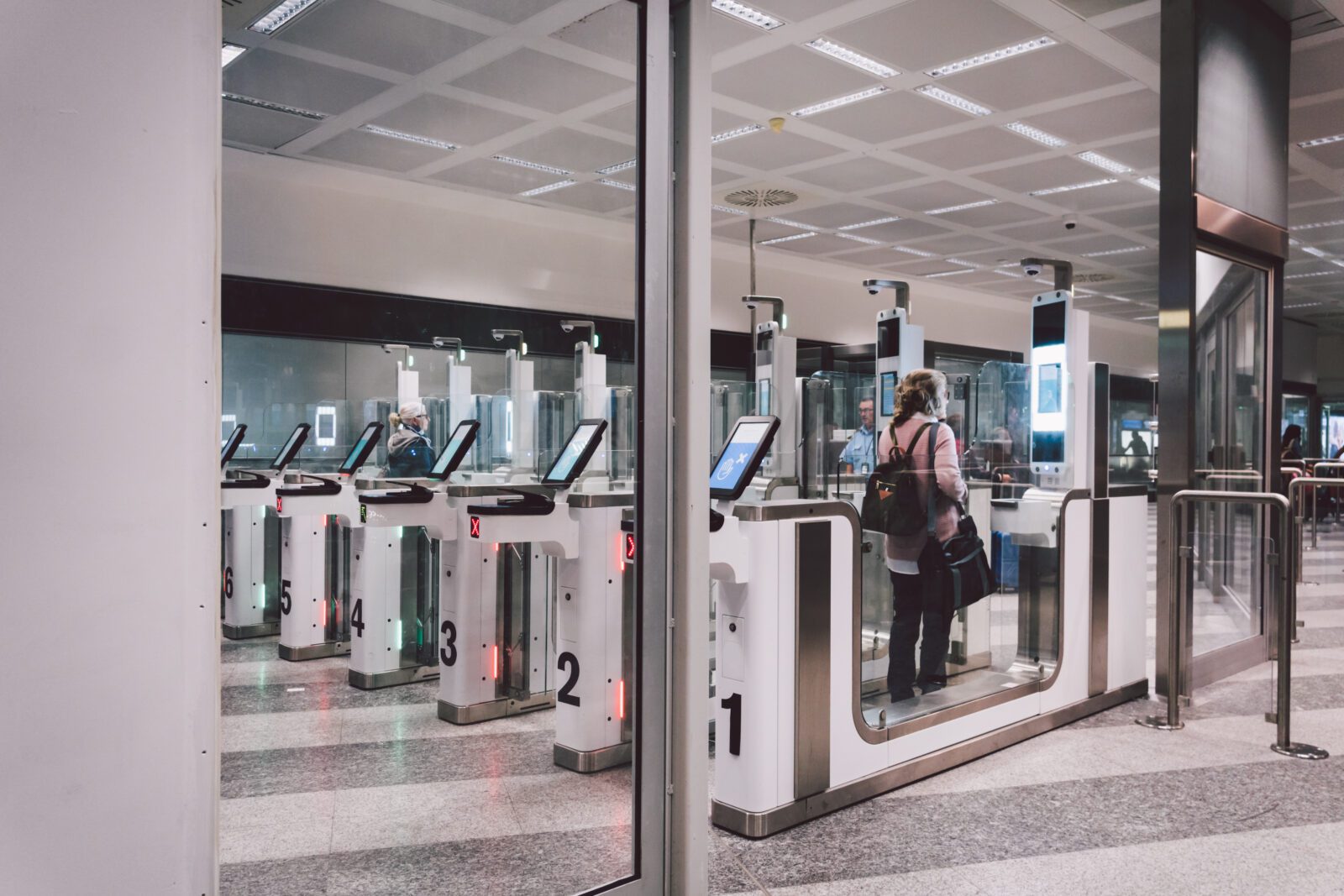
Friday marked the first day of the full rollout of Europe’s much-delayed biometric ‘Entry/Exit System’ (EES) system at airports across the bloc, and a major trade organization representing airports throughout Europe said it went as badly as it had feared.
Passengers are facing wait times of up to three hours to get through the new border controls, and the delays are affecting both arriving and departing passengers.
In fact, one flight to the United Kingdom took off without 51 passengers who were meant to be on board, but were still stuck at the immigration checkpoint, Airports Council International (ACI) EUROPE said.
Another flight didn’t have any passengers on board at the scheduled time of departure. The airline ended up waiting for as many passengers as possible to get through the immigration checkpoint, but an hour and a half later, 12 passengers were still stuck in lines.
“While we will continue to closely monitor developments in the coming days, it is already evident that greater flexibility is immediately needed,” commented Olivier Jankovec, Director General of ACI EUROPE.
Jankovec wants European lawmakers to give border officials the option to fully suspend the EES system during busy periods… Not only in the next few weeks ahead, but for the entire summer travel season.
EES replaces Europe’s old-fashioned passport-stamping immigration system with a full automated biometric system. On arrival, passengers from countries outside of the Schengen area are required to register their fingerprints and photo on automated kiosks before proceeding to the normal immigration counter.
The European Commission says that on average, it takes travellers just 70 seconds to register when the system is running at full capacity, but that hasn’t stopped massive lines building up at some airports across Europe.
The Commission opted for a phased approach to the introduction of ESS, with only a small number of airports switching on the kiosks late last year. Every airport has been using the kiosks since March 31, but it wasn’t until today that the flexibility to suspend the system EES for short periods was removed from local officials.
There is, however, still a limited amount of flexibility. During particularly busy periods, local officials can switch off the biometric capture part of the kiosks, reducing the registration process to just capturing the passport and travel details of the passenger.
The European Commission has, however, refused to back down, saying that EES is essential to improving border security across the EU. Since the system was introduced, more than 27,000 travellers have been refused entry into the bloc, including 700 who were refused because they posed a security threat to Europe.
Who has to use EES?
EES rules apply to third-country nationals, which are essentially any citizen of a state that is not a member of the EU, nor a citizen of Iceland, Liechtenstein, Norway, or Switzerland.
That means that if you are from countries like the United States, Canada, the United Kingdom, and Australia, the EES rules apply to you.
Why is Europe getting rid of passport stamps?
Until the introduction of EES, the use of passport stamps was the only way that immigration officers in different Schengen zone countries had to monitor whether ‘third country’ citizens from visa waiver nations weren’t overstaying the rule that allows them to stay in the EU for a maximum of 90 days in any 180-day rolling period.
For now, many EU states still require third-country nationals to physically see an immigration officer, but in the future, it’s hoped that fully automated e-gates will be rolled out.
What’s the difference between EES and ETIAS?
EES isn’t the only major change that Europe is making to its immigration border controls. In late 2026, the continent is also slated to introduce its ETIAS travel authorization program.
ETIAS will apply to third-country nationals who don’t currently need to get a visa to visit the European Union.
Before traveling to the EU, third-country nationals will need to apply for and pay for an ETIAS. It will be valid for three years or until the traveler’s passport expires. Obtaining an ETIAS will be a mandatory requirement to travel to the EU, but it does not guarantee entry, and a final decision will still be taken by immigration officials in the first entry country.
ETIAS was meant to be introduced in 2025, but, just like EES, it has been beset by delays and isn’t now due to be introduced until the last quarter of 2026.