



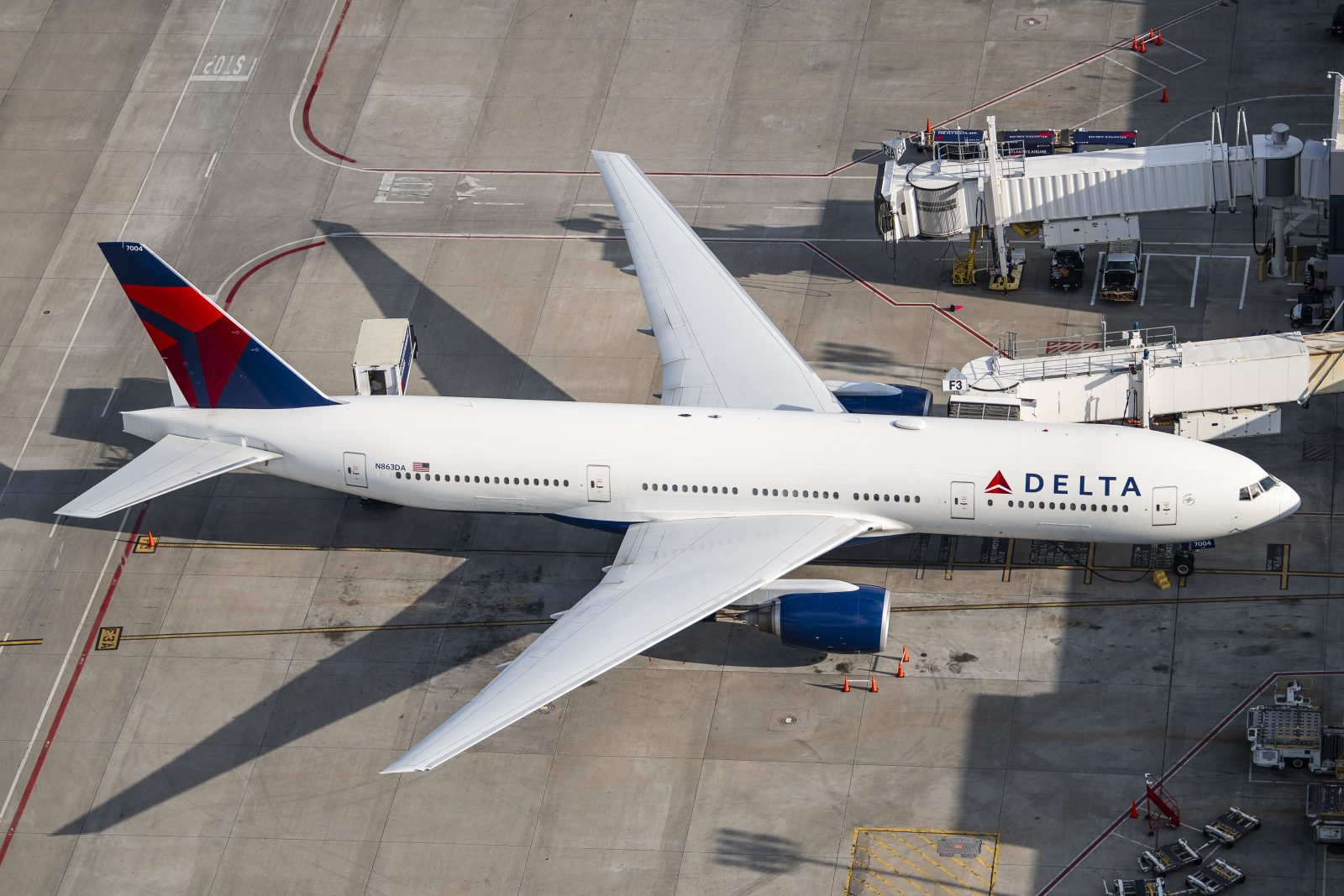
Delta Air Lines has reached a $78.7 million settlement in a long-running class action lawsuit brought by two residents of a suburb close to Los Angeles International Airport (LAX) whose homes were doused in jet fuel when a Delta Boeing 777 jettisoned fuel as it made an emergency landing.
Delta flight DL89 had just taken off LAX for a 13-hour flight to Shanghai, China, on January 14, 2020, when the pilots realised there was a serious issue with one of the plane’s two engines.
Flight Details
- Flight Number: Delta Air Lines DL-89
- Route: Los Angeles (LAX) – Shanghai (PVG)
- Aircraft: Boeing 777-200
- Passengers and crew: 167
The pilots shut down the affected engine and declared an emergency, requesting an immediate return to LAX, where the airport fire service would be waiting to meet the aircraft on the tarmac.
15,000 Gallons Of Jet Fuel Dumped On LA Homes
Because the airplane was fully loaded with fuel for the long-haul transpacific flight to Shanghai, the pilots decided to jettison some of the fuel onboard to make sure the plane wasn’t too overweight for a safe landing.
Unusually, rather than jettisoning the fuel offshore, around 15,000 gallons of jet fuel were jettisoned over heavily populated areas close to Los Angeles International Airport at an altitude of just 2,000 feet.
In the aftermath of the incident, Delta promised to send cleaning teams to mop up any jet fuel that had doused local schools, but just ten days after the accident, two local residents filed a class action lawsuit in a California district court, accusing Delta of unnecessarily damaging their homes.
Five-Year Legal Battle For Compensation
After more than five years of litigation, Delta has reached a settlement to avoid the case going to court, although the airline continues to deny any liability, wrongdoing or allegations of negligence.
In a court filing accompanying the settlement agreement, Delta said that if the case had gone to trial that it would have proven that “the experienced pilots and cabin crew of DL89 did exactly what federal regulations and their FAA-approved training required them to do to respond to that in-flight emergency and ensure the safety of the passengers, crew, and people on the ground.”
Without jettisoning fuel before landing, the aircraft would have exceeded its maximum landing weight by around 160,000 pounds, the airline explained in the filing.
“And because the pilots did not know the cause of the engine malfunction, they had to consider the risk that they also would lose the second engine. Those factors, the pilots concluded, presented unacceptable risks to the safety of their passengers and crew,” the filing continued.
“Delta contends that this emergency decision complied with all applicable Federal Aviation Administration (FAA) regulations, Delta’s procedures, and the pilots’ training.”
An investigation by the FAA into the incident cleared the pilots of any wrongdoing.
Compensation: Who Gets What?
Delta will create a settlement fund of $78.75 million, although after attorneys’ fees and litigation costs, the compensation fund will be cut to $50.59 million.
Of that, nearly $34 million will be awarded to property owners, with each owner receiving around $888 in compensation. The remaining $16 million will be paid out to around 160,000 residents who lived in the area that was doused in jet fuel. Each resident will receive approximately $104 in compensation.
Delta says that the amount of jet fuel that actually reached the ground was “negligible” and lab tests conducted after the incident revealed that there was no evidence of jet fuel in the local soil seven days after the incident.
Both parties are expected to return to court next month so that a judge can approve the settlement.
What happened to Delta’s Boeing 777s?
Just months after the emergency landing of DL-89 in January 2020, Delta announced that it planned to retire its fleet of 18 Boeing 777s. At the time, Delta said it was disposing of its 777s earlier than planned due to the effects of the COVID-19 pandemic.
Delta first started flying the Boeing 777 in 1999, and the ‘Long Range’ variant of the aircraft type joined Delta’s fleet in 2008. The airline operated the Boeing 777 for just over two decades before they were retired.
Air India acquired some of Delta’s old 777s, but the airline ended up getting in trouble with aviation regulators after it transpired that it was operating the planes on routes that they weren’t certified for.
The old Delta 777s had overhead oxygen masks that were designed to operate for 20 minutes in the event of a depressurization, but Air India accidentally used these planes on routes over mountainous regions that require an additional oxygen tank to supply the masks for a much longer time limit.