



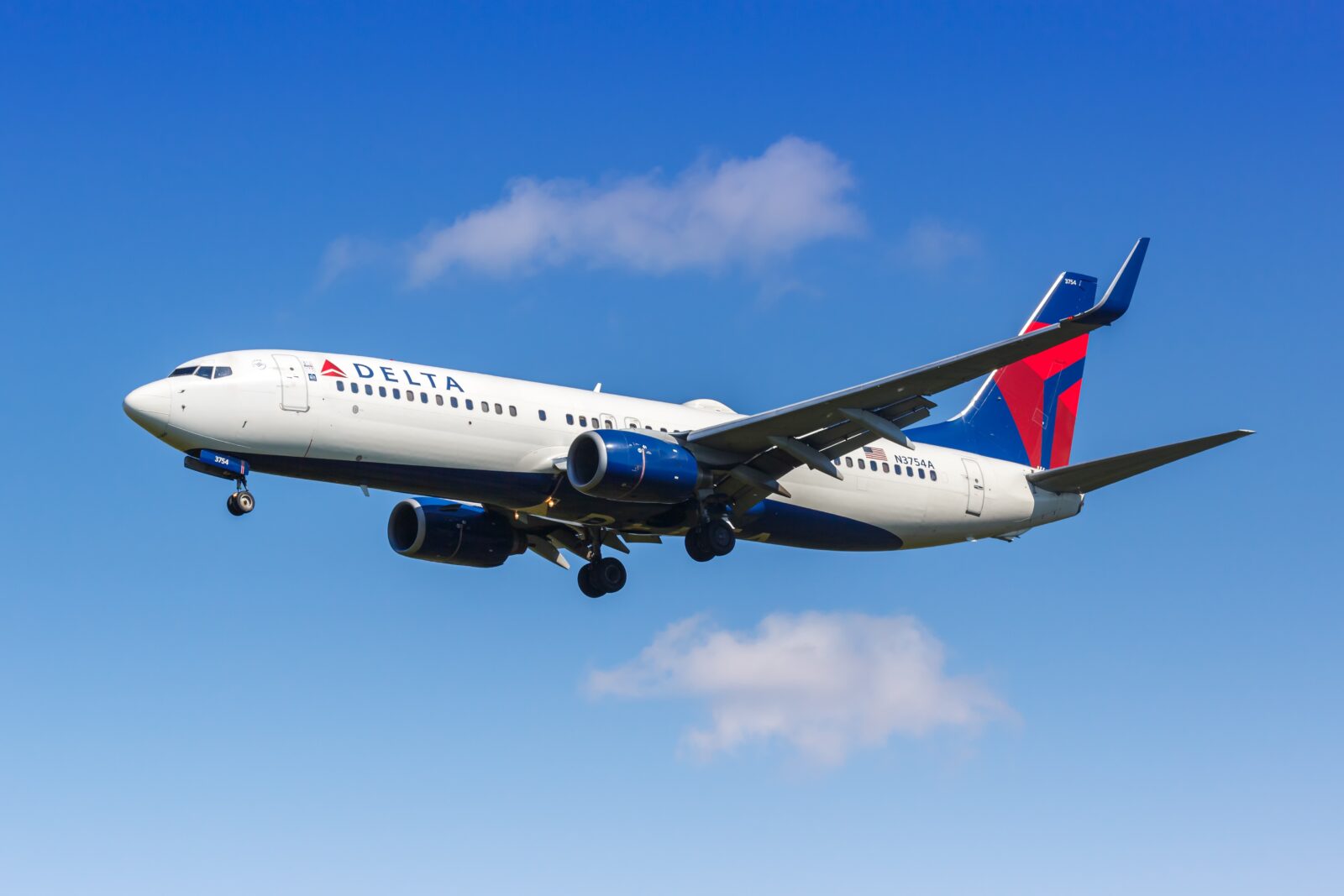
A passenger who was onboard a Delta Air Lines flight from Salt Lake City to Portland says she had suffered permanent hearing loss after the cabin pressurization system of the Boeing 737 malfunctioned shortly after takeoff.
Jaci Purser from Utah is now suing Delta for negligence following the September 15, 2024, incident, which resulted in an emergency diversion and landing back in Salt Lake City.

Delta flight DL-1203 departed Salt Lake City at around 8:10 am for the one-and-a-half-hour flight to Portland, but as the aircraft was still in its initial climb, the pilots received a cabin pressurization alert in the cockpit and leveled off at just 9,000 feet.
Data supplied by flight tracking website Flight Radar 24 shows how the pilots quickly looped back to Salt Lake City, where the plane landed safely just 16 minutes after takeoff.
On board the aircraft were 140 passengers, including children who were left in obvious pain due to the plane’s pressurization failure.
One passenger explained his experience to the accident reporting site, the Aviation Herald, saying, “I noticed my ears were popping much more than normal upon takeoff. A few minutes after departure, there was a rapid level off and possible descent.”
“My ears were popping the entire time, and some children behind me were screaming in pain. After a few minutes, we taxied back to a gate where paramedics came on board, where they attended to multiple people with apparent ear pain.”
Another passenger reported that their coworker on the plane had blood coming out of their ear, and this turned out to be a ruptured eardrum. There are reports that between 10 and 15 passengers had to be transported to the hospital.
In her complaint against Delta, Jaci says she was “severely injured” by the pressurization malfunction and has sustained permanent hearing loss. The complaint alleges that the issue was due to Delta failing to properly maintain the aircraft.
Why didn’t the oxygen masks drop?
Oxygen masks are designed to automatically drop when an aircraft suffers a decompression at high altitude, when the air inside the cabin would be so thin that it would lead to hypoxia.
On many aircraft, the trigger for the deployment of oxygen masks is when the altitude inside the cabin reaches approximately 14,000 feet.
In this case, the aircraft never reached an altitude that would automatically trigger the deployment of oxygen masks in the cabin.
So what caused this accident?
The actual cause of this pressurization issue remains unclear, although there is speculation that, rather than the plane failing to pressurize, it actually pressurized too much.
This explanation is supported by the fact that passengers reportedly suffered such dramatic barotrauma, although the National Transportation Safety Board (NTSB) did not open an investigation into this incident.


There are some similarities with this incident on Ryanair: https://asn.flightsafety.org/wikibase/213256