



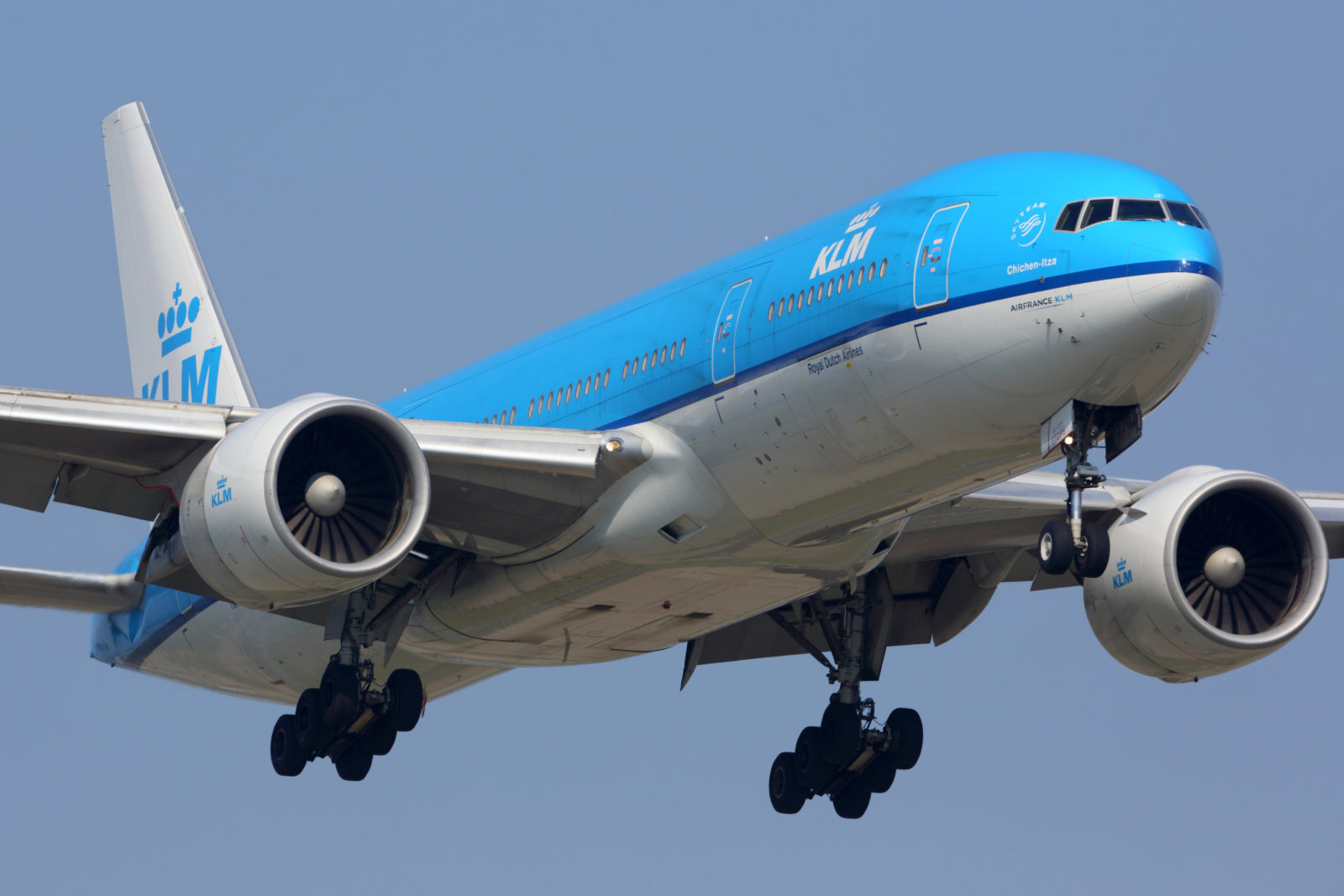
Police at Atlanta Hartsfield International Airport rushed to intercept a Boeing 777-200 operated by Dutch airline KLM, which was taxiing for takeoff, after one of the passengers on board dialled 911 and claimed they had seen someone on the widebody jet with a gun.
Before law enforcement could get to the aircraft, however, the panicked passenger reached for an emergency exit and managed to deploy the inflatable slide, resulting in the flight being scrapped.
The incident unfolded on Tuesday night as KLM flight KL-622 was preparing to depart ATL at around 10:45 pm. The aircraft had already pushed back from the gate and was taxiing towards the runway for takeoff when local police received a ‘person armed’ call on the plane.
Shortly after calling 911, the passenger lunged towards an emergency exit and managed to open it before the cabin crew could restrain him.
The pilots were able to taxi the aircraft back to the gate, where the police were waiting to investigate what had actually gone down on the plane.
The panicked passenger was identified as 32-year-old Johannes Van Heertum, who appeared to be experiencing a mental health episode. EMTs were called to give Van Heertum a medical assessment before he was cleared to be taken into custody.
The APD confirmed that Van Heertum was charged with Reckless Conduct, Criminal Damage to Property, and Interfering with Security Measures, after it was confirmed that there was no armed person on the plane.
The flight ended up being canceled overnight, with a spokesperson for KLM noting in typical Dutch matter-of-factness that they “understand that this is inconvenient for the other passengers.”
You might be surprised to learn that the emergency exit slide would not have to be replaced before the plane returned to Amsterdam. Instead, engineers would be able to remove the used slide and then block off the exit for its return flight to the Netherlands, where the slide could then be replaced.
When this type of alleviation is used, however, passengers would need to be informed that the emergency exit was not operational, and, in some cases, airlines are required to reduce the number of passengers allowed on board.
This type of alleviation would be particularly useful if an incident occurred in a remote destination with limited access to spare parts of qualified engineers.
That wouldn’t be the case in Atlanta, but just because an airport has the expertise nearby, it doesn’t mean that an airline has the required maintenance contract to allow such work to take place.
While costs can vary, it’s estimated that replacing the large dual-lane emergency exit slides on a Boeing 777 can cost as much as $75,000 per slide.
Why so expensive? Well, one reason is that they are just emergency slides, but are officially known as ‘slide rafts,’ which can be detached from the aircraft in the event of a water landing and have a canopy and survival pack built in.
Designed to fully inflate in just six seconds, the emergency slides on the Boeing 777 have been certified to be capable of evacuating an entire planeload of people in just 90 seconds with only half operational.
In reality, real emergency evacuations take much longer. In 2016, when an Emirates Boeing 777-300 crashed while landing at Dubai International Airport, it took around 6 minutes and 40 seconds to evacuate everyone from the burning wreck.
One of the reasons the evacuation took so long was that passengers blocked the aisle as they stopped to retrieve their hand luggage from the overhead bins despite panicked pleas from the cabin crew for them to leave everything and get out.
But the evacuation was also delayed due to issues with the emergency exit slides.
The aircraft had ten emergency exits, but half of those exits were never used, because it was either too dangerous to open the door or because the strong winds impacted the operation of the emergency slides.
The strong winds also affected the five operational slides, resulting in them becoming unusable for portions of the evacuation as they were lifted from the ground.
In the wake of the accident, Emirates altered its cabin crew training to address wind gust concerns. In the event of an emergency evacuation, flight attendants now order able-bodied passengers to get down the slide first and then hold onto to ensure it isn’t picked up by a wind gust.