



British Airways Passengers Stuck on a 9-Hour ‘Flight to Nowhere’ After A Critical Cockpit Instrument Failed Mid-Air

- Aside from astronomical fuel and diversion costs, British Airways could be hit with a compensation bill of £112,320 following Wednesday's 'flight to nowhere,' along with hotel and meal costs for all the passengers on board.
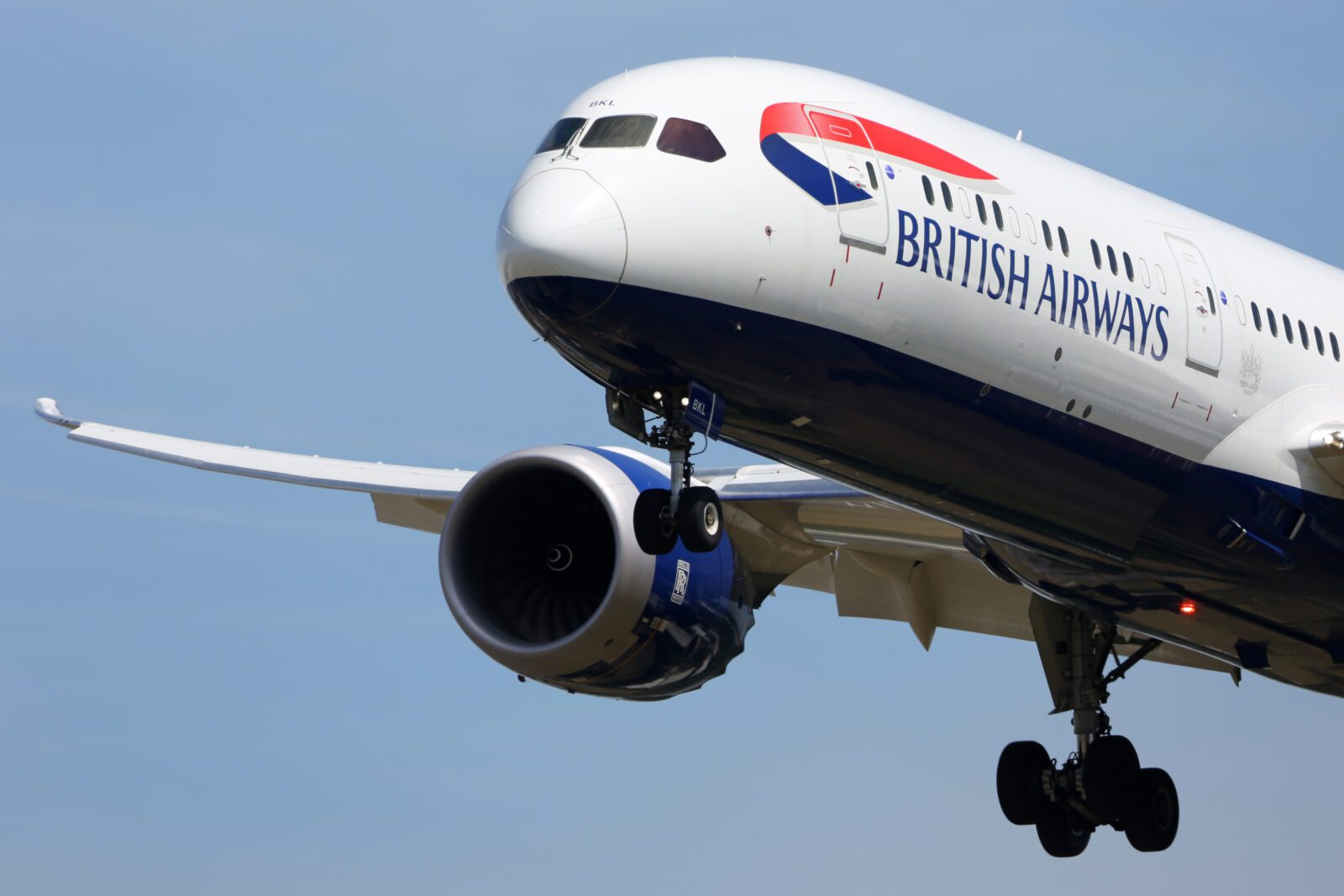
As many as 216 passengers boarded a British Airways Boeing 787 Dreamliner at London Heathrow Airport on Wednesday under the impression that they would walk off on a different continent on the opposite side of the world. Instead, after nine hours in the air, they ended right back where they started.
And if that doesn’t sound agonizing enough in itself, the time they spent on board was just two hours shy of the expected flight time that would have got them to their intended destination.
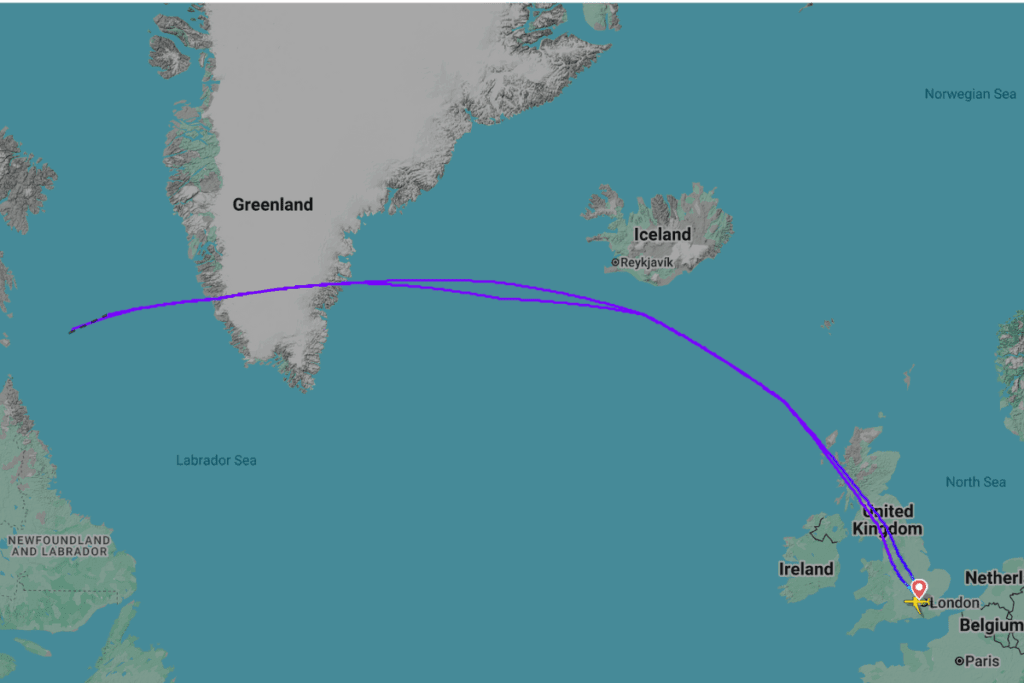
BA243 to Mexico City Crossed The Atlantic Ocean Before Suddenly Turning Back
British Airways flight BA-243 to Mexico City departed London Heathrow Airport at around 1:20 pm on December 10. Although the flight was running nearly 40 minutes behind schedule, the Boeing 787 Dreamliner quickly climbed to a cruising altitude of 36,000 feet as it flew north towards Scotland and then over the Atlantic towards North America.
Everything seemed to be going as planned until the plane was approaching the coast of Newfoundland in Canada’s far northeast.
Rather than continuing southwards towards Mexico, the seven-year-old aircraft suddenly performed a U-Turn. Data captured by the flight tracking website Flight Radar 24 showed how the aircraft retraced its steps along almost the exact same route towards Heathrow.
In the end, the aircraft landed back in London nine hours after takeoff at around 10:10 pm, where the passengers had to be deplaned and then put up in hotels overnight while British Airways worked out how it was going to get them to Mexico City.
In a statement, a spokesperson for British Airways told us: “The flight landed safely and customers disembarked normally following reports of a technical issue with the aircraft.”
“We’ve apologised to our customers for the delay, and our teams are working to get their journeys back on track.”
Cockpit Instrument That Stopped Working Is Essential For Landing in MEX
It turns out that a cockpit instrument that is essential for landing at Mexico City Airport stopped working mid-flight, and despite the best efforts of the pilots, the instrument couldn’t be fixed.
The instrument in question was the radio altimeter, which measures the altitude of the aircraft above ground level by bouncing radio waves off the surrounding terrain.
A radio altimeter isn’t always necessary, but in the case of Mexico City, with its high terrain and nearby mountains, it’s an essential instrument, especially for landings during the hours of darkness.
Why Divert All The Way Back to London?
In these kinds of tricky situations, passengers often ask why an airline can’t divert to a suitable nearby airport and then allow everyone onboard to continue their journeys to their final destination.
In recent years, however, airlines have taken the attitude that it’s preferred to get their broken aircraft straight back to a hub base where their own engineers and a supply of spare parts are readily available to get the plane fixed and back in service as quickly as possible.
The problem with diverting to another airport is that the airline doesn’t have the ground staff available to support the disrupted passengers or the technical expertise to fix the aircraft without it being grounded for longer than strictly necessary.
And, given the fact that this kind of situation is going to delay passengers to the point that compensation becomes payable, it really makes no difference if you fly everyone back to their point of origin on a nine-hour flight to nowhere.
British Airways Is Becoming Known For Its Wacky Diversions
British Airways is becoming known for wacky diversions, with the carrier sometimes coming up with inventive solutions to get passengers where they need to be.
- Last month, the airline decided to dispatch a very heavily delayed flight from Johannesburg even though the pilots didn’t have enough legal hours to work all the way back to London. Instead, the airline diverted the Airbus A380 to Madrid, where it had sent two smaller planes to pick up the passengers and get them the rest of the way to Heathrow.
- British Airways came up with a similar ploy in April when a flight from Nassau in the Bahamas was forced to divert to Gander in Canada due to a medical emergency. Once on the ground, it quickly became apparent that the crew couldn’t legally work all the way back to London, so, instead, they flew to Iceland, where BA had flown a new set of crew to take over the plane.
Bottom Line
Passengers faced an incredibly frustrating flight to nowhere on Wednesday when a British Airways flight to Mexico City landed back at London Heathrow around nine hours after departing the British capital.
While this isn’t the longest ‘flight to nowhere’ to have occurred in recent years, it just goes to show that your travel plans could be disrupted even when you think you are well on your way.
In this case, British Airways will have a hard time arguing that the technical fault was outside of its control, and, as such, it will be required to pay the passengers compensation under the UK’s air passenger rights regulations.
For a long-haul flight over 3,500km and a delay of more than four hours, BA could have to pay £520 in compensation to every passenger who was on board flight BA-243 on Wednesday.