



Taiwanese officials have warned that as many as 100,000 airline passengers could be affected by massive live fire exercises planned by the armed forces of the People’s Republic of China off the coast of Taiwan.
The exercises are set to start at 8 am Taiwan Standard Time (UTC +8) on December 30 and last for up to ten hours. Mainland China gave just 24 hours’ notice of the exercises, which are planned in seven ‘dangerous areas’ around the island of Taiwan.
In a statement, Taiwan’s Civil Aviation Administration warned that these seven areas cover most of the standard flight paths within the Taipei Flight Information Region (FIR) – the airspace which covers all of Taiwan, as well as most of the Taiwan Strait between Taiwan and mainland China.
The Taipei FIR has 18 published flight paths, and only three of these will not be affected by the planned military exercises, the Taiwan CAA explained.
These are:
- M750 – which is the busiest air route in and out of the region.
- R595 – an international air route toward Japan and Northeast Asia.
- R583 – another international air route toward Japan and East Asia.
The decision by mainland China to announce the military exercises with so little notice “seriously violated international norms and flight practices,” the Taiwan CAA said in a statement.
A total of 857 flights could be affected by the exercises, including 296 international departures, 265 international arrivals, and around 296 that are due to transit through the Taipei FIR.
Airlines still plan to maintain their schedules as much as possible, but passengers are being warned to check the status of their flight before heading to the airport. Officials have warned that delays and cancellations could be made at short notice in response to how the exercises develop.
Dubbed ‘Justice Mission 2025’ by the Chinese People’s Liberation Army, the exercises involve the Army, Navy, Air Force, and Rocket Force, in what has been described as a simulated ‘blockade’ of the island of Taiwan.
Taiwan is governed by the Republic of China (not to be confused with the People’s Republic of China). It is a de facto self-governing democratic country, but mainland China claims it as its own, and Taiwan’s recognition on the world stage is massively limited.
This is why Taiwan can’t have its own seat at the United Nations, and why athletes from the island compete at the Olympics under the Chinese Taipei Olympic flag – a compromise solution that allows Taiwan to take part in the Olympics but not as a sovereign nation.
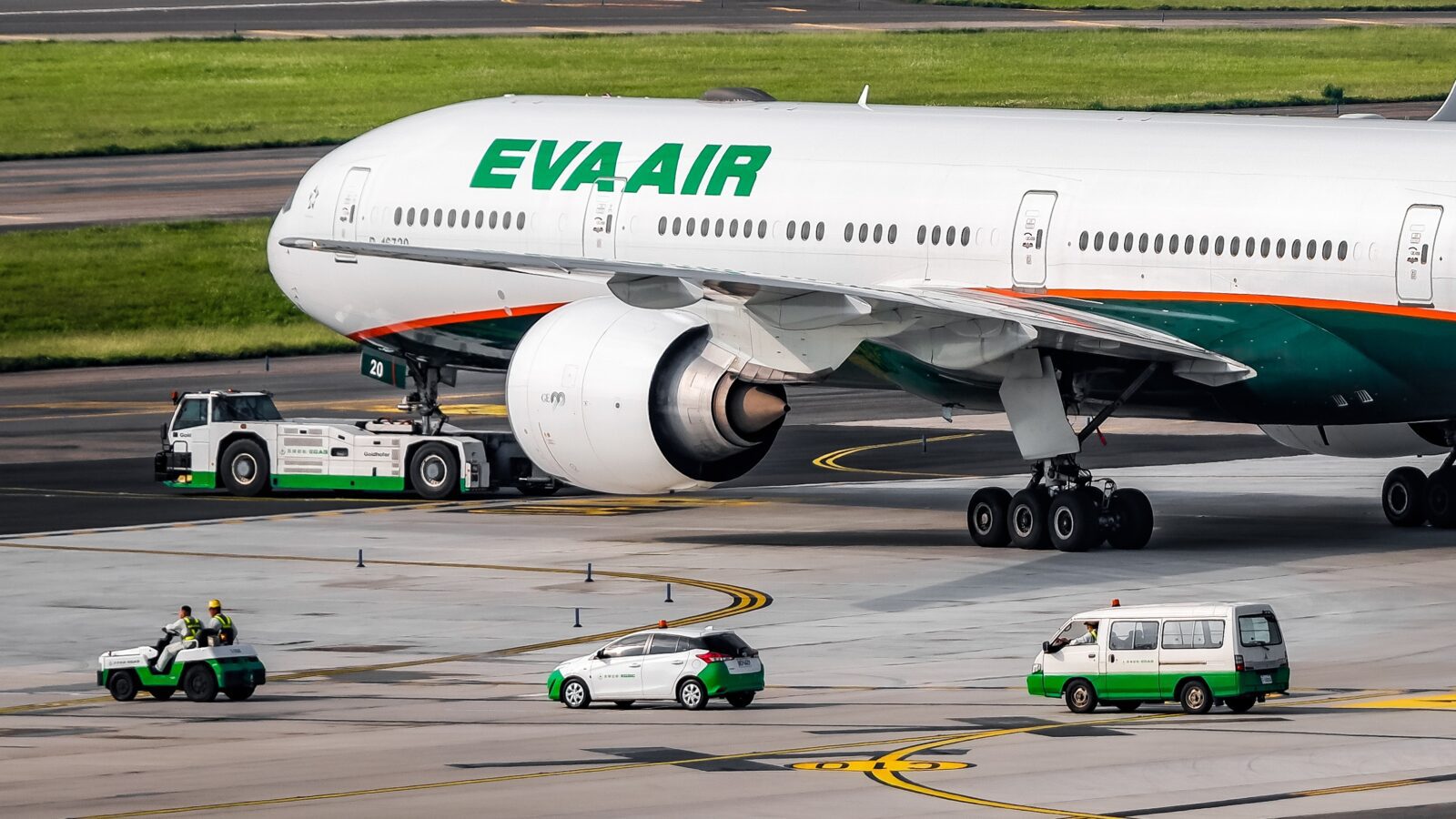
Despite the complicated politics surrounding Taiwan, the island has developed three major homegrown international airlines – EVA Air, China Airlines, and most recently, Starlux.