



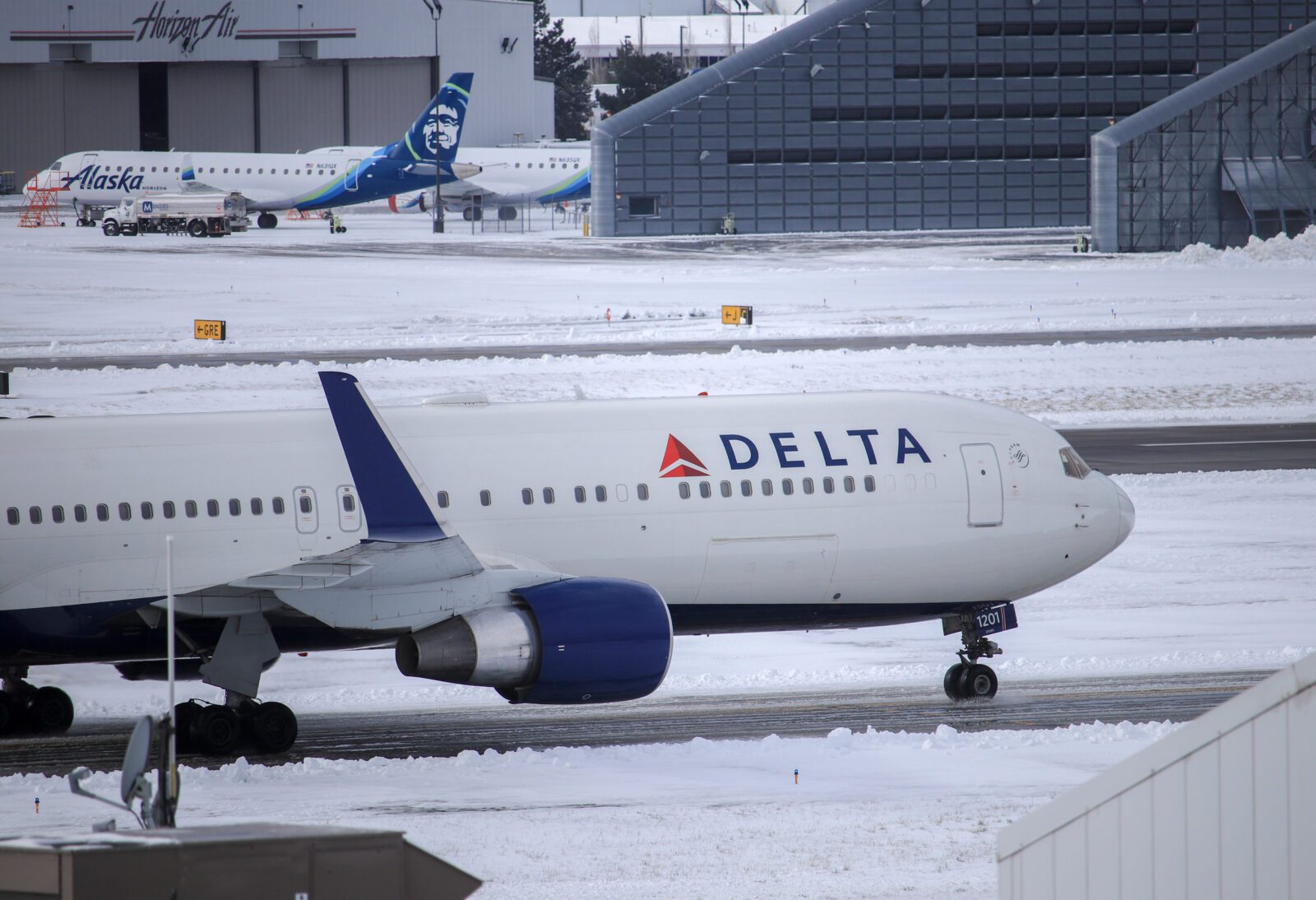
The family of a man who was tragically killed in a horrific accident at Salt Lake City International Airport on New Year’s Day 2024 is now suing the airport operator for negligence, accusing it of not taking commonsense steps to prevent the incident.
30-year-old Kyler Efinger was found critically injured in the engine of a Delta Air Lines plane after his dreadlocked hair was sucked into the blades of the Airbus A220 jet engine. He was pronounced dead at the scene.
Man goes missing at Salt Lake City International Airport
On January 1, 2024, Kyler Efinger had gone to Salt Lake City International Airport to catch a Delta Air Lines flight to visit his sick grandfather in Denver, Colorado. Kyler never made it on his plane and instead ended up dying in the engine of a plane after suffering a manic episode.
According to a newly filed lawsuit, Kyler had been living with bipolar disorder for around 10 years. He would occasionally suffer episodes that made him become disorientated, and that’s exactly what happened on the night he died.
At around 9 pm, Kyler left the gate from which he was due to catch his plane. Surveillance camera footage showed him acting in an increasingly erratic way.
He was spotted walking and running along the moving walkways, sometimes against the flow of other passengers, before entering the Utah Jazz store at the airport at around 9:30 pm.
The store manager would later tell investigators that Kyler was acting so strangely that he sold him a jersey at less than half the ticket price so that he could hurry through the transaction.
After Kyler left the store, the manager noticed that Kyler had left his suitcase. The manager put in a call to Airport Operations about the suitcase, which made two announcements asking the owner to return to the store.
Kyler eventually returned to the Utah Jazz store. By this point, Kyler appeared agitated. He was no longer wearing his shoes and was shouting at the manager about his bag, as well as demanding his money back for the jersey he had just purchased.
The manager offered to process a refund, but Kyler fled the store. He was spotted a short time later by cleaners lying on his stomach on the handrail of a moving walkway. The staff members also allegedly spotted Kyler trying to open the doors at several gates.
Police find victim in the engine of a Delta Air Lines jet
At around 9:52 pm, Kyler succeeded in getting through an emergency exit at a gate area, which led to the restricted area of the airport.
What came next, his family alleges, is a chaotic and bungled response from the airport operator.
The airport alerted police to a possible security breach, but responding officers were not told what door Kyler had managed to access. At one point, officers were told that the emergency door at gate A31 had been accessed, but Kyler had actually accessed the door at gate A4.
It would take around 10 minutes for the responding officers to learn what door Kyler had really gotten through.
By this point, Kyler was in the outside ramp area of the airport. Despite the security breach, however, airport operations were continuing, and pilots were none the wiser to a possible trespasser.
At around 10:07 pm, Kyler ran towards a Delta Airbus A220 that had just been given clearance to taxi for departure after being deiced. The pilot started up the plane’s engines and headed off the deicing pad.
At this point, the pilot noticed Kyler running towards the plane. The pilot killed the engines, but it was already too late. Kyler climbed into the engine cowling, and his dreadlocked hair was sucked into the still-spinning blades of the engine.
Family accuses airport operator of negligence
The family claims that Salt Lake City Airport officials didn’t do nearly enough to prevent Kyler’s death. For example, they allege:
- Airport workers didn’t proactively alert law enforcement about Kyler’s erratic behavior inside the terminal until it was too late.
- They claim the emergency exit that Kyler accessed didn’t have a delay opening system or any form of automatic notification to airport officials that the door had been opened.
- Kyler was then able to access the outside ramp area through a second door that had no form of access control.
- A breakdown in communications between airport officials and law enforcement meant that the search for Kyler was severely hampered.
- Air traffic control and pilots were not informed of the security breach until it was already too late.
Ultimately, the family says they are bringing their lawsuit to prevent a future tragedy of this nature from happening again.
“The notion that an airport was so dangerously designed and operated as to allow this sequence of events generated international attention and shock,” the complaint read.
It adds: “Plaintiffs bring this suit to obtain redress for their unfathomable loss and to prevent future tragedies.”
Bottom line
The family of Kyler Efinger is suing Salt Lake City International Airport after a tragic incident on New Year’s Day 2024. Kyler managed to climb into the engine of a Delta Airbus A220 while the engine was still partially running.
Although Kyler was suffering a manic episode at the time of his death, his family argues that design deficiencies with the airport, as well as a bungled emergency response, ultimately led to his death.


But it was his fault, not the airport’s.
Why do Americans always look for money when things like this happen?