



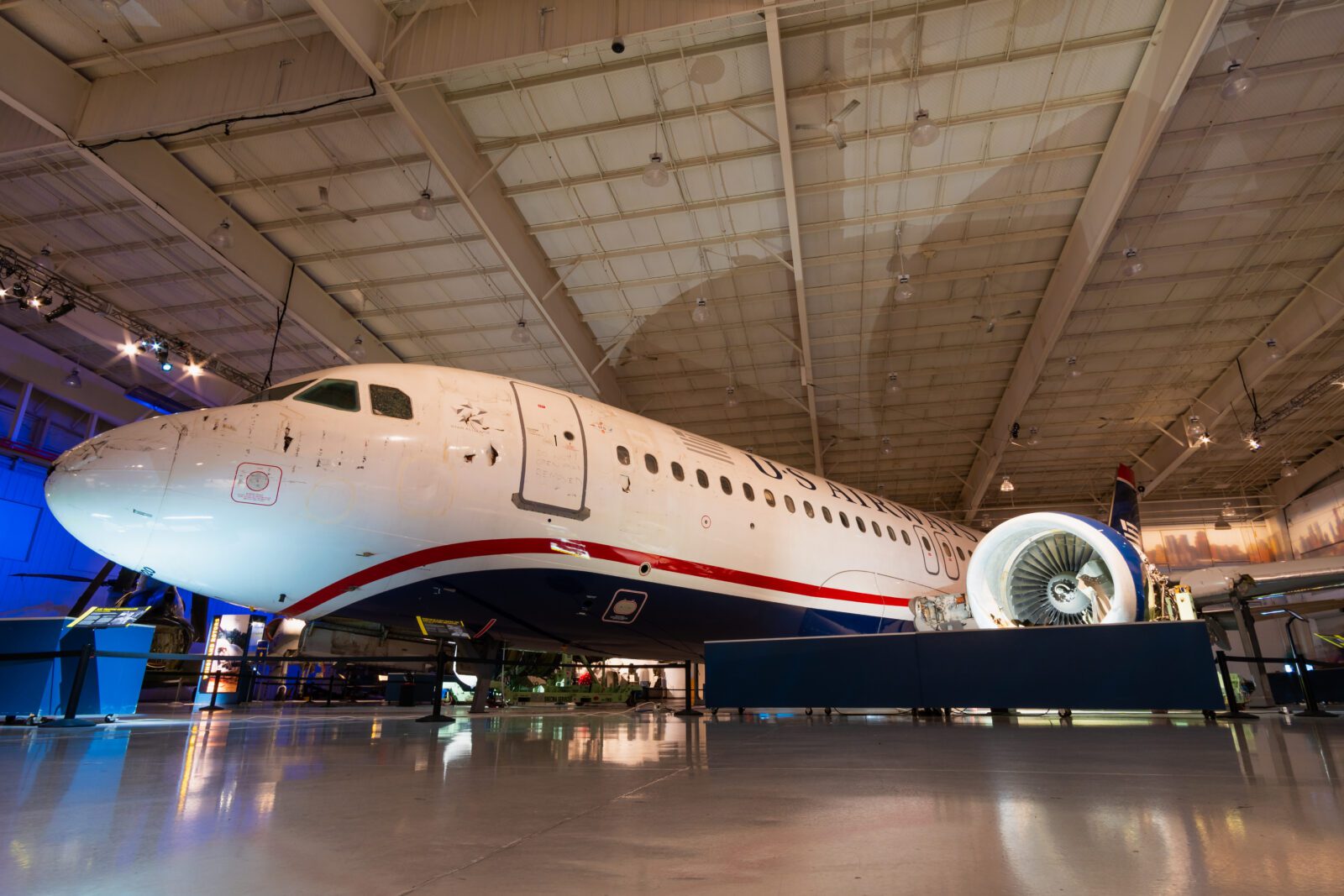
Seventeen years after US Airways flight 1549 crash landed in the Hudson River on January 15, 2009, with the miraculous survival of all 150 passengers and five crew members, one of those survivors has joined American Airlines flight attendants in their fight to increase crew numbers on widebody aircraft.
Universally known as the ‘Miracle On The Hudson,’ the Airbus A320 suffered a catastrophic double-engine failure when the plane hit a flock of Canada Geese just moments after takeoff from LaGuardia Airport.
With the plane now effectively little more than a glider, Captain Chesley ‘Sully’ Sullenberger, decided the only option was to ditch the plane into the icy Hudson River.
Described by accident investigators as “the most successful ditching in aviation history,” everyone on board survived the crash, with Sullenberger, First Officer Jeffrey Skiles, and the three flight attendants all credited for their involvement in the ditching and evacuation.
Miracle On The Hudson crash survivor joins campaign to force U-turn
The Miracle On The Hudson is once again in the news, as one of the survivors has joined flight attendants at American Airlines (which merged with US Airways in 2013) to fight for an increase in staffing levels on widebody jets.
Denise Lockie, who was sitting in seat 2C on flight 1549, has praised the flight attendants, Doreen Welsh, Donna Dent, and Sheila Dail, as being “instrumental” in the crash preparation and evacuation, as they shouted their commands for passengers to brace for impact.
In the moments that followed the crash landing, Lockie describes what happened next: “People were very panicked, you could hear screams, you could hear crying, prayers, then people started rushing to the front galley of the aircraft, not really knowing where to go and how to exit the aircraft.”
“I saw big, strong men not really knowing how to open the doors.”
Then Welsh, Dent, and Dail jumped into action: “They were diligent, they remained calm, and they directed us to do exactly what we needed to do at a time of panic, trauma, and fear.”
What followed was a “textbook” evacuation, according to Julie Hedrick, President of the Association of Professional Flight Attendants (APFA), which represents crew members at American Airlines.
Lockie has joined APFA’s campaign to stop airlines from being allowed to reduce the number of flight attendants on widebody aircraft, saying it’s a matter of “life and death, as far as I’m concerned.”
FAA lets American Airlines staff 787-9 Dreamliner with just seven crew
APFA’s campaign focuses on a recent trend in which the Federal Aviation Administration (FAA) has permitted US-based carriers to operate certain widebody aircraft with fewer than one flight attendant per exit door.
In June 2025, the FAA approved a request from American Airlines to allow its new premium heavy Boeing 787-9 Dreamliner to be operated with just seven flight crew members – one fewer than the eight emergency exits on board
APFA opposed the application, but neither American Airlines nor the FAA heeded the union’s concerns.
Specifically, the union fears that in the event of an emergency evacuation, not all emergency exits could be opened by trained flight attendants, resulting in a significant delay in evacuating a plane that could lead to serious injuries or even fatalities.
“There is no question that an unattended emergency exit hinders the ability for passengers and crew to evacuate safely and efficiently within the 90-second parameter,” the union warned last year.
The union also fears that if the lone flight attendant were incapacitated, then two emergency exits could be left unopened.
Delta and United also have reduced crewing levels on some planes
When American Airlines submitted its application to the FAA, it was simply following in the footsteps of its two main rivals, Delta and United Airlines.
- United secured a minimum flight attendant level of just seven crew members on all of its Boeing 787 Dreamliner fleet, including the larger 787-10 model, which can carry 74 more passengers than AA’s 787P.
- Delta Air Lines was given permission to operate its similarly sized Airbus A330 aircraft with just six crew members.
From an international perspective, European airlines are permitted, under certain circumstances, to operate their Boeing 787s with just six flight attendants on board, although safety regulators across the Pond have a different take on single-aisle aircraft.
While US carriers are permitted to operate Airbus A320 planes (like the one in the Miracle On The Hudson) with just three flight attendants, EU regulations require a minimum crew of four flight attendants.
APFA’s campaign does not, however, aim to address this disparity. The thinking behind this is that on a single-aisle plane its easier for one flight attendant to open both doors on either side of the aisle, although it doesn’t answer what would happen if the lone crew member were incapacitated.
Bottom line
APFA continues to press lawmakers to enact rule changes that would require airlines to staff widebody planes with at least one flight attendant per floor-level emergency exit.
In day-to-day operations, it’s worth pointing out that airlines will staff planes with more than the legally required number of flight attendants so that the onboard service can be delivered.
However, if a flight attendant goes sick at the last minute, and the airline isn’t able to find a replacement in time, then they can still send the plane out.


The a320 comment is interesting but it’s kind of a moot point as the last carrier to operate an a320 with less than 150 seats American will be adding seats soon requiring them to staff it with 4 FAs anyways per FAA rules.