



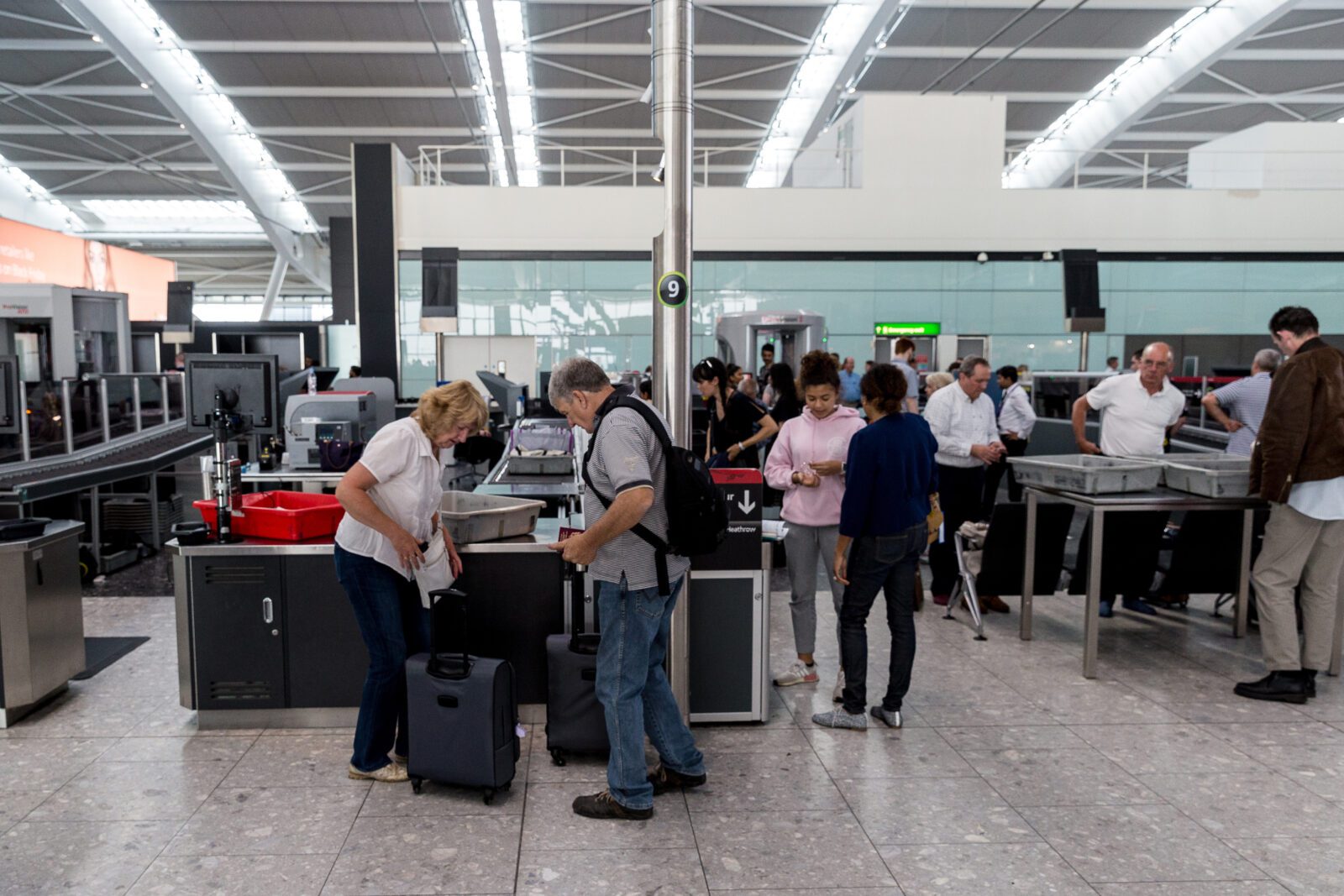
It may have taken two years longer than planned, but Heathrow Airport (LHR) has finally completed the much-anticipated rollout of game-changing security scanners that lift the derided liquid restrictions.
Heathrow becomes the biggest airport with 100% CT scanners
In 2022, the British government ordered UK airports to upgrade their security scanners with next-generation Computed Tomography (CT) scanners that remove the need for passengers to remove liquids and large electronic items from hand luggage.
The idea was not only to make airport security checkpoints safer by introducing upgraded tech but also to make the whole experience a lot easier for passengers by lifting liquid restrictions that had been in place since 2006.
Airports were given until June 2024 to complete the upgrade program, but when that deadline came and went, the government begrudgingly gave Heathrow a 12-month extension.
Unfortunately, it took another six months for Heathrow to complete its rollout, but on Friday, the airport announced that it finally upgraded all of its older X-ray machines to CT scanners.
In doing so, Heathrow claims it is now the largest airline in the world to solely use CT scanners at passenger screening checkpoints. The benefit for passengers is that they no longer have to worry about taking liquids through security or removing laptops and other electronics from their luggage.
Under UK-government rules, passengers are allowed to take up to two liters of liquids through the new scanners, although travelers have been warned not to get caught out if they have to travel through an airport in another country with more stringent restrictions.
Why were liquid restrictions introduced in the first place
The old liquid restrictions were introduced in 2006 after British and American security services foiled a plot to bomb commercial passenger jets on transatlantic flights.
The terrorists behind the plot devised an ingenious way to smuggle liquid explosives through airport security checkpoints by injecting them into otherwise sealed drink bottles.
As security services swooped in to arrest dozens of suspects, the UK military was called in to provide extra protection at Heathrow Airport as overnight travelers were told they could no longer take liquids through airport security.
To minimize the risk of a copycat plot, travelers have been banned from carrying large amounts of liquid with them.
Why did the rollout take so long?
The British government initially proposed having airports upgrade their old X-ray machines to CT scanners in late 2019, with the rollout anticipated to be complete by 2022.
Unfortunately, the COVID-19 pandemic meant that the deadline was quickly pushed back by two years, although even that extended rollout wasn’t nearly long enough for Heathrow.
One reason behind the delay is that the CT scanners are so big and heavy that it was reported Heathrow had to spend a significant amount of time and money to reinforce the flooring in some of its terminals.
Last July, Heathrow said it had taken a £1 billion hit from installing the CT scanners, although the total cost could be higher.
TSA rules out lifting liquids restrictions anytime soon
While the United Kingdom is now well on its way to completely lifting liquid restrictions at all of its airports, the same can’t be said for the Transportation Security Administration (TSA) in the United States.
Airports across the US are working to install CT scanners, but the TSA doesn’t believe it can ease the loathed 3-1-1 liquids rules until the rollout is complete. The latest update was that this isn’t expected to be complete until 2040.
And while Homeland Security Secretary Kristi Noem has pledged to make airport security easier for passengers, so far, this has only meant allowing passengers to keep their shoes on when passing through the TSA checkpoint.
Bottom line
Heathrow Airport has completed the rollout of next-generation CT scanners at all passenger security checkpoints. As a result, passengers no longer have to remove their liquids or electronics from their bags when they pass through the checkpoint.
The amount of liquids that passengers can take with them has also been significantly increased to two liters.