



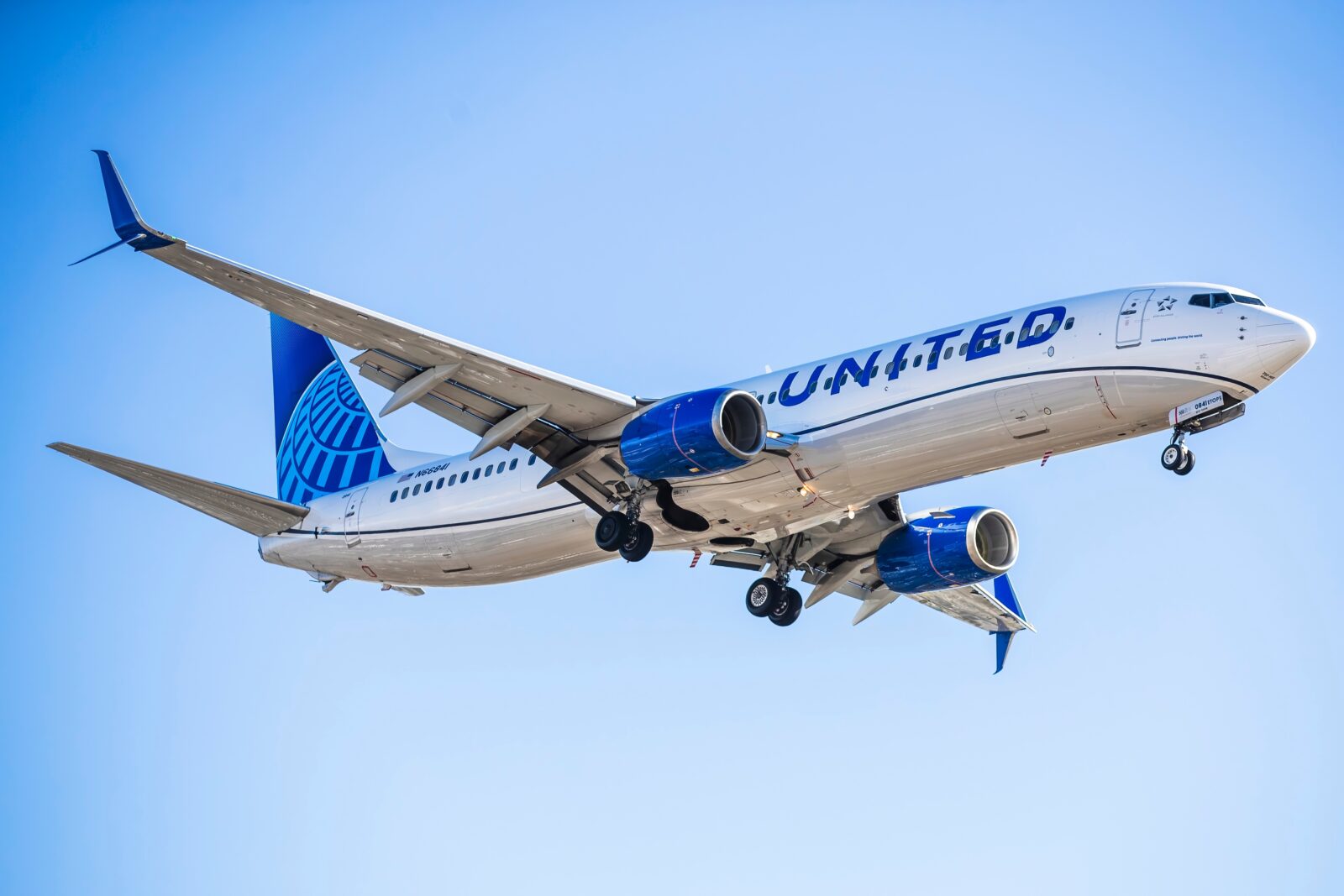
A United Airlines passenger has described the moment he was left in “brain-searing pain” after the Boeing 737 he was on failed to pressurize properly, leaving passengers grasping their temples as they tried to relieve the agony building up in their heads.
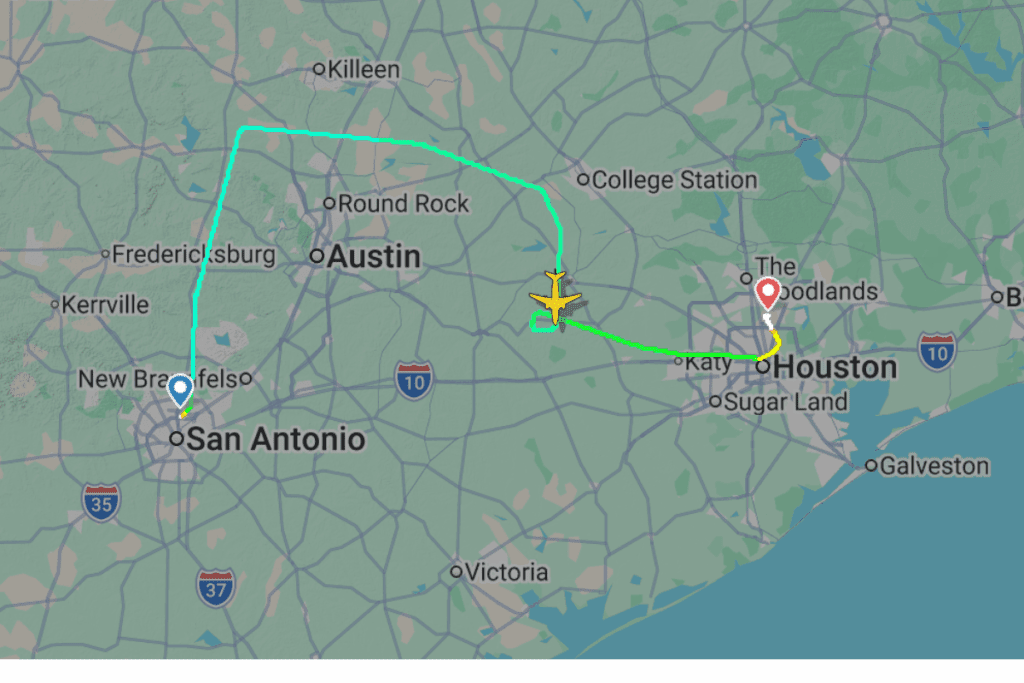
The incident occurred on January 30 as United Airlines flight UA-1332 from San Antonio to Chicago was still in its initial climb for the two and a half hour flight to the Windy City.
The 27-year-old Boeing 737-700 had been in the air for just thirty seconds when the passenger described what happened next:
“I went from feeling completely normal to brain-searing pain. It felt like my eyes were bulging and my eardrums were at the point of bursting. Looking around, I saw other passengers holding their heads and looking around in confusion,” the passenger, who uses a NSFW username on social media platform Reddit, wrote.
“Only after leaning into the aisle and sending a message to the flight attendant with my hands frantically pointing to my head did the attendant make a message saying we don’t have cabin pressure,” the passenger continued.
Data supplied by the flight tracking website Flight Radar 24 shows that the aircraft climbed to a maximum altitude of around 8,700 feet, and had just passed Austin when the pilots suddenly made a hard right-hand turn and dropped to an altitude of 6,625 feet.
UA1332 from SAT to ORD depressurized today and it was AWFUL
byu/just_shit_my_pants inunitedairlines
Although the aircraft was close to Austin at the time of the incident, the pilots elected to divert to Houston, which makes sense given that this is a major hub for United.
“United sent an email immediately after landing saying they would give me 2500 miles as compensation, but honestly, this seems terrible considering the absolutely horrible time I had during the flight and how I still haven’t fully recovered from it,” the passenger continued in their Reddit post.
Several days later, the passenger says his hearing still hasn’t properly recovered.
“I enjoy flying United and have some status with them, but this was terrifying and extremely painful as an experience,” the passenger added.
While unusual, there have been several recent incidents that are remarkably similar to what the passengers experienced on this United Airlines flight.
Jaci Purser from Utah is currently pursuing a lawsuit against Delta Air Lines following an incident on September 15, 2024, when the Boeing 737 she was on experienced a pressurization malfunction shortly after takeoff.
Just like the United incident, Jaci’s plane had just taken off and was in its initial climb out of Salt Lake City when the pilots received a cabin pressurization alert.
One passenger explained his experience to the accident reporting site, the Aviation Herald, saying, “I noticed my ears were popping much more than normal upon takeoff. A few minutes after departure, there was a rapid level off and possible descent.”
“My ears were popping the entire time, and some children behind me were screaming in pain. After a few minutes, we taxied back to a gate where paramedics came on board, where they attended to multiple people with apparent ear pain.”
Another passenger reported that their coworker on the plane had blood coming out of their ear, and this turned out to be a ruptured eardrum. There are reports that between 10 and 15 passengers had to be transported to the hospital.
Jaci alleges that she sustained permanent hearing loss and was “severely injured” by the pressurization malfunction.
Why didn’t the oxygen masks drop?
Although the flight attendants on the United Airlines flight told passengers that the cabin had failed to pressurize, the oxygen masks did not automatically drop, and there’s a very simple reason for this.
Most commercial airliners are pressurized to an altitude of around 8,000 feet, but automatic systems to alert to a pressurization problem won’t activate until around 10,000 feet.
Even then, the oxygen masks won’t automatically drop. This only happens at an altitude of around 14,000 feet, which is the point at which passengers and crew could quickly lose consciousness if they get oxygen supplementation as quickly as possible.
Are 2,500 MileagePlus miles a fair amount of compensation for this incident? Let us know your thoughts in the comments below…


That is the equivalent of $25.00, and is roughly what your co-pay would be at a doctor’s office if you have insurance.
90% of the light aircraft fleet are not pressurized and operate at 10,000’ and below on every flight. Even at 18,000 feet a person’s time of useful consciousness is 20-30 min. A fully functioning pressurization system on many airliners at their operating altitude will have a cabin altitude of 8,000’. A unpressurized climb is not what causes ear pressure issues, it would be the descent. Crews are trained to to use more gradual descent rates when operating unpressurized. This is someone over dramatizing in an attempt Shake down the airline. This is why people hate lawyers who take cases like this and the people who try to hire them.
I routinely climb to 14,000 feet without much difficulty, sherpas in Nepal routinely go above 20,000 feet. When I took my Florida family to 12,000 feet on Trail Ridge they were all hyperventilating and complaining about how sick they felt. The airline is responsible for maintaining a consistent cabin pressure, there is a wide variety of passengers and many can’t tolerate high altitude or sudden changes. Accept responsibility United.
2500 frequent flyer miles is essentially nothing. At a minimum this flight should be free, on a different plane to Chicago. A $1000 voucher or 100,000 miles would be a minimal offer. Go cheap United and the lawyers will clean up.