



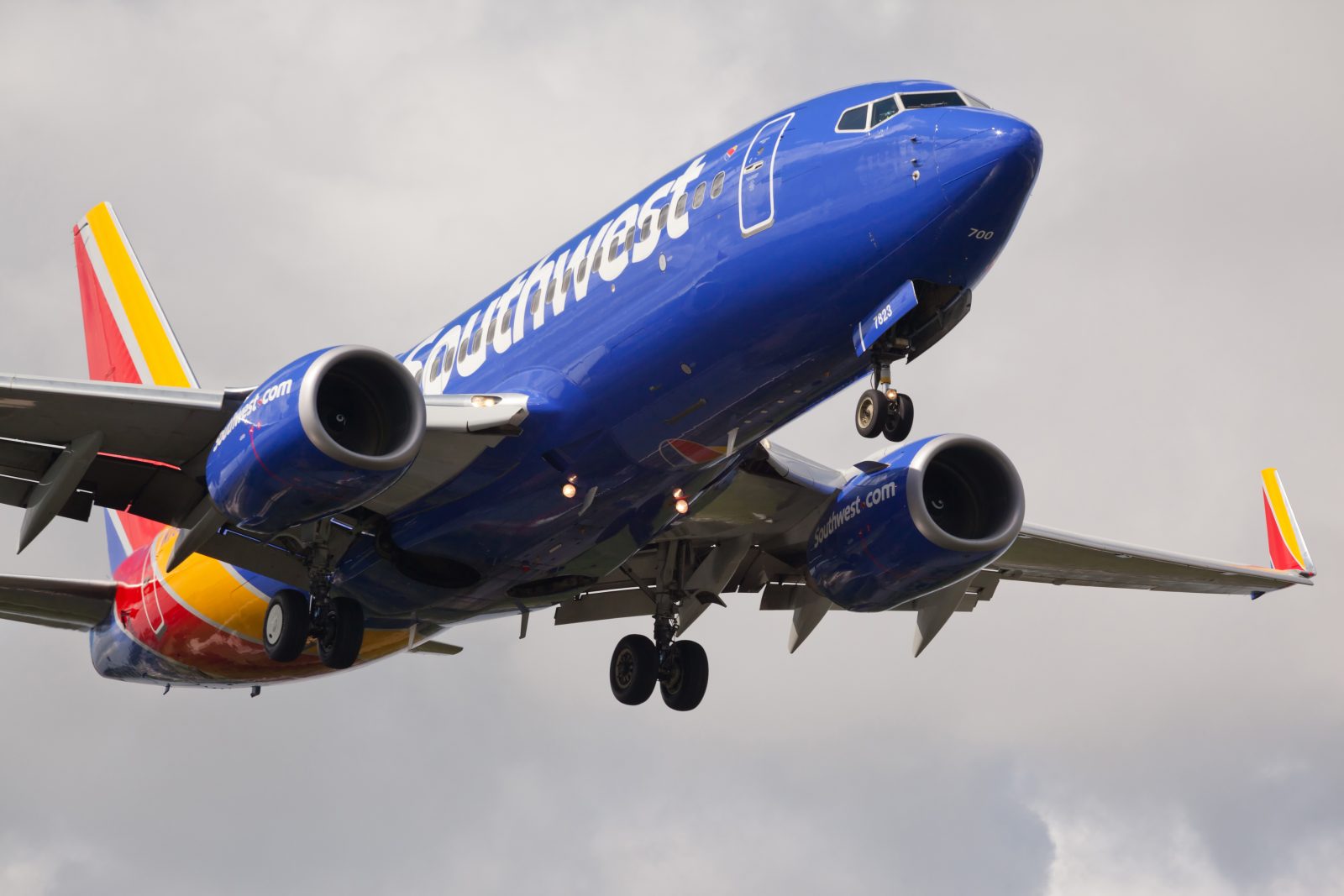
Southwest Airlines has just announced that it is rolling out free, superfast Starlink Wi-Fi across its fleet, and the Dallas-based carrier is setting its sights on an aggressive installation timeline with plans to have as many as 300 airplanes running Starlink by the end of 2026.
The announcement was made at a glitzy event on Wednesday, where Southwest’s Chief Customer & Brand Officer, Tony Roach, said the carrier intends to have the first of its massive fleet of more than 800 Boeing 737s refitted with Starlink internet by the summer.
Last October, Southwest rolled out free Wi-fI across its fleet to all Rapid Rewards loyalty program members, thanks to a sponsorship deal with T-Mobile, but the passenger-pleasing amenity hasn’t quite lived up to expectations.
Unfortunately, Southwest’s current Wi-Fi providers – Anuvu and Viasat – have struggled to provide the bandwidth to provide a fast, reliable connection to everyone on board who wants to stay connected.
Starlink, fast becoming the de facto in-flight internet provider, solves that problem with broadband-quality, low-latency Wi-Fi service that is enabled by a so-called constellation of low-earth orbit satellites.
“We know our Customers expect seamless connectivity across all their devices when they travel,” explained Roach.
“Starlink delivers that at-home experience in the air, giving Customers the ability to stream their favorite shows from any platform, watch live sports, download music, play games, work, and connect with loved ones from takeoff to landing.”
While Starlink is winning over airline customers around the world, the aggressive rollout that Southwest has planned for the service will give it an edge, at least temporarily, over competitors who are locked into contracts with the likes of Viasat.
In the United States, Starlink is currently limited to United Airlines and Hawaiian Airlines, although United’s rollout has only just started on its mainline fleet after the carrier chose to first prioritize its regional aircraft.
Alaska Airlines has also installed Starlink on some of its regional aircraft, while only last month, the Seattle-based carrier announced an accelerated rollout across the rest of its fleet, which is expected to be complete next year.
JetBlue, meanwhile, has signed a contract with Amazon’s rival LEO satellite internet service, although that isn’t expected to go live until 2027 at the earliest. American Airlines remains in talks with Amazon LEO, and a deal has not yet been finalized.
After months of criticism over major changes that Southwest has made to its business model, the airline is no doubt hoping that the Starlink deal will win back its once loyal customers who vowed never to fly with it again.
Starlink is not only much faster and more reliable than traditional in-flight Wi-Fi services, but it can also bring cost savings for airlines. The antenna that sits on top of the aircraft fuselage is much lighter and low profile, reducing drag and fuel burn.
Airlines have also reported that installations are much faster than traditional internet services, reducing downtime while the refit process takes place.
Given that Southwest has no intention of installing seatback screens on any of its planes, Starlink will give customers the ability to stream TV shows and play internet-based games without interruption.
Starlink also offers a Live TV subscription, although it remains unclear whether Southwest has chosen this add-on. So far, the only airline to have confirmed that it will enable Live TV through Starlink is the Dubai-based mega airline Emirates.


Not needed. Not a priority. What IS a priority is IPEN SEATING andvBAGS FLYBFREE, once again. And btw, anyone not intelligent enough to know their ABC’s tonthe 3rd letter, and also count from 1-60, need to just fly the low IQ aitlinescsuch as AA, Delta, and United, where you will be TOLD where to sit. Swa did, after, be known as the high IQ passenger airline since they could all recite tgeirvABC’s and count to 60. Also, I love all the dweebs who are unable to sit on an airplane for 1-3 hours without their computer or smart phone. I simple have so much keeping my window shade wide open and hearing them whine about too much bright light. Truly one of life’s great pleasures.