



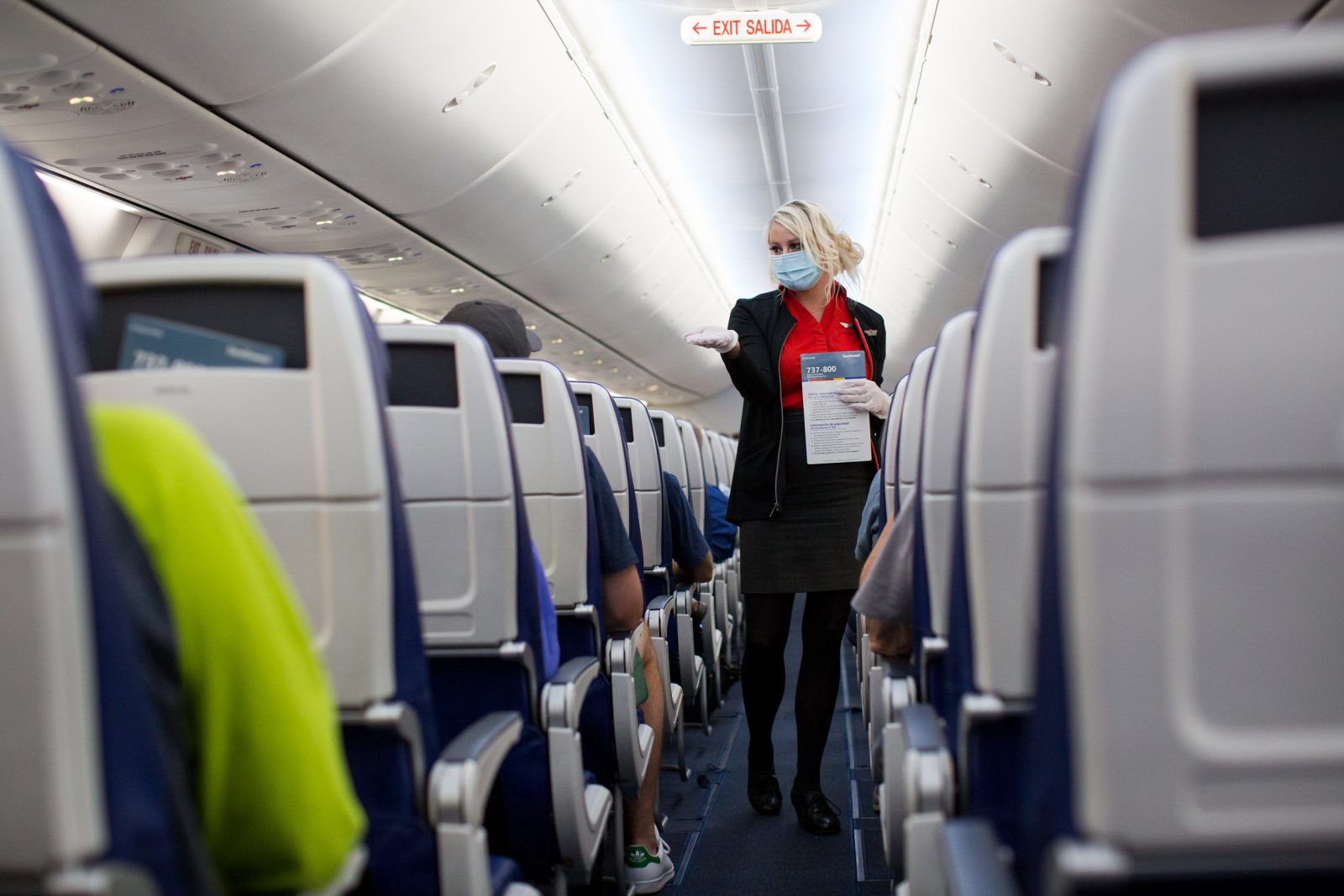
On January 27, Southwest Airlines ended an iconic 50-year tradition when it made the switch from open seating to assigned seating, but the change has not been without hiccups, leaving some passengers frustrated and demanding changes already.
While assigned seating is hardly a new concept, it has come as a bit of a shock not only to Southwest’s regular passengers but also to many of the Dallas-based carrier’s flight attendants, who have never known anything but open seating.
Passengers would board and take whatever seat they fancied. If a more spacious exit row seat or a front row seat were open, they could take it, and seat swaps were nothing unusual.
In preparation for the changeover, Southwest’s flight attendants had to complete mandatory assigned seating training, and it appears that some crew members either didn’t fully understand the assignment or clicked through the slides a little too fast.
Officially, Southwest still allows passengers to swap seats, but only under the following conditions:
- Given that Southwest is now monetizing exit row seats, front row seats, and extra legroom seats, the swap must be within the same fare and zone as the passenger’s original seat assignment.
- Swaps can only take place when the seatbelt sign is off.
Southwest has added an additional layer of complexity to the swap process because flight attendants have been told they can’t just leave passengers to sort the swap out amongst themselves.
Instead, crew members are meant to register the swap via an app on their airline-provided mobile phone.
But while swaps are, very much, still allowed, some customers are reporting a very different experience on board.
On Wednesday, CNN contributor and regular Southwest flyer, Brad Todd, slammed the airline in a post on X, saying he had been denied the opportunity to switch seats on a nearly empty plane despite the fact that another passenger had been assigned the middle seat next to him.
There was plenty of room for Brad and the other passengers to spread out, but the flight attendants reportedly made them sit next to one another in their assigned seats for the duration of the flight.
“In a totally empty late-night plane, a Southwest Airlines flight attendant just refused to let me sit anywhere except the row where my ticket is, and where someone inexplicably bought the middle seat,” Brad wrote.
“As an 80+ segment a year business flyer, you’d better fix this nonsense SWA [Southwest Airlines].
Brad included a selfie of himself on the plane, showing row upon row of empty seats that he could have moved to.
Now, there are some circumstances when a seat swap isn’t possible. This is commonly due to weight and balance purposes on lightly loaded flights, where passengers will be specifically positioned in certain rows, while sections of the plane are off-limits.
That being said, the weight and balance argument on an aircraft like a Boeing 737 only applies for takeoff. There is really no need to keep passengers in their assigned seats for weight and balance purposes after the aircraft has taken off.
Could the plane be at risk of ‘tipping’ over once on the ground? Well, potentially, but then that problem can be resolved by moving passengers back to their original assigned seats for landing.
Southwest’s move to assigned seating hasn’t been without other issues. Most notably, given that the airline no longer offers free checked baggage, the rush for passengers to stow their belongings in the overhead bins.
Customers who have paid extra to sit up front in the first few rows of the plane are discovering that the overhead bins are already full when they get on board, even though they are some of the first people to step foot on the plane.
To make matters worse, passengers are only now realizing that there is a full-sized overhead bin above rows 2 and 3 on many of Southwest’s planes that can’t be used because it’s for flight attendant baggage only – it even comes with a lock and key to make sure passengers can’t gain access.
These ‘crew only’ overhead bins are not new. In fact, they’ve been present on Southwest’s 737-800s and 737-MAX jets for some time, but passengers never used to pay them any attention because overhead bin space wasn’t an issue until the airline started to charge for checked luggage.
Naturally, passengers want to have their belongings close to them, but when the overhead bins are already full, customers in the first few rows are reporting traipsing all the way down to row 12 to find space for their carry-on.
This quickly becomes an issue for Southwest, not just from a disgruntled passenger’s point of view, but because boarding and deplaning are delayed as passengers fight their way up and down the aisle to stow and retrieve their luggage.
But while assigned seating and paying for checked luggage isn’t anything new for most of the US aviation industry, this does mark a huge change for Southwest, so teething problems should be expected.