



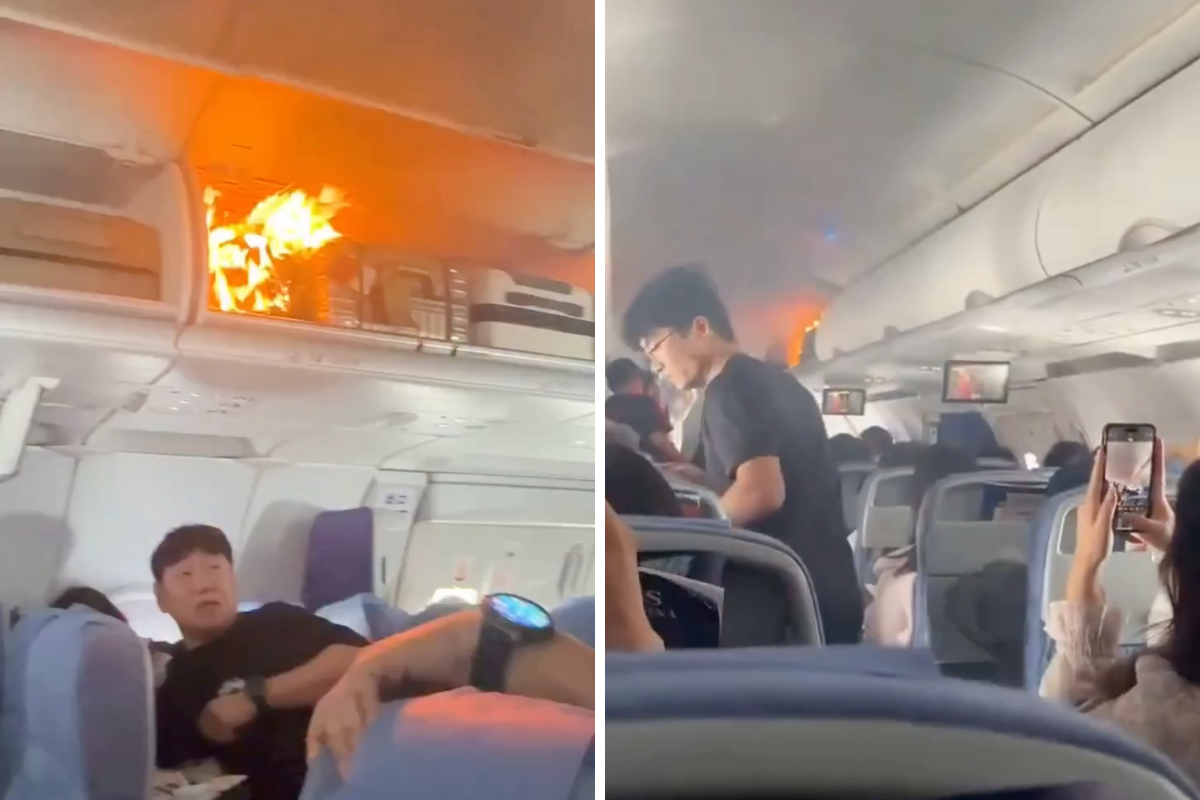
In January 2025, an Airbus A321 airplane operated by Air Busan, which was preparing for departure from Gimhae International Airport in Busan, South Korea, was completely gutted in a blaze that was traced to a passenger’s lithium battery that overheated during boarding.
176 passengers and crew members were forced to evacuate the aircraft via emergency slides as the flames quickly spread from an overhead bin to the surrounding cabin.
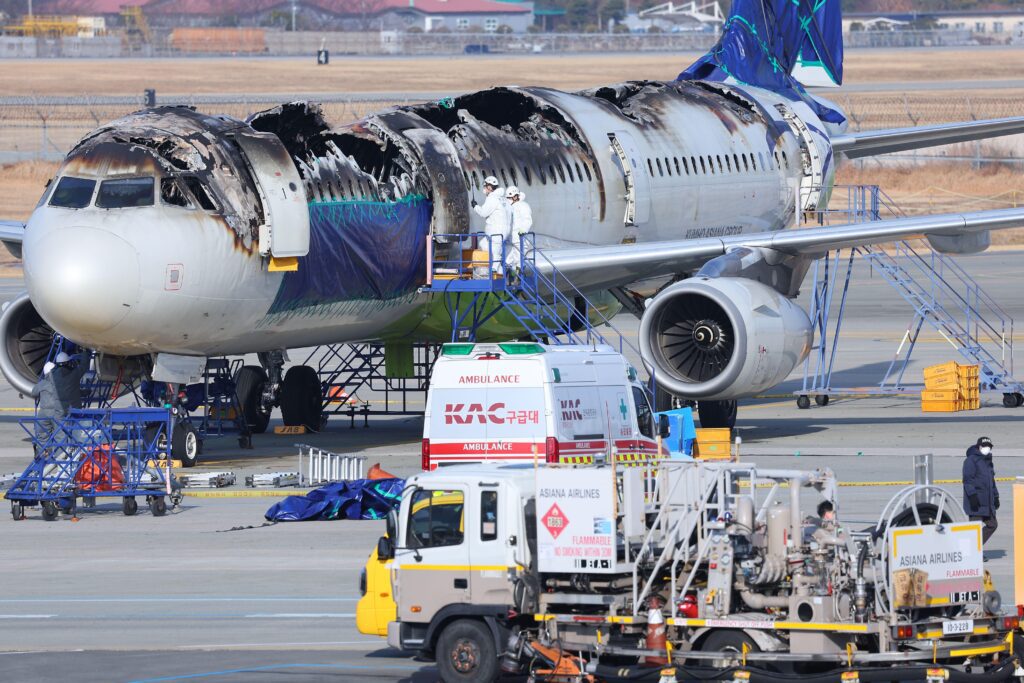
Thankfully, only three passengers sustained minor injuries in the evacuation, while four crew members were treated for smoke inhalation. The aftermath of this serious incident could have been so much worse.
So bad, in fact, that in the wake of this accident and a slew of other less serious lithium battery fires, a slew of airlines took quick action to change their rules over how passengers transport and use devices with lithium batteries, especially portable battery packs.
What’s perhaps surprising, though, is that outside of Asia, only a handful of major international carriers have, so far at least, changed their rules.
And that’s not because they are ignoring the issue. Instead, it’s simply down to the speed at which aviation regulation often progresses.
Rather than taking unilateral action that could create a confusing patchwork of regulations from one airline to the airline, many carriers decided they would wait until an industry-wide review was completed.
That review was conducted by the International Air Transportation Association (IATA), which represents the vast majority of global carriers, creating standardized regulations that are implemented by its members as a minimum safety standard.
Earlier this year, IATA completed its assessment of the dangers posed by lithium batteries and decided that changes were required.
Until now, IATA had banned passengers from packing lithium batteries in their checked luggage, but the new regulations go much further, with a focus on power banks, given that these pose the most serious safety risk:
- Power banks cannot be used to charge devices on the plane.
- The in-seat power supply cannot be used to charge a power bank.
- Passengers can only carry a maximum of two power banks.
- Power banks and any other item with a lithium battery must be kept close to the passenger – ideally in the seat pocket or under the seat in front.
- Power banks must display battery specifications and cannot exceed a maximum capacity of 160 watt-hours.
So far, however, surprisingly few airlines have so far adopted these guidelines. The most prominent international carrier to have changed its own internal policies to mirror the IATA guidelines is the Australian flag carrier Qantas.
But that’s not to say that other airlines aren’t going to follow suit over the next few months. In fact, we should expect a wave of additional airlines to update their power bank rules in the not-too-distant future.
The simple reason is that rewriting internal policy books and getting them signed off can take some time. The real question is whether some airlines that already adopted their own more stringent rules will also update their guidelines to match the IATA regulations.
For example, Emirates decided not to wait for IATA to finish its own review when it implemented its new power bank policy last October. The Dubai-based carrier went even further than IATA by banning customers from carrying more than just one power bank on board with them.
The important thing to remember is that the IATA regulations are generally considered to be the minimum level of compliance, and airlines often go even further… either on their own accord or because their national regulator requires stricter rules.
Even with many airlines being slow to adopt the new IATA guidelines, it can’t be overstated how important it is for passengers to be aware of the dangers posed by lithium batteries, and in particular, power banks.
Ideally, keep your power bank within view or easily accessible at all times. Should it overheat or start bulging, immediately alert a flight attendant so that the battery can be isolated before it starts to emit smoke or flames.