



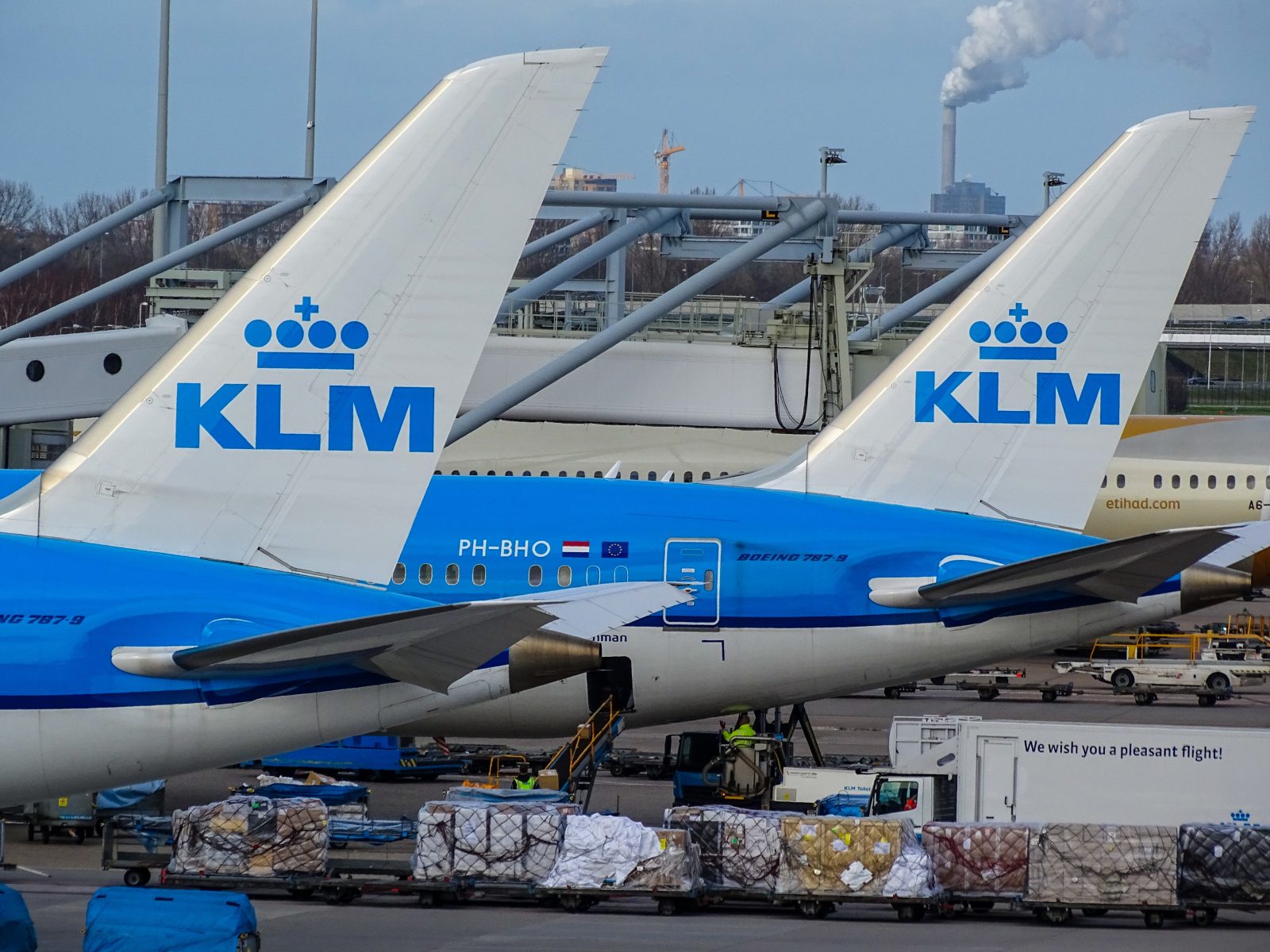
Soaring wage bills for aircrew at the Dutch flag carrier KLM, and an inflation-busting bonus package for its chief executive, are proving to be incredibly controversial in the Netherlands, where the country’s finance minister has vowed to object to the bonus at the airline’s next general meeting.
It’s no secret that KLM’s financial performance has lagged behind other European competitors, and that of its partner, Air France, with the airline reporting a profit of just €416 million in 2025 on the back of revenues of €13.2 billion.
Part of the reason for KLM’s poor financial performance is the tough market conditions it faces at its home hub at Amsterdam Schiphol Airport, where the Dutch government has repeatedly tried to curtail growth, but staff costs are also increasingly seen as a major issue.
In 2024, KLM admitted that it needed to start cutting costs to address its financial position, which included nearly 250 job cuts at its head office, as well as productivity improvements, and slashing non-safety-related investments.
During this same time, however, staff costs have still increased by 4.3%, and attention is turning to the huge wage bill KLM faces for its pilots and cabin crew.
KLM’s short-haul pilots reportedly earn an average of 17% more than their peers at similarly sized European rivals like British Airways and Lufthansa, despite similar living costs in the UK and Germany.
Meanwhile, the wages of KLM cabin crew continue to massively outstrip those at other European carriers, including Air France.
It’s believed that a purser (head cabin crew) at KLM earns on average as much as 50% more than their peers at other full-service carriers across the continent, where airlines pushed through painful wage adjustments over the last two decades.
KLM hasn’t attempted to completely overhaul its wage structure for cabin crew, meaning that flight attendants at the airline are relatively well paid, with more generous terms and conditions than their counterparts at other carriers like Iberia and British Airways.
Even some recent cost reduction methods would certainly raise eyebrows at other airlines. Notably, KLM has agreed on an 80-90-100 scheme with cabin crew unions in which veteran flight attendants work 80% of a full-time roster, but earn 90% wages, and accrue 100% in pension contributions.
And while wages remain relatively stagnant, the airline did recently agree 3.25% cost of living pay rise, which stretches through to January 2027. The agreement also included a €750 one-off payment in January.
Most of the controversy, however, is over chief executive Marjan Rintel’s bonus, which surged by €400,000 to nearly €1 million in 2025.
Finance Minister Eelco Heinen slammed the bonus as “out of proportion” given KLM’s recent difficulties. As a minority stakeholder in the airline, the Dutch government says it will register a formal objection to Rintel’s bonus payment at the airline’s next general meeting.
Wage bills for aircrew can vary massively from one country to the next
Given that flight attendants generally all do the same job, you might think that wages, adjusted for cost of living, would be relatively stable across the industry. How wrong you would be!
Flight attendant wages can vary massively from one country to the next, without any seeming reason for the disparity.
Generally speaking, European airlines have moved towards much lower wages for flight attendants in the last couple of decades. In the United States, the top-out pay rate for veteran crew members far exceeds anything that a European crew member might earn, but the road to get to this point is long and painful.