



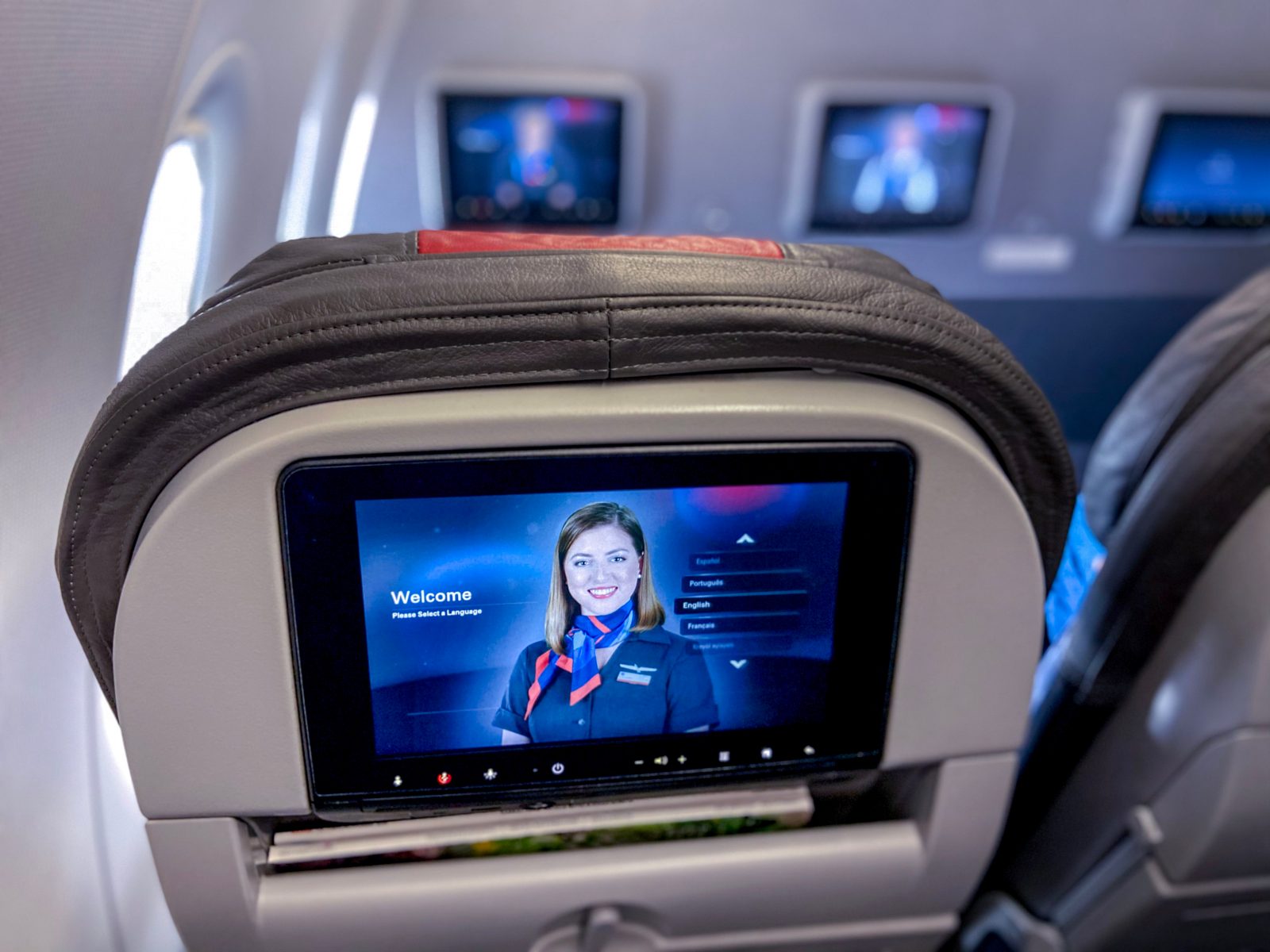
- American Airlines has confirmed a multi-million-dollar reversal of its 2017 decision to strip seatback screens from narrowbody jets, though the new screens won’t start arriving until 2028.
- Why the rollout won’t begin until 2028, and how long full fleet installation across more than 800 narrowbody aircraft is expected to take.
- The tech specs American is promising, including 4K displays and USB-C charging at every seat.
- How the seatback U-turn fits into a wider premium push, with domestic First Class seating set to grow from a quarter to 40% of the narrowbody fleet.
- Why United made the same reversal back in 2021 after also betting big on BYOD entertainment.
Back in March, it was revealed that American Airlines was “seriously considering” installing seatback screens across its narrowbody airplane fleet after taking the controversial decision to rip them out in 2017. On Tuesday, the Texas-based carrier announced a multi-million-dollar U-turn as it seeks to better compete with Delta and United Airlines.
Unfortunately, though, passengers will have to be patient as the return of seatback screens to narrowbody planes isn’t going to happen overnight. In fact, the first narrowbody aircraft with seatback entertainment won’t enter American’s fleet until 2028.
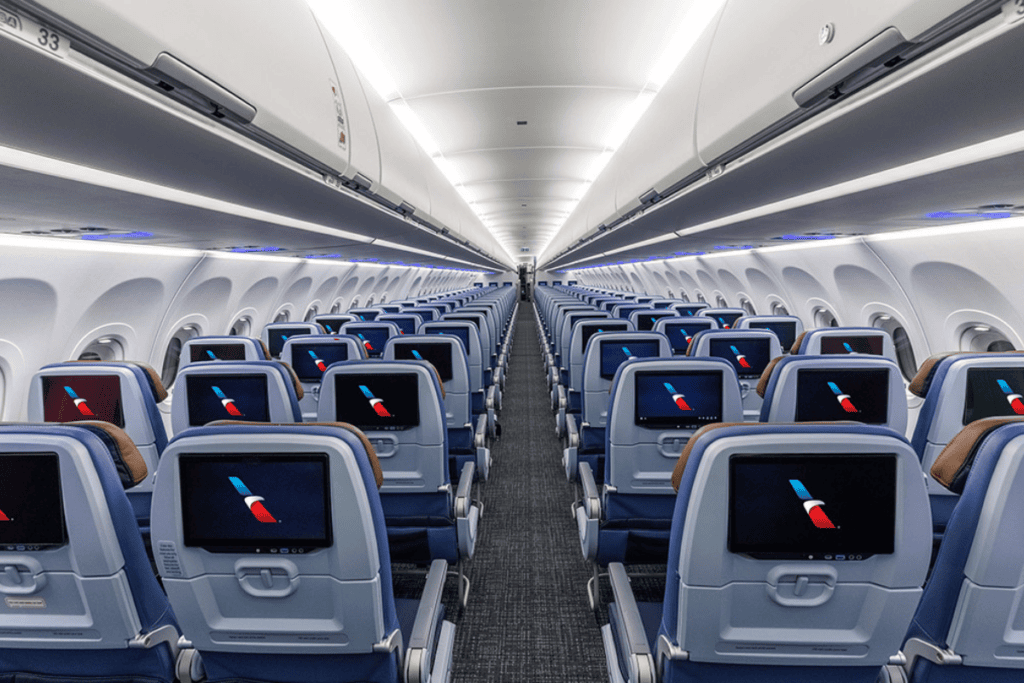
That’s the point at which every new Airbus A320 series aircraft and Boeing 737 jet that is delivered to American Airlines will have seatback entertainment installed as standard. At the same time, American Airlines will start retrofitting its existing fleet to have seatback TV screens installed.
Unsurprisingly, this project could take some time to complete, but the airline is painfully aware that it needs to race to keep up with its premium rivals, so is promising to complete the rollout “as quickly as possible, with full fleet installation of more than 800 mainline narrowbody aircraft expected to be complete by early next decade.”
Once installed, however, the carrier is promising ‘industry-leading’ screen sizes, 4K definition, Bluetooth headphone pairing, an expanded range of content, and USB-C fast charging ports at every seat.
We’re making one of the most significant investments in the onboard experience in our history. From next-generation seatback entertainment at every seat to substantially more premium seating options, these enhancements will give our customers more ways to relax, stay connected and enjoy their journey.
Heather Garboden, Chief Customer Officer, American Airlines
American Airlines entered its failed era of screenless narrowbody aircraft in 2017 when it took delivery of its first Boeing 737MAX-8 airplane with a new-look interior, which featured smaller lavatories and less legroom in coach.
Despite widespread criticism of the new look, the following year, American Airlines rolled out the concept on older planes as part of its so-called ‘Project Oasis’ retrofit project.
At the time, American Airlines believed that it needed to compete against discounters like Frontier Airlines and Spirit Airlines with a vast domestic network and low fares.
In the years since, American’s profit margins have been eaten away, while Delta and United steal high-spending passengers looking for a premium experience.
Even as it became crystal clear that American’s strategy was failing, executives refused to concede that Project Oasis was a costly mistake that had to be reversed.
Tuesday’s announcement is part of a wider pivot towards premium passengers, with the airline also announcing a major increase in the number of premium seats across its narrowbody fleet.
At present, premium seats account for around a quarter of all seating on American’s narrowbody fleet. In the future, premium seating will grow to around 40% of available seats.
This process has already started with retrofits of older Airbus A319 and A320 aircraft. Domestic First Class cabins on reconfigured airplanes will increase in size as follows.
- The A319 goes from 8 First Class seats to 12 First Class seats.
- The A320 goes from 12 First Class seats to 16 First Class seats
Upcoming deliveries of Boeing 737 MAX 10 aircraft will have 24 First Class seats, while the airline has also promised more First Class seats on yet-to-be-delivered Airbus A321 airplanes. Along with more First Class seats, American will also install more Main Cabin Extra seats.
Despite being an incredibly expensive mistake, American’s decision to abandon ‘Project Oasis’ will give it a structural advantage: passengers will know that the seatback TV screens on American’s narrowbody planes will be some of the newest in the industry.
What’s interesting is that just a few years ago, airlines were betting big that seatback screens, especially on narrowbody planes, were a thing of the past. Airlines proposed BYOD (‘Bring Your Own Device’) was the future, with free streaming entertainment to a passenger’s iPad or cellphone.
United realized it had wrongly embraced the BYOD era several years ago, starting the process of reinstalling seatback screens on its narrowbody fleet back in 2021.
Want to see more stories like this? Add PYOK as a preferred source on Google, and we'll show up more often in your searches and Google News.
Add PYOK as a Preferred Source