

- Flight attendants working Alaska Airlines’ new long-haul Boeing 787 routes have filed a formal grievance, saying management broke its own agreement by loading up the Main Cabin with new products after the union had signed off on the service flow.
- What the union agreed to during testing, and the extras management added afterward without retesting, including alcohol for purchase and warm cookies.
- Why crew say months of feedback during a 30-day observation period led to no changes from management.
- The union’s ultimatum: increase staffing, or agree to a simplified service standard that matches the crew actually provided.
- How this fits into Alaska’s plan to fly to 12 long-haul destinations from Seattle within the next few years.
Flight attendants working Alaska Airlines’ new long-haul Boeing 787-9 Dreamliner flights from Seattle to London, Rome, and even further afield to Tokyo and Seoul say the carrier is putting “unsustainable” pressure on them and has failed to listen to months of feedback.
Alaska Airlines has invested a lot of money into its new long-haul operation, which came about following the acquisition of Hawaiian Airlines into the Alaska Airlines Group.
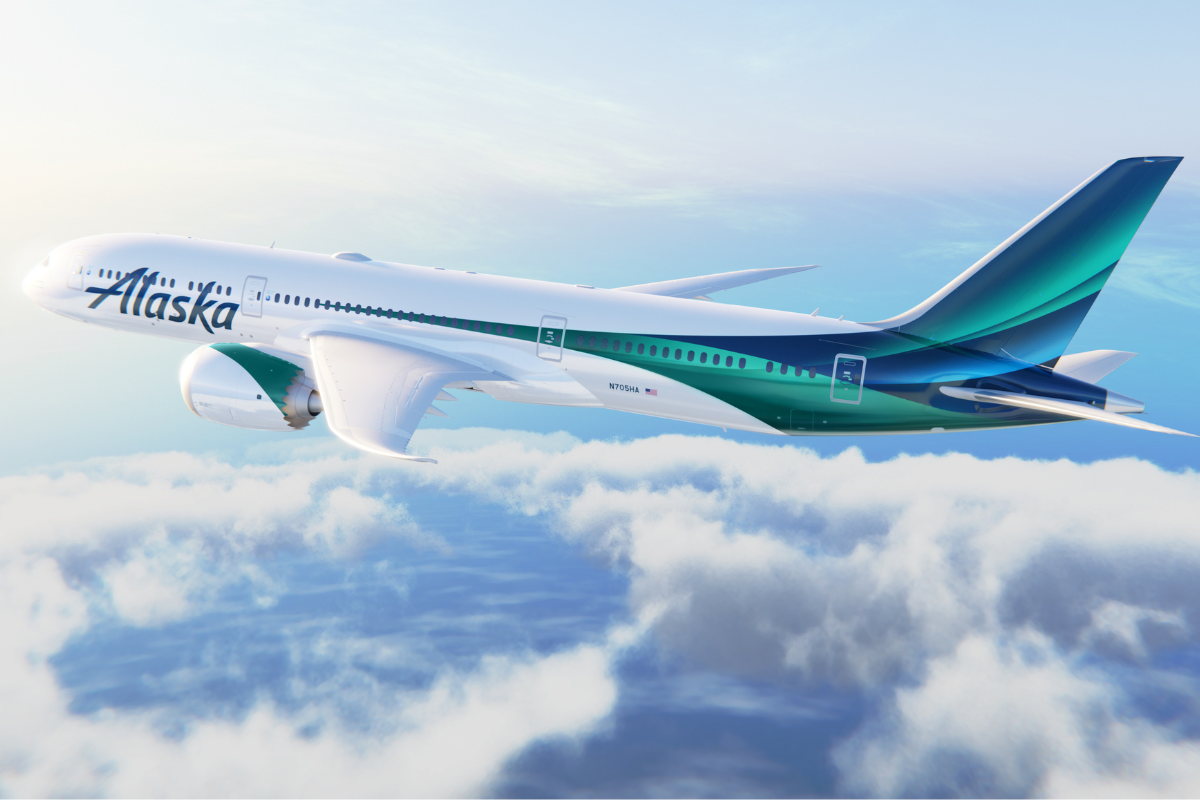
The airline took control of Hawaiian’s Boeing 787 Dreamliner fleet and moved these planes to its home hub at Seattle-Tacoma International Airport, where they were repainted in a new ‘Global’ livery but bearing the name of Alaska Airlines.
The airline is using ex-Hawaiian Airlines flight attendants to operate these services, given they were already trained to work on board the Boeing 787, although the carrier has developed its own service routines – its first ever attempt at long-haul service.
Alaska Airlines adopted a ‘train service’ as its service flow on long-haul international flights, whereby flight attendants work through the entire cabin from front to back on beverage and meal carts. When initial testing took place, the union signed off on the service routine on the proviso that no extra service elements would be added.
Following this sign-off, however, Alaska Airlines “introduced several new products and services in the Main Cabin—such as premium-class offerings, status recognition, expanded beverage options, alcohol for purchase, and both ice cream and warm cookies—without the opportunity for further testing.”
When the first flights featuring these new service routines took off to Rome in April, Alaska Airlines said there would be a 30-day ‘observation period’ to see what worked, and what might need to change. Flight attendants provided their feedback on how to improve the service flow, but, according to the Association of Flight Attendants (AFA-CWA), nothing changed.
Management’s response to Flight Attendants has consistently been: Make it work.
Association of Flight Attendants–CWA, internal memo
The observation period concluded on May 28, but “months later, management has offered no resolutions to ease the demands of an operation they refuse to resource properly, citing claims of needing more data,” an internal memo from the union slammed.
“Management has repeatedly shown they can react swiftly to passenger feedback—highlighting that changes can be made, but they simply choose not to. Instead, management’s response to Flight Attendants has consistently been: Make it work,” the memo continued.
Normally, when we see complaints from flight attendants about service routine issues, it’s about the premium cabins, but in this case, crew members say their biggest challenge is the Main Cabin service routine.
“Current main cabin staffing levels currently make it impossible to deliver on management’s promises. We will not stand by while our professional standards are compromised due to their unwillingness to invest the necessary resources needed to make their service model work,” the memo blasted.
The union has made it clear that either staffing levels are increased on long-haul services or the Main Cabin service routine is simplified.
“If management expects a certain level of service, it must provide the staffing necessary to deliver it. They face a clear choice: increase staffing to meet their service goals, or work with our Inflight Service Committee to establish realistic service standards that actually reflect the staffing provided. Until they choose one, we will not accept being set up for failure.”
While flight attendants often complain about the service routine that airlines create, there isn’t a lot they can do about it. In this case, however, the Hawaiian Airlines crew members say Alaska Airlines is breaching their contract, which “requires mutual agreement on inflight service requirements.”
Last week, the union filed a formal grievance challenging Alaska Airlines’ refusal to work with its Inflight Service Committee on changes to the Main Cabin service routine.
Within the next four years, Alaska Airlines plans to be flying to 12 long-haul, international destinations from Seattle-Tacoma, turning the airport into its global hub. The airline acquired five Boeing 787 Dreamliners as part of the acquisition of Hawaiian Airlines, and has ordered 12 more 787 Dreamliners, five of which will be the stretched -10 variant.
For now, ex-Hawaiian Airlines flight attendants will continue to work on Alaska’s Boeing 787 fleet, but eventually, all flight attendants within the Alaska Airlines Group will work under a single collective bargaining agreement.
At that point, a flight attendant’s assigned base will dictate which airline brand and what aircraft types they will work on.
Want to see more stories like this? Add PYOK as a preferred source on Google, and we'll show up more often in your searches and Google News.
Add PYOK as a Preferred Source

It’s the norm nowadays with airlines. Minimum crew to try and give a better service. Doesn’t work. American airlines is doing this by a side agreement from COVID days when there were layoffs and light loads. But the union forgot to put a back to normal crew size return date. Now AA flights are full. They want the service to be precovid again. But won’t put back the regular crew size. It’s makes for better, more efficient service.