



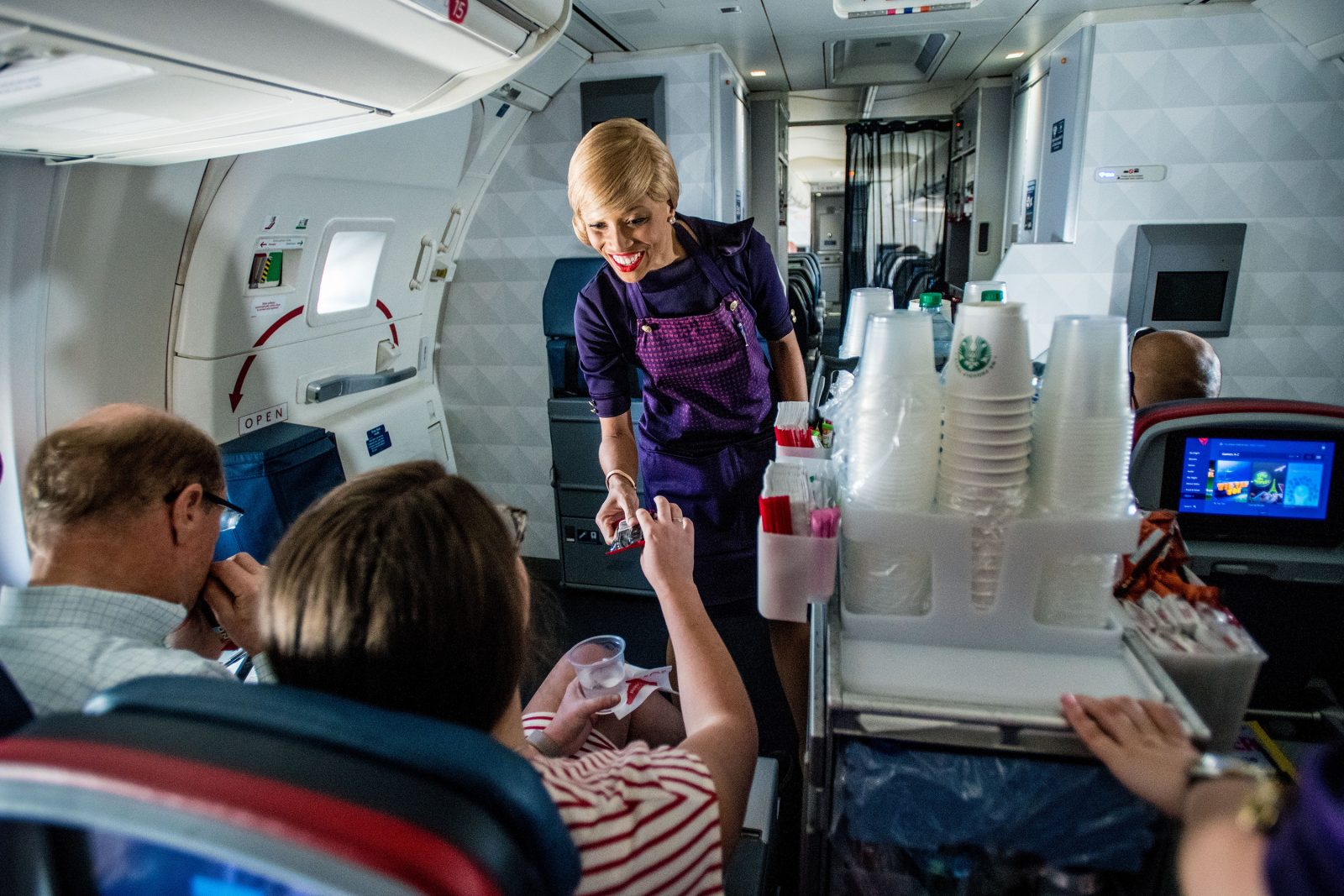
Flight attendants on a recent Delta Air Lines flight from Minneapolis-Saint Paul to Tokyo blocked an unruly passenger from causing any more disruption by using beverage carts to trap him in his seat as the pilots declared an emergency and diverted the aircraft to Alaska.
What caused the passenger to attack flight attendants on Delta flight DL-121 on January 18 will, however, be a primary focus of an ongoing criminal investigation. Was the passenger drunk? Did a reaction to sleeping tablets contribute to his behavior? Or was it even dementia?
These are all potential causes that the flight attendants mentioned when they were interviewed by FBI agents after the plane landed in Anchorage and the passenger was wheeled off to a local hospital for medical assessment.
Local law enforcement in Anchorage was first alerted to a potential issue aboard flight DL-121 when they received an email containing an FAA Incident Notification of a Level 2 unruly passenger incident.
There are four internationally recognized unruly passenger levels:
- Level 1: Disruptive behavior such as verbal disruptionand refusing to comply with crew member instructions.
- Level 2: Physically abusive behavior, which could include pushing or shoving crew members or other passengers.
- Level 3: Life-threatening behavior, which also includes any use or threat of use of a weapon.
- Level 4: An attempted or actual breach of the cockpit.
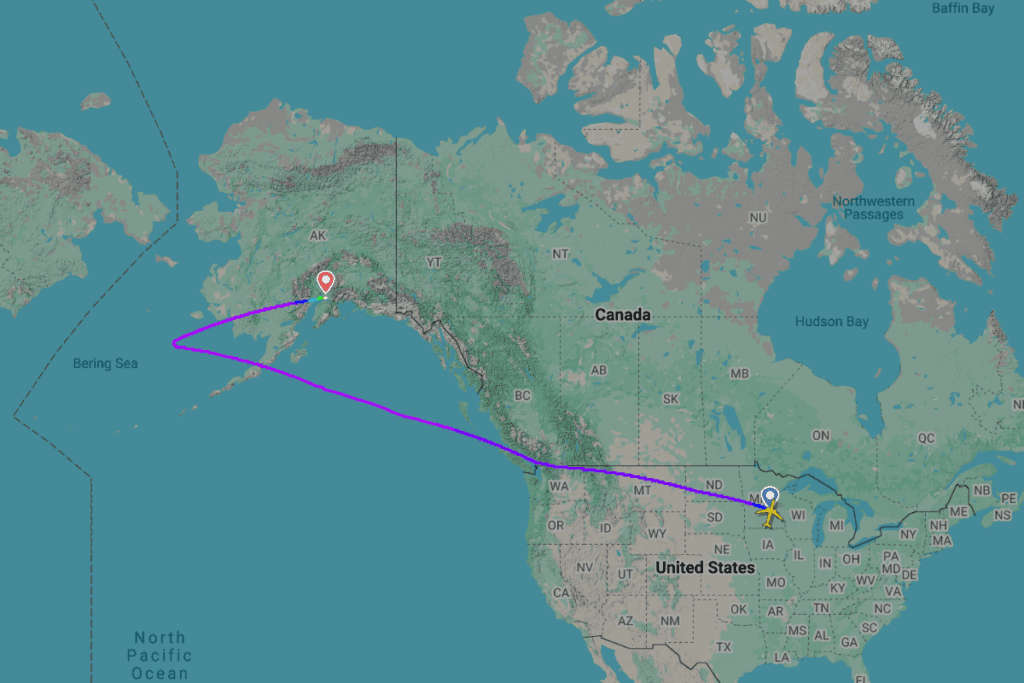
A Level 2 incident doesn’t always end up in an emergency diversion, but given that Flight DL-121 was about to fly across the Bering Sea and Pacific Ocean with no diversion points for hours upon hours, Anchorage was the last suitable airport to get rid of the unruly passenger on U.S. soil.
According to an FBI affidavit filed in a federal district court, flight attendants were aware of an issue with the passenger, identified as 64-year-old Harry Matthews, before the plane had even pushed back from the gate.
One of the flight attendants told the FBI that Matthews was stumbling as he boarded the plane, struggled to find his seat, and was slurring his words. The crew member thought Matthews was drunk and, in her mind, she believed it would be best to have him deplaned.
A second flight attendant was tasked with checking on Matthews, and she believed he was actually suffering from dementia. As a result, he was allowed to stay on board for the 12-hour flight to Tokyo.
The flight departed at around midday and headed west towards Vancouver, Canada, where the plane would then fly across the Pacific Ocean for most of the flight to Tokyo.
After takeoff, however, Matthews’ behavior progressively deteriorated. He would get up from his seat when the seat belt signs were switched on and ignore crew commands to return to his seat. He became increasingly aggressive, and crew members feared he was under the influence of an illicit substance.
At one point, Matthews allegedly got up from his seat towards the back of the plane and physically pushed a flight attendant three rows into the aft galley. Two of the crew members’ male coworkers intervened and physically escorted him back to his seat.
Matthews was instructed to remain seated, but it wasn’t long before he was up again, and this time heading towards First Class at the front of the plane.
This was the final straw for the flight crew, who took him back to his seat and used beverage carts to block the aisle and physically stop him from leaving his seat. As the plane diverted back towards Anchorage, four off-duty personnel, including a retired air marshall sat with Matthews to prevent a further disruption.
Given that there were still six hours left of the flight, the pilots diverted to Anchorage Ted Stevens Airport, where Matthews was taken into custody.
Matthews has been charged with interference with flight crew members, which can carry a maximum sentence of 20 years imprisonment, plus a fine of up to $250,000.
Matthews has also been charged with simple assault within Maritime and Territorial Jurisdiction, which, despite the name, includes aircraft.


While it is impossible to “squeeze blood from a turnip”, it is high time that the courts start penalizing passengers causing a diversion with the maximum fine and some jail time. The passenger might not have the $250K “on hand” but garnish the wages and lock his ass up! A national “do not fly list” would also help. Maybe with some harsh reality, others inclined to cause issues would get the drift!