



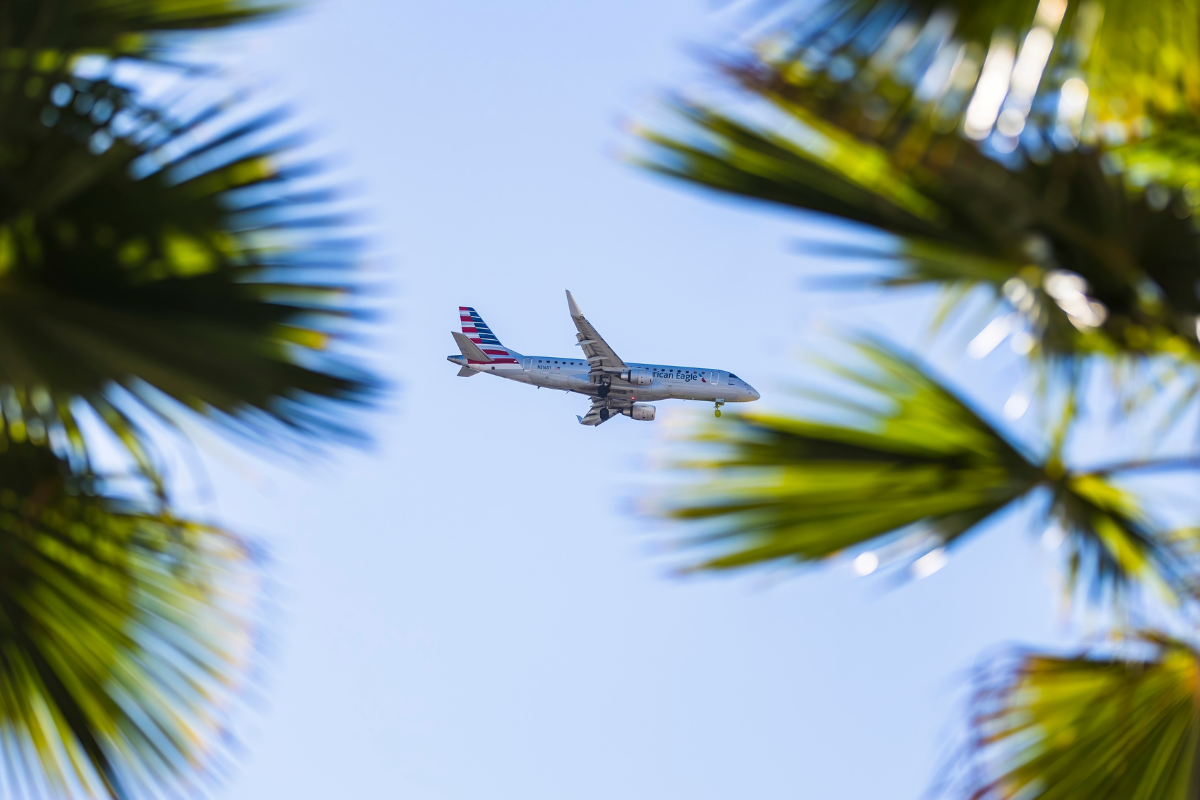
Flight delayed by three hours? Be like a palm tree. Not enough catering? Be like a palm tree. Broken oven? Be like a palm tree. Divert to another airport? Be like a palm tree. No hotel for the night? Be like a palm tree. Can’t get hold of the airline? Be like a palm tree.
You get the idea, right? Any problem that can be thrown at a flight attendant can be quietly swept under the carpet by urging crew members to be like a palm tree.
After all, a palm tree doesn’t break in a storm. It’s flexible, adaptable, and will ride out anything that is thrown at it. And that’s exactly what airlines want their flight attendants to be like – even when they’re facing hurricane-like conditions.
The phrase has become a bit of a joke amongst flight attendants, especially when they’re expected to work under objectively unacceptable conditions.
That was perfectly illustrated last week when American Airlines suffered a mini-meltdown as Winter Storm Fern swept across the United States.
Flight attendants were stranded at airports across the country without hotel accommodation, and there was no way of getting in contact with the airline because crew support phone lines were so overwhelmed that phones were cutting out after 12-hours of being on hold.
In the end, some flight attendants had to sleep on airport floors, and while the airline’s chief executive, Robert Isom, has admitted that these conditions were unacceptable, he might as well have thrown up his arms and exclaimed: “Be like a palm tree.”
During a ‘state of the airline’ conference call with employees that was obtained by View From The Wing, Isom said that unacceptable working conditions “come with the kind of business we run.”
“This isn’t the only storm that we’ve ever had. It’s not going to be the last storm we’ve had.”
You have to wonder what the point Isom was making because it sure doesn’t sound like American Airlines is interested in investing in new technology and procedures that would prevent crew members from being stranded without a place to sleep.
It is, of course, understandable that airlines expect a level of flexibility from their employees that other businesses wouldn’t. If a plane diverts, for example, pilots and flight attendants can’t simply tap out and go home because their shift has ended.
But where do you draw the line?
Internally, American Airlines has at least admitted that it violated contract guarantees for flight attendants, and their union says it is now focused on holding the carrier accountable.
There’s an astonishingly long list of potential violations, where requiring flexibility from workers in the moment could now result in a big compensation payout.
The problem with requiring so much flexibility from employees is that eventually it will run out. Regular American Airlines flyers would no doubt argue that this time has already come for an increasing number of the carrier’s employees.
Asking for flexibility works best when it is required only in the rarest of circumstances. But when it becomes a Band-Aid for an organization that simply isn’t working effectively, employees will soon become immune to the cries of ‘Be like a palm tree.’