



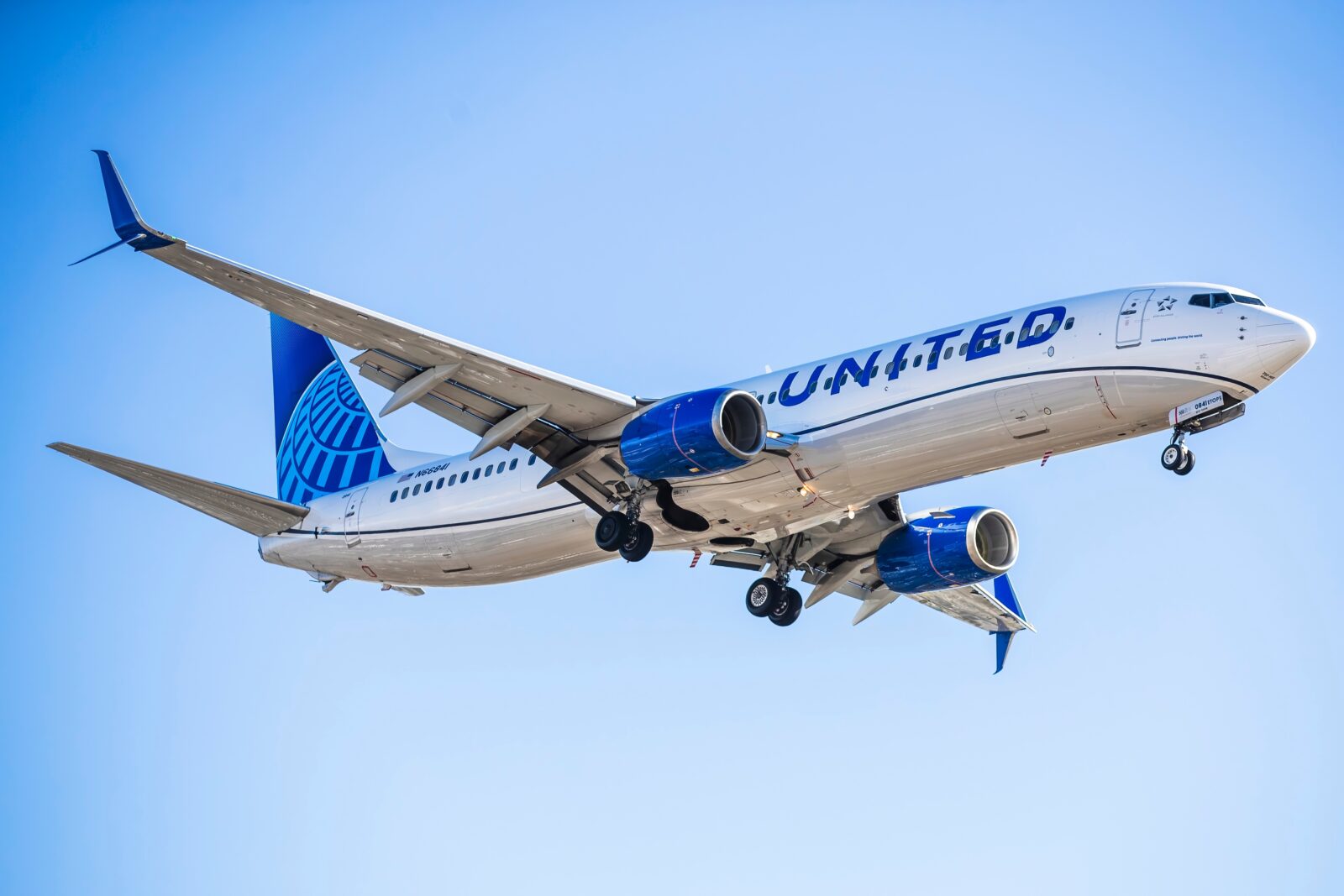
Large and aggressive passengers who were “panicked, fearful, and acting irrationally” prompted two flight attendants on a United Airlines plane at Houston Intercontinental Airport (IAH) to initiate an unnecessary emergency evacuation after one of the engines failed as the airplane was speeding along the runway for takeoff.
Details of the chaos that unfolded aboard United Airlines flight UA-1382 on February 2, 2025, have now been released after the National Transportation Safety Board (NTSB) issued its final investigation report into the incident.
The report paints a frenzied picture of what occurred in the cabin of the Airbus A319 in the moments after the right-hand engine failed, creating a loud bang that sent a shiver of fear through the passengers as the pilots performed an emergency stop on the runway.
Just seconds after successfully bringing the aircraft to a stop on the runway, the pilots made a public address announcement, ordering passengers to remain seated, as they worked through their emergency checklists and developed a plan for the next steps.
It didn’t take long, however, for passengers to ignore this command. Some passengers sitting close to the right-hand engine could see flames inside the cowling and screamed out that there was a fire.
The purser, who was the only flight attendant at the front of the plane, managed to phone the pilots, who moved onto their engine fire checklist.
At this point, there was no smoke in the cabin, the right-hand engine had been shut down, and the pilots did not believe there was a need to initiate an emergency evacuation. Some of the passengers, though, had a very different belief.
After hearing cries of “FIRE!”, panic started to spread through the cabin towards the rear of the aircraft, where two flight attendants at the rear doors were following their training to assess the situation.
Given what they could see and hear, the flight attendants at the back of the aircraft did not believe there was a need to initiate an emergency evacuation without authorization from the pilots, but they soon came under intense pressure from passengers who demanded they open the doors.
Some passengers were climbing over seats to get to the exits, while others repeatedly screamed at the flight attendants: “Open this door now!”
One of the crew members valiantly tried to explain what was happening and why an evacuation wasn’t taking place, but her words were lost on the passengers, who continued to reach the emergency exit door.
One of the flight attendants desperately tried to call the pilots to tell them about the panicked reaction of the passengers, but they were so busy working through their checklists and communicating with air traffic control that they did not answer the interphone.
The two flight attendants looked at each other and came to the conclusion that their only option was to initiate an evacuation themselves, as passengers escalated their attempts to reach the exits.
They decided not to open the door on the right-hand side of the aircraft as this was the side where there had been reports of an engine fire. Instead, they planned to evacuate passengers through the left-hand exit. Unbeknownst to them, though, the left-hand engine was still running.
It appears that the flight attendants were under so much pressure that they forgot to activate the evacuation alarm, which would have immediately alerted the purser and pilots to what was occurring at the back of the plane.
The rear-left-hand door was opened, but even as the flight attendants tried to hold back passengers as the evacuation slide inflated, three men pushed past her and jumped down the barely inflated slide, miraculously escaping serious injury from falling to ground below.
At this point, a jet blast from the left-hand engine caught the slide, twisted it violently, and caused it to puncture. The slide deflated and hung limp from the side of the plane, unable to be used to evacuate any more passengers.
With the rear-left-hand door no longer usable, the flight attendants opened the right-hand door, while the purser at the front of the plane also initiated an evacuation from the forward left-hand door.
The NTSB noted in its final report that what occurred on Flight UA-1382, “highlights the challenges faced by cabin crews when attempting to manage passenger behavior during emergencies or perceived emergency situations, particularly when passenger fear and urgency result in disregard for crewmember authority and standard evacuation procedures.”
The report continued: “Cabin crew training emphasizes assertive command presence and passenger control during evacuations; however, this event demonstrates how rapidly escalating passenger behavior can affect evacuation dynamics even in the absence of confirmed fire or smoke conditions.”
To make matters worse, once the evacuation was initiated, the evacuation flow was significantly hindered by passengers taking their carry-on luggage with them.
Last year, the NTSB issued a safety alert, pleading with airlines to improve communication delivered to passengers to make it clear that stopping to take carry-on luggage in an emergency could lead to serious injury or even death.
What occurred in this incident is similar to the passenger behavior reported after an uncontained engine failure of a British Airways Boeing 777 during takeoff from Las Vegas in September 2015.
In that incident, the pilots successfully carried out an emergency stop on the runway and started to carry out their emergency checklists, as passenger behavior in the cabin became more and more panicked.
There was what felt like a lengthy delay in issuing an evacuation order, even as flames from the engine started to lick against the fuselage, partially melting the interior cabin wall.
One flight attendant told investigators he was about to self-initiate an evacuation because the passengers were becoming so hard to control while they waited for instructions from the pilots.