



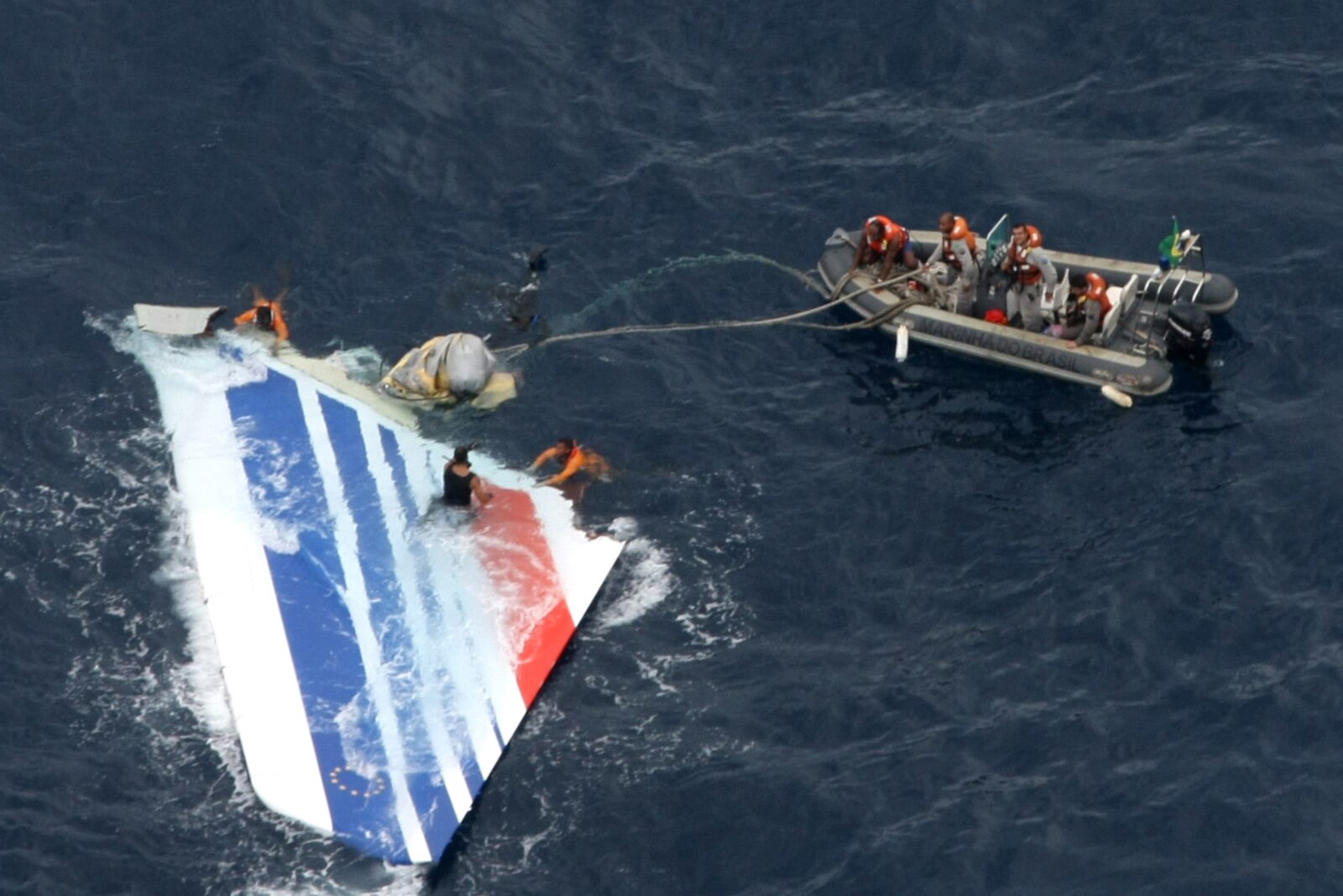
European aircraft manufacturer Airbus has vowed to appeal the decision of a French court to convict the aerospace giant and Air France of corporate manslaughter in a years-long legal battle over who is to blame for the fatal downing of Flight AF-447 nearly 17 years ago.
On June 1, 2009, Air France flight 447 from Rio de Janeiro to Paris Charles de Gaulle was flying high above the Atlantic Ocean when it suddenly plunged from the sky and crashed into the water.
Accident investigators concluded that the Airbus A330 twin-engined aircraft involved in the accident had suffered a mid-air stall, which occurred when the plane’s pitot tubes (which measure airspeed) iced over during the flight.
At the time, Air France pilots received little training in how to deal with a high-altitude mid-air stall, and the Captain was not in the cockpit at the time of the accident.
Some of the families of the 228 passengers and crew killed in the accident have long campaigned for justice, arguing that Airbus and Air France should be found guilty of manslaughter.
In 2023, however, a French court ruled that while Air France and Airbus were responsible for several acts of negligence, these acts fell short of establishing a link with the accident, and, therefore, the two companies were acquitted.
The Paris Public Prosecutor’s Office immediately sought an appeal to the Paris Court of Appeal, which delivered its verdict on Thursday, finding that Airbus and Air France were responsible for corporate manslaughter.
No individuals faced prosecution, and instead, the court ordered both companies to pay the maximum fine available for corporate mansalughter which is just €225,000 each.
Shortly after the verdict was delivered, Airbus said it intended to lodge an appeal with the Court of Cassation.
In a statement, Airbus said: “Airbus wishes to express its deepest sympathies and unwavering support to the families and loved ones of the victims of this tragic accident.”
“From the outset, Airbus has pursued a constant objective: to understand the facts, to seek the truth, to draw all necessary lessons, and to act responsibly to continue improving aviation safety.”
The statement added: “Flight safety is the absolute priority for Airbus. It is at the heart of Airbus identity, its industrial operations, and the focus of all its employees, from aircraft design through to operation. This total commitment is owed to the millions of passengers and crew members who place their trust in Airbus aircraft every day.”
Want to see more stories like this? Add PYOK as a preferred source on Google, and we'll show up more often in your searches and Google News.
Add PYOK as a Preferred Source

It is my understanding that the pitot static system heat was either not turned on or failed. This caused a disagreement between the flight instruments on either side of the cockpit. However, the standby instruments, which are on a separate and independent system, were giving correct readings. The “two out of three” instruments will assist in mitigating a “Mexican standoff”. Assuming that was the case, the FIRST THING one does is disconnect all of the automation (autopilot and autothrottle/auto thrust) and hand fly the aircraft. This is basic airmanship. Then the pilot flying, and others in the cockpit, will ascertain whether the left or right side instrumentation is faulty OR both. From what I read in the accident report, there was confusion as to who/what was flying the aircraft. The fact that the captain was on break at the time, is not a factor since he/she left the cockpit on required break. Now, if the remaining crew failed to call the captain back to the cockpit…then, shame on them. Regardless, the loss of life is horrible. On the bright side, this scenario is now taught by the airlines and in the general aviation community.