



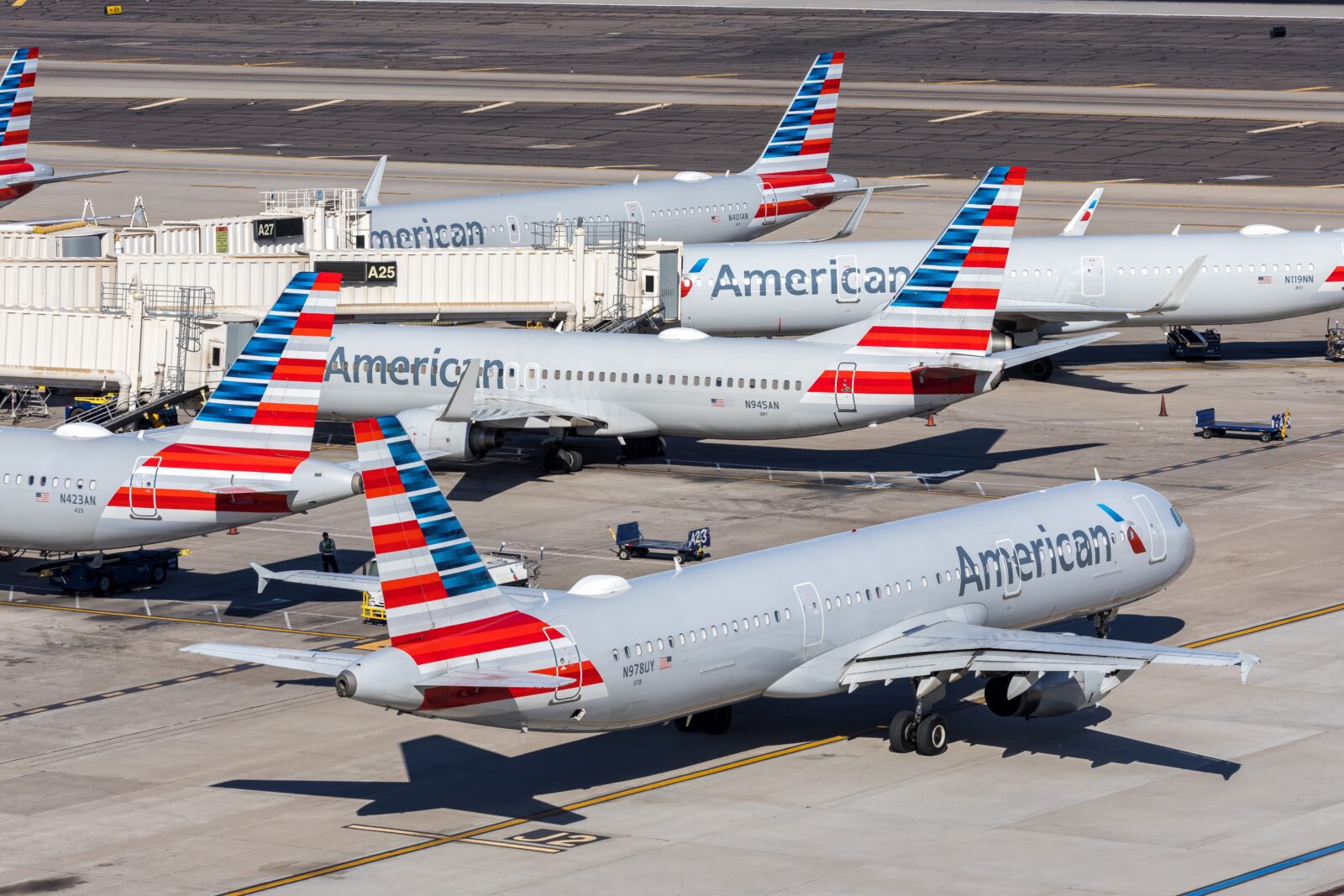
American Airlines has just announced a new deal with Elon Musk’s ultra-fast Starlink internet service in the half-hearted kind of way that passengers have come to expect from the Texas-based carrier, as most passengers won’t actually get to experience it.
Like so many of American’s recent forays into creating a more premium experience to better compete with Delta and United, the airline’s Starlink deal looks good on paper, but the devil is in the details.
The headline news is that American Airlines will start to introduce fast and free in-flight Wi-Fi as soon as early 2027. The Starlink service will be available to all travelers on multiple devices with free one-click access, promising streaming -quality connectivity at 35,000 feet.
Most American Airlines Flights Still Won’t Have Starlink
But here are the details: The rollout will only take place on American’s narrowbody fleet of Airbus aircraft.
In total, around 500 planes will be equipped with Starlink, giving passengers a less than 1 in 3 chance of flying on an airplane with the service, if you include American’s mainline fleet and its regional American Eagle fleet.
That means that if you end up on a regional jet, narrowbody Boeing 737, or any of American’s widebody aircraft, you won’t get to enjoy Starlink Wi-Fi.
American Airlines hasn’t even attempted to explain this odd decision, which will create a Starlink lottery, especially when you factor in last-minute equipment swaps.
At the very least, American Airlines will be ahead of Delta in equipping its aircraft with ultra-fast in-flight Wi-Fi by at least a year, after its arch-rival controversially opted to sign a deal with rival satellite internet service Amazon Leo.
The problem that Delta faces is that Amazon Leo isn’t even close to becoming operational, as it still needs to fire thousands more satellites into low-earth orbit to create a so-called satellite constellation to make the service reliable.
American Risks Falling Behind United
But while American Airlines will, at the very least, steal a march on Delta, it finds itself falling further behind United, which is rapidly equipping its entire mainline fleet with Starlink, having already completed the rollout on its entire regional United Express fleet.
Starlink Vs. Amazon Leo… Which services have U.S. airlines selected?
| Starlink | Amazon Leo |
|---|---|
| Alaska Airlines | Delta Air Lines |
| American Airlines | JetBlue |
| Hawaiian Airlines | |
| Southwest Airlines | |
| United Airlines |
American’s chief customer officer, Heather Garboden, announced the deal on Tuesday, who said the “addition of Starlink solidifies American as a leading airline in keeping passengers connected in flight.”
The limited rollout suggests American Airlines is testing the business case for a larger rollout, and this could ultimately depend on how well Starlink is received on the Airbus fleet.
Could Amazon Leo Still Win Part of the Fleet?
The other possibility is that American is still in talks with Amazon Leo and could potentially pit the two companies against one another in an attempt to secure better terms.
By the time Amazon Leo is expected to come online, American would be at the stage where it would be looking to expand its ultra-fast Wi-Fi rollout, so Amazon Leo could still secure the Boeing and regional fleet contracts.
The good news, at least is that American Airlines will continue to offer free sponsored Wi-Fi for members of its AAdvantage program on aircraft equipped with the older Viasat satellite internet service.
Unfortunately, that doesn’t extend the widebody planes equipped with another rival internet service from Panasonic… and that’s unlikely to change for quite some time.
In-flight Wi-Fi has fast become an essential travel item
In-flight Wi-Fi has fast become an absolute essential for American travelers, but traditional satellite systems from the likes of Viasat and Panasonic have been pushed to their limits.
Frequent flyers don’t just want in-flight Wi-Fi; they’re now demanding free and fast access across multiple devices. Legacy in-flight Wi-Fi systems suck at this, while Starlink has been proven to deliver time and time again.
It’s now reached the point where more and more passengers are actively booking away from airlines that can’t offer reliable in-flight Wi-Fi, and carriers that have fallen behind are now in an arms race to catch up.
Delta has already taken significant flak over its decision to team up with Amazon Leo due to the lengthy lead time before the rollout begins. American Airlines will have a hard time convincing its customers that less than a third of its fleet equipped with Starlink is a win.