



A disability rights campaigner and model has vowed to sue British Airways for disability discrimination after airline staff at New York JFK refused to let her board one of the airline’s flights to London Heathrow because cabin crew wouldn’t be able to help her use the airplane’s bathroom during the transatlantic flight.
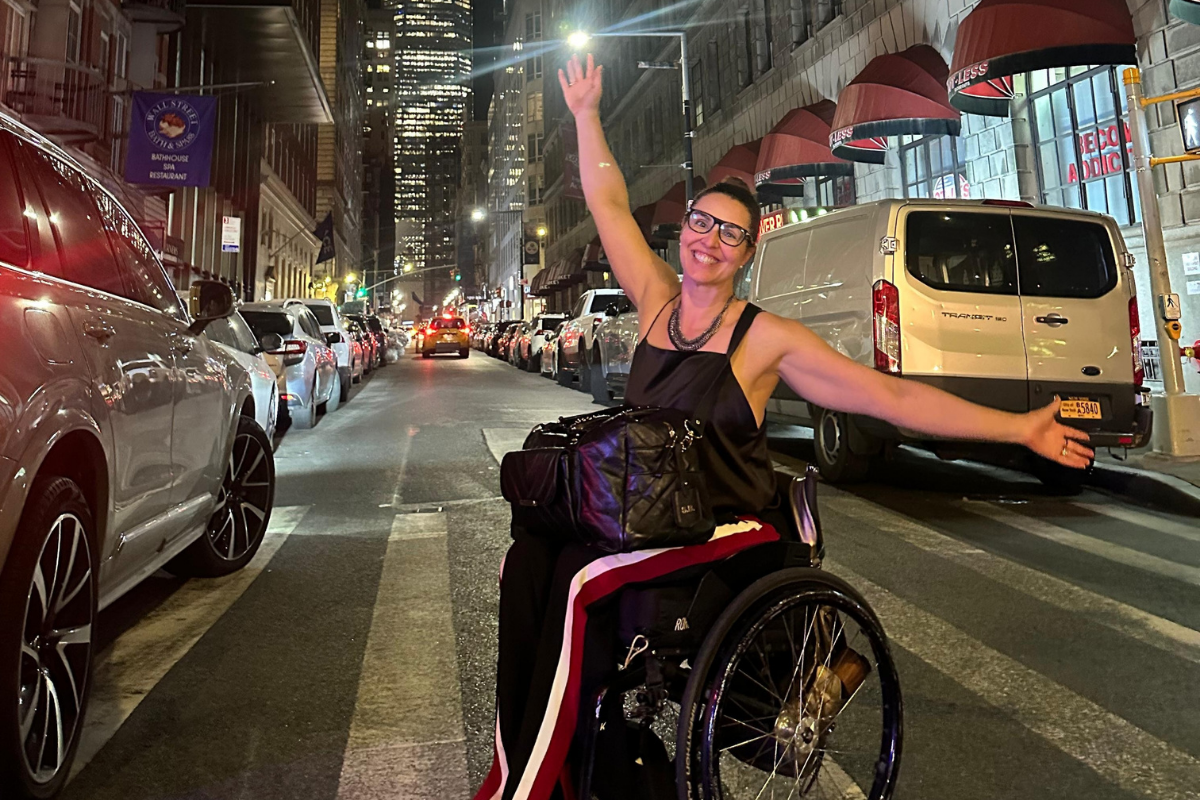
Samanta Bullock, who runs her own inclusion charity, had shared upbeat photos from her trip to New York, where she had been working on a fashion show and attending a UN conference for the rights of disabled people. Her mood, however, soon soured when she tried to board a British Airways flight back home on Sunday.
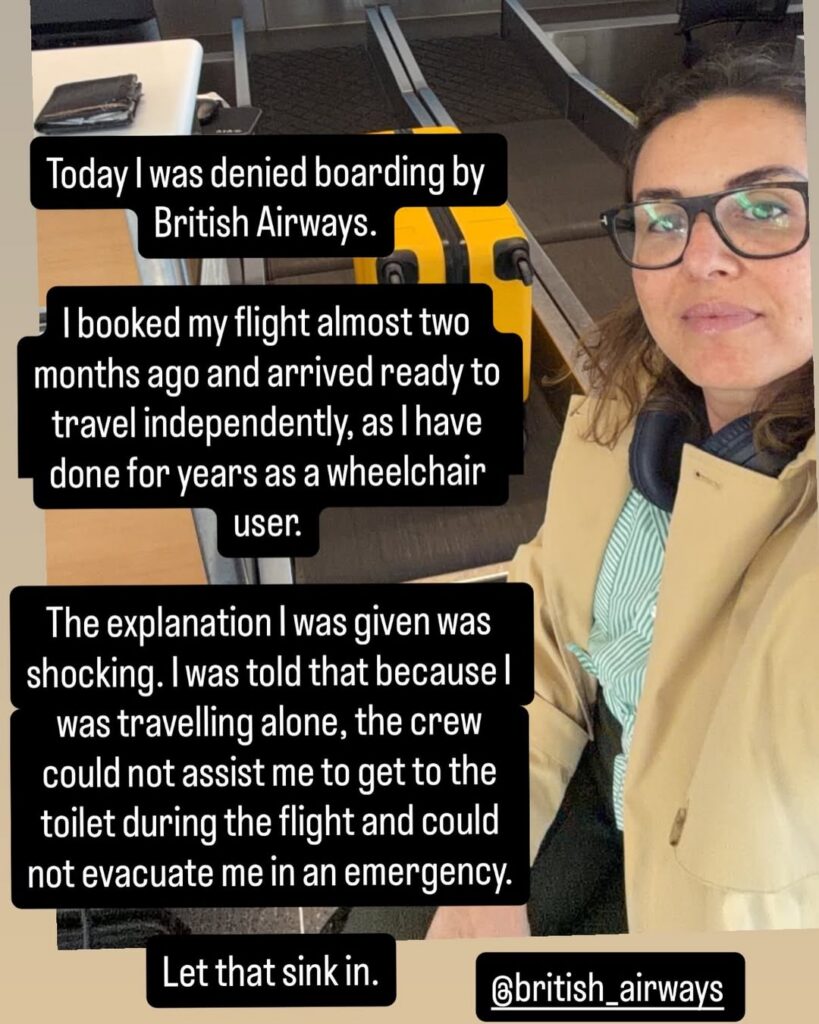
“Today I was denied boarding by British Airways from NY to London,” Samanta wrote in an Instagram post that has since gone viral. “I booked my flight almost two months ago and arrived ready to travel independently, as I have done for years as a wheelchair user.”
Samanta continued: “The explanation I was given was shocking. I was told that because I was travelling alone, the crew could not assist me to get to the toilet during the flight and could not evacuate me in an emergency. Let that sink in.”
“I was not denied because of a ticket issue, a safety violation, or missing documentation. I was denied because I am disabled and travelling independently.”
“If disabled people are expected to travel with a companion, that means we must pay for two flights instead of one. We are effectively being charged more for the same freedom and opportunities that non-disabled passengers take for granted.”
Bizarrely, Samanta has travelled independently on countless flights without an issue, and has never been denied boarding over claims that the cabin crew can’t help a passenger with disabilities get to and from the bathroom.
Even more bizarrely, though, the explanation flies in the face of BA’s own claims of what services it offers disabled people, and would appear to be illegal under U.S. law, which British Airways is subject to on flights departing the United States.
Last year, the airline boasted that it was “committed to doing everything we can to support customers who require additional assistance and provide a seamless travel experience.”
One of the examples the airline provided was supporting “customers to move between their seat and the bathroom,” explaining that every single British Airways aircraft in its fleet is equipped with an on-board wheelchair for exactly this purpose.
In fact, the U.S. Air Carrier Access Act makes this type of assistance non-negotiable, saying that “once a passenger with a disability has boarded, airlines must provide assistance, if requested, such as: moving to or from the lavatory, including using an on-board chair to assist, if requested.”
The situation is, however, more complicated when you review BA’s conditions of carriage, which has an important caveat that could exclude disabled passengers from being allowed to board without a companion or attendant.
Tucked away towards the end of BA’s conditions of carriage, sub-section 20c states: “We may require that you travel with an attendant if it is essential for safety or you are unable to assist in your own evacuation from the aircraft or you are unable to understand safety instructions.”
How British Airways decides whether someone is able to evacuate without assistance is, however, open to interpretation.
Samanta has vowed to sue British Airways, saying in her Instagram post: “I have everything documented and recorded and fully will continue this discussion and sue them for all the time and significant discrimination I have suffered.”
In the end, Samanta ended up being moved to an American Airlines flight, although she was still asked whether she could get to and from the bathroom on her own. Again, this would appear to be in violation of U.S. disability laws.
Sadly, many disabled passengers who struggle to get to and from the bathroom on a plane won’t even attempt to ask the cabin crew for assistance and instead go to extreme measures to avoid a trip to the lavatory, such as taking Imodium and even wearing an adult diaper.
In response to Samanta’s claims, British Airways has said in a statement: “We are sorry for our customer’s experience and are urgently looking into what happened. We remain in direct contact with the customer while we review the circumstances.”
What could Samanta have done in the moment?
Every airline operating flights in the United States, including foreign carriers, must have an appointed Complaints Resolution Official or CRO on duty at the airport in order to mediate disputes over disability rights.
The CRO must be available, either in person or on the telephone, to listen to complaints and try to come up with a satisfactory resolution. While gate agents should know basic disability rights rules, the CRO is a designated subject matter expert in this field.
In other words, the CRO would likely have been able to tell the gate agents that requiring assistance to use the bathroom is not, in itself, a reason to refuse a disabled person boarding.