



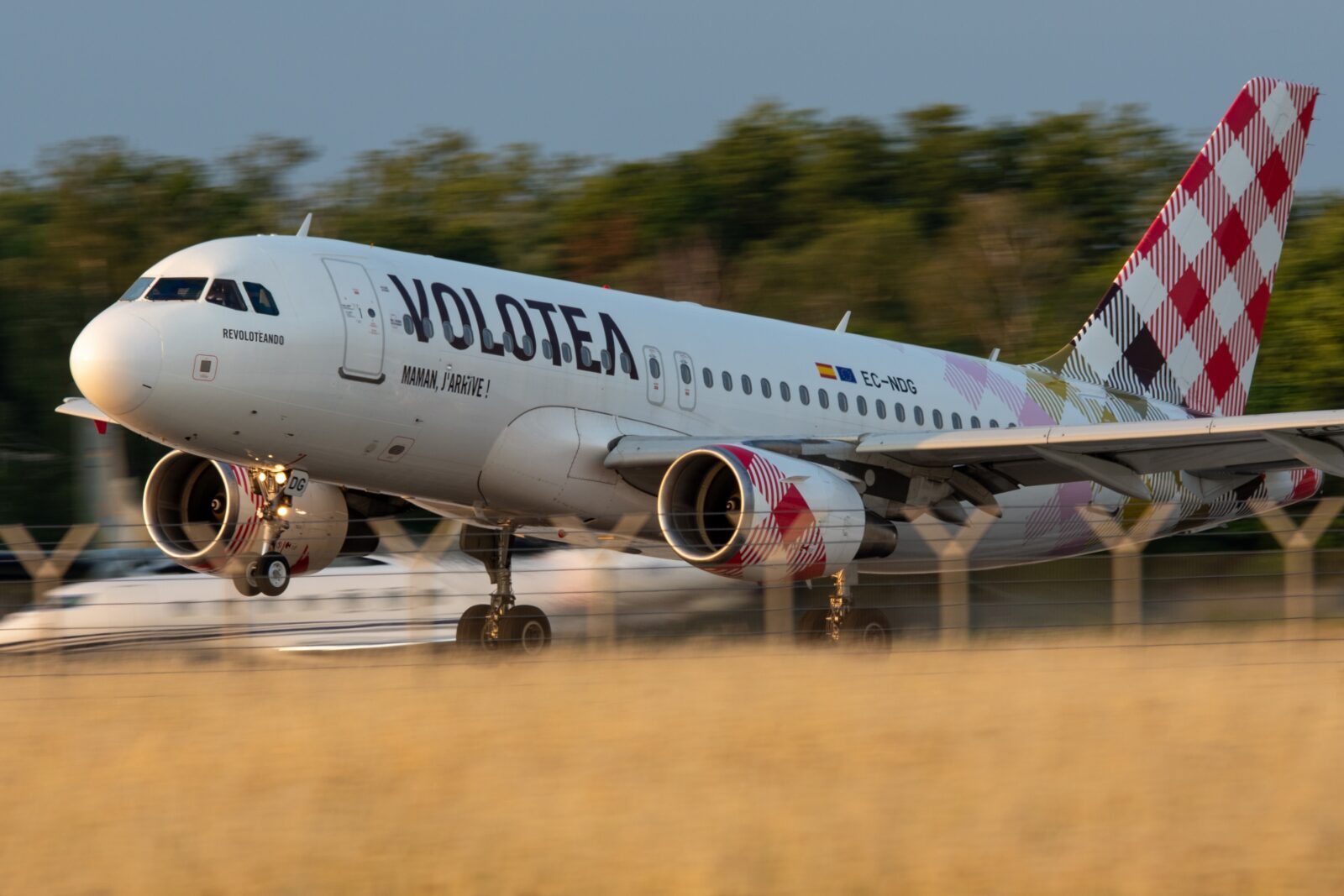
Spanish airport employees for the Spanish low-cost airline Volotea told an American travel vlogger that they would only continue talking to her about a boarding pass issue if she stopped recording them through her Meta AI glasses. When she refused, they followed through with their threat, leaving her standing at an airport counter while they carried on working as if she was no longer there.
The incident occurred on June 4 when vlogger ‘Escape with Emily’ was attempting to fly with Volotea from the Spanish city of Oviedo in the Asturias region of the country to Paris-Orly.
Part 1 @volotea I complained about how I was treated by Volotea staff at the airport after being charged for a boarding pass issue and receiving no assistance from multiple employees.
— Escape with Emily (@Escapewithemily) June 13, 2026
Their response?
Not an apology. Not an investigation into the customer service complaint. pic.twitter.com/cATg82rgKe
Like other low-cost carriers in Europe, Volotea has no qualms about charging additional fees if you don’t follow its very stringent rules. One of those rules includes a requirement to check in and obtain a boarding pass online before you get to the airport.
If you don’t check in before you arrive at the airport, Volotea will charge an additional €30 (US $34) per person for the privilege of an airport agent completing the check-in process for you.
But in this case, Emily claims she did, in fact, check in online before she got to the airport and even had a screenshot from Volotea explaining that she would receive her boarding pass via email shortly. That email never allegedly arrived.
Cue a standoff between Emily and Volotea staff, who insisted that their computer system hadn’t registered her as checking in and that her only option to get on the plane would be to pay the €30 airport check-in fee.
At this point, the situation became more tense when a customer service agent noticed that the vlogger was recording her with Meta AI glasses. She issued an ultimatum: Stop recording or the conversation is over.
When the vlogger refused to comply, the agent immediately disengaged and carried out her other duties. Volotea’s station manager explained the situation and asked her repeatedly to stop recording and not to post video of the airline’s workers on social media. If she didn’t comply, he threatened to call law enforcement.
The threat was ignored, and, in the end, the agents simply abandoned their customer service booth to get away from the vlogger. She was being stonewalled until the Meta AI glasses were switched off.
Emily then sent a complaint to Volotea, but when the airline responded, it wasn’t to apologize.
“It has been reported that you recorded our airport staff without their consent, violating Civil Aviation regulations, as well as the accepted conditions of carriage,” the email sent to Emily explained.
“At Volotea, we maintain a zero-tolerance policy towards any behavior that may compromise safety and compliance with current regulations,” the email added.
Volotea’s conditions of carriage reference the Ley Orgánica 1/1982 law, which is also known as the Spanish Law on the Civil protection of the right to honour, personal and family privacy.
The law is a prime example of how something you might be allowed to do and take for granted in your country of birth is very much illegal in another country. Spanish workers have a right to privacy, which is enshrined in law.
Privacy and public photography laws can differ massively from one country to the next, but as a general rule of thumb, assume that photographing or video recording someone without their consent in Europe or the Middle East will be much more frowned upon than, say, in the United States.
Airports are an interesting example of where the right to film isn’t as clear-cut as they might seem. While an airport is, for all intents and purposes, a public space, access is conditional. In effect, an airport is actually a private space but made to feel public.
You wouldn’t be allowed to wander into a private office building and start recording the workers inside. The same applies in many airports around the world, even if you believe that you have a right to document a negative interaction with an airline employee.
Unfortunately, this isn’t the only time that Emily has had a bad travel experience in Spain. She says she was also scammed by a ‘foreigner’ during a taxi ride to an airport, and on another trip, a Spanish police officer shouted at her for no reason.
Blasting Volotea’s behavior as that of a ‘third world country,’ Emily has vowed never to return to Spain.
Volotea made international headlines in April when it was revealed that the airline was adding a fuel surcharge onto bookings that had already been made because of the surging costs of jet fuel. The airline has since pulled the policy after competition authorities raised concerns.