



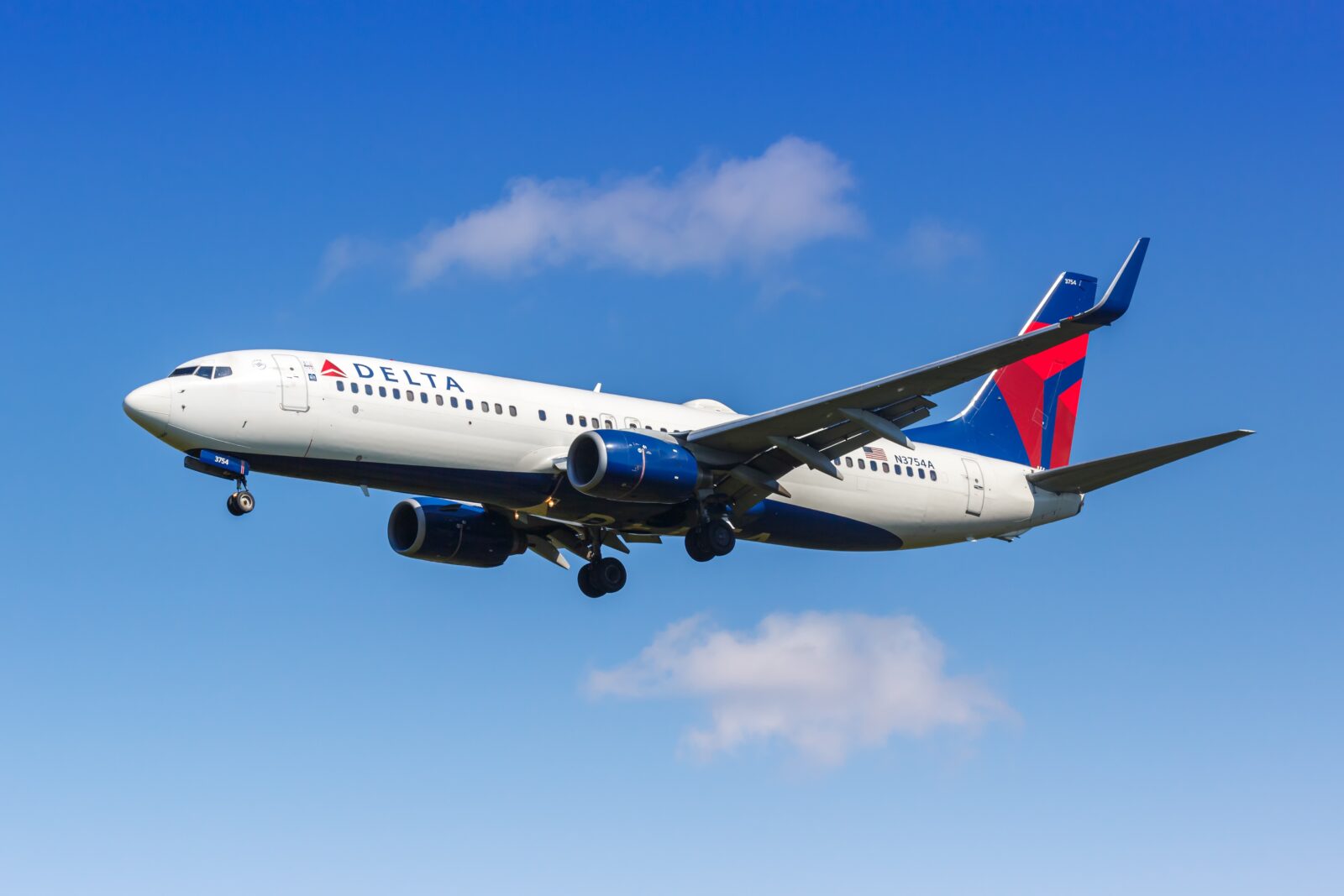
Delta Air Lines is partnering with two of President Trump’s most hated newspaper brands, which he has repeatedly labeled as ‘fake news,’ giving passengers free access to an extensive library of articles from both media outlets, as well as other content like videos, which will be loaded on Delta’s seatback screens.
The latest partnership, announced on Wednesday by the famously liberal Atlanta-based carrier, is with the Wall Street Journal – a paper that Delta says is known for “quality, reliability, and helping people navigate an increasingly complex world.”
Trump, however, has a slightly more complicated history with the Wall Street Journal, sometimes praising the paper for its business coverage, but other times, attacking the outlet for any articles that have been critical of him or his actions as President.
In April, Trump slammed the WSJ’s editorial board as “one of the worst” for their op-ed titled ‘Trump Declares Premature Victory in Iran.’ In a post on his own Truth Social platform, Trump wrote: “The Wall Street Journal will, as usual, live to eat their words. They are always quick to criticize, but never to admit when they’re wrong, which is most of the time!”
Trump’s blazing attacks on the WSJ are nothing, however, in comparison with his views on Delta’s other recent media partner, the New York Times, which Trump sued for $15 billion last September for defamation and libel.
Trump has accused the Times of smearing his character and defaming him. The New York Times said the lawsuit has “no merit” and “Lacks any legitimate legal claims and instead is an attempt to stifle and discourage independent reporting.”
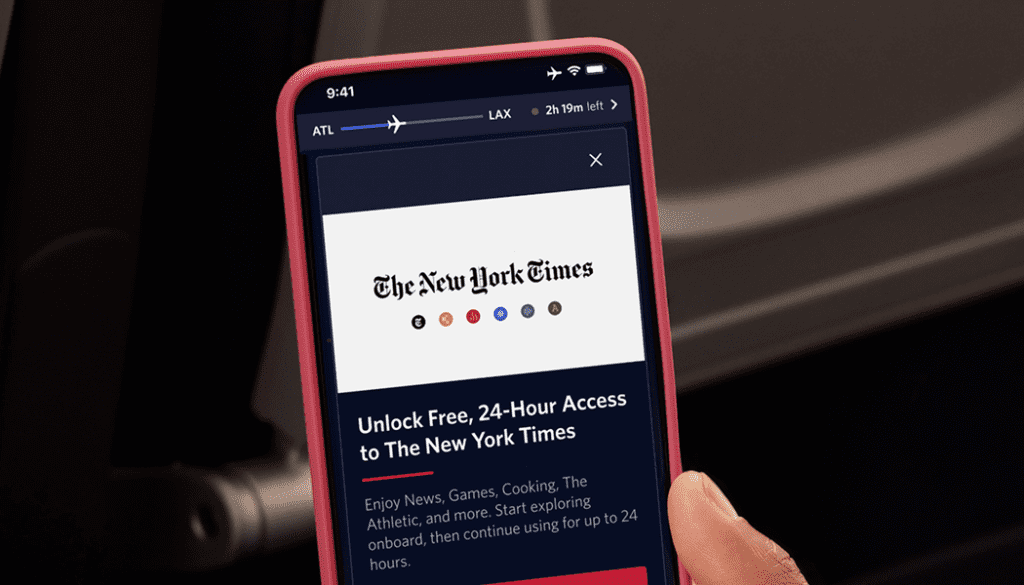
Delta partnered with the New York Times in April, months after Trump’s furious legal outburst at the paper. At the time, Delta insisted that the New York Times remains “one of the world’s most trusted brands on board.”
Both papers are available through Delta’s in-house ‘Delta Sync’ entertainment ecosystem – an ambitious project that is designed to curate a premium in-flight experience for passengers, which encompasses seatback screen content, the onboard Wi-Fi, and access to other multimedia content.
In the case of the New York Times and the Wall Street Journal, the Delta Sync partnership gives passengers free access to both newspapers for 24 hours from the moment they sign into Delta’s in-flight Wi-Fi service. Access can be enjoyed even after the flight is over.
Select video content produced by both outlets is also uploaded onto Delta’s in-flight entertainment for passengers to watch for free during the flight.
Delta Sync is the airline’s way to create its own partnership with content makers, outside of the traditional suppliers of in-flight entertainment content. Delta has also signed content deals with the likes of Paramount+, YouTube, and Crunchyroll.
A lot of the Delta Sync experience is powered through the airline’s Wi-Fi portal, although this decision may have proved fatal when the airline held talks with Elon Musk’s Starlink company for ultra-fast in-flight internet.
While Delta wanted to maintain its highly curated Delta Sync Wi-Fi portal, Starlink reportedly said it would only offer its service if passengers could log-on to in-flight internet through a pared back one click portal.
In the end, Delta was reportedly unwilling to budge, and talks broke down. Delta was then forced to turn to Amazon Leo, a soon-to-be rival to Starlink, which still has to fire thousands more satellites into low-earth orbit before it will become unusable.
Delta will have to wait until mid-2027 at the earliest before it can start installing Amazon Leo on its fleet. By that point, however, United will have completed its Starlink rollout across its entire fleet, and Alaska Airlines and Southwest won’t be far behind on their own Starlink rollouts.
Even American Airlines will have started to install Starlink on around 500 narrowbody Airbus aircraft.