



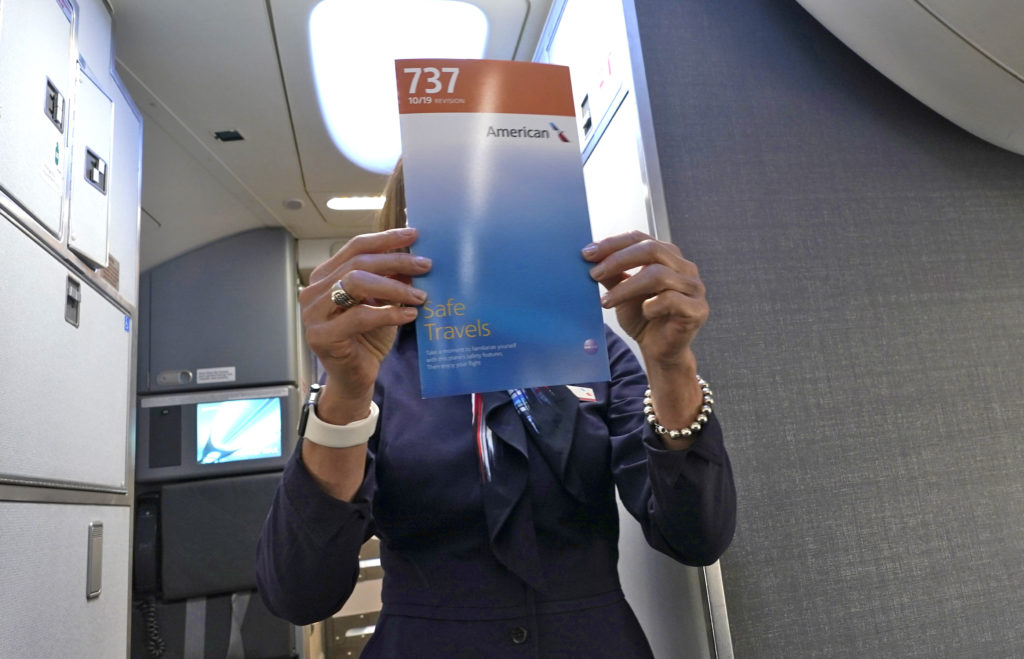
American Airlines will deploy anti-terror cockpit barricades across its fleet on Thursday, June 18, for the first time, after the barriers were installed on newly built airplanes but left unused for nearly a year so that the Texas-based carrier could train tens of thousands of flight attendants and pilots on how to use them.
The barricades are officially known as an ‘Installed Physical Secondary Barrier’ or IPSB for short. IPSBs are a secondary barrier between the main bulletproof cockpit door and the passenger cabin, allowing the pilots to open the cockpit door for short periods in-flight without the fear of someone trying to breach the flight deck.
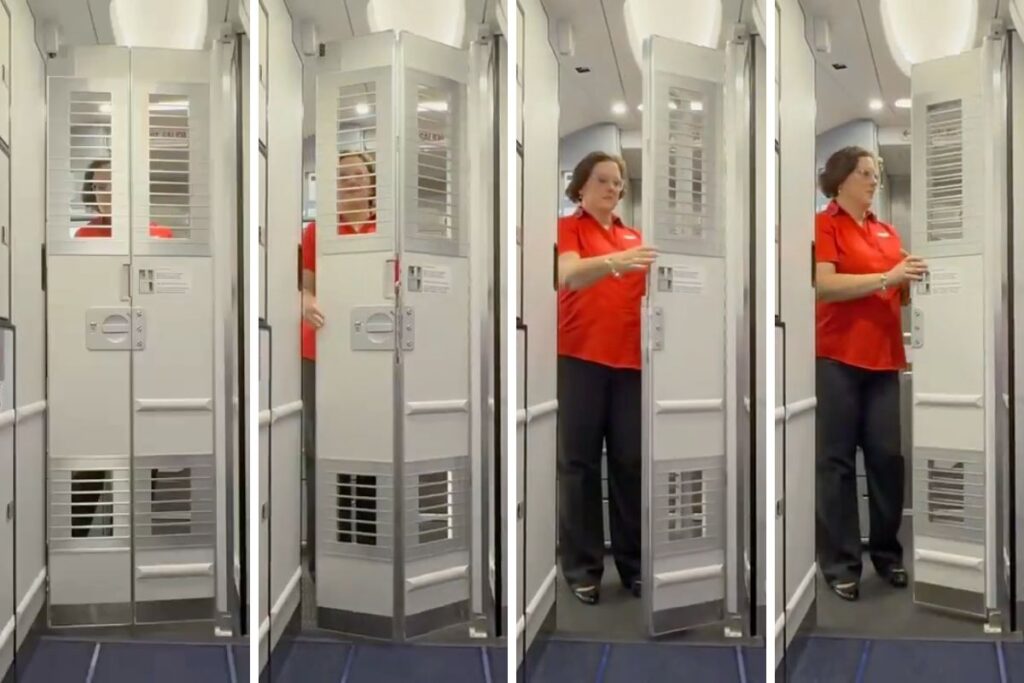
For example, if a pilot needs to take a bathroom break during a flight, the IPSB is deployed and locked shut for a brief moment while the main cockpit door is opened. IPSBs aren’t supposed to be impregnable, but they are designed to keep an assailant at bay long enough for the cockpit door to be shut and locked.
U.S.-based airlines have been mandated to install IPSBs on newly built aircraft since August 2025, although the history of how these barricades came to be can be traced back over many years.
In the aftermath of 9/11, lawmakers searched for ways to make the aircraft cockpits, and this ultimately led to airlines around the world being required to install bulletproof cockpit doors that couldn’t be unlocked from the outside if the pilots didn’t want them opened.
Aviation unions, however, didn’t think this solution went nearly far enough, fearing that armed attackers could wait for a moment when a pilot needs to use the bathroom during a flight to launch an attack, bypassing the security features of the bulletproof cockpit door.
While American Airlines and many other carriers required flight attendants to create makeshift barricades using beverage carts, campaigners sought a better solution.
They soon discovered that a small number of airlines in foreign countries used secondary cockpit doors that blocked the forward galley from the passenger cabin.
In 2018, after many years of campaigning, Congress signed a bill into law through the FAA Authorization Act that would require US airlines to install these anti-terror barricades on all newly built airplanes.
Even then, however, the necessary rulemaking to make IPSBs a reality was kicked into the long grass. In 2023, however, the FAA finally got around to ordering airlines to start installing IPSBs on all new aircraft within two years.
The deadline to install and start using IPSBs was meant to be August 2025, but with just a month to go, airlines secured a controversial extension for when IPSBs actually need to start being deployed.
The airline industry argued that a delay by the Federal Aviation Administration (FAA) in certifying IPSBs that were already being installed on new airplanes meant that they hadn’t been given enough time to prepare training materials and instruction manuals.
Airlines successfully convinced the FAA that, without a deadline extension, they would be forced to ground hundreds of new airplanes until all of their pilots and flight attendants had been trained in the use of IPSBs.
Southwest Airlines bucked the industry trend when, in August 2025, it decided to start using IPSBs on newly delivered aircraft straight away. Meanwhile, other carriers, like American Airlines, were taking delivery of new airplanes with IPSBs installed, but were zip-tieing them open so that they couldn’t be used.
With the latest deadline fast approaching, however, American Airlines is now activating IPSBs from June 18. Flight attendants have been instructed that they must now use the IPSBs rather than makeshift barricades, such as a beverage cart.
IPSBs will, however, only be in use on a small percentage of the American Airlines fleet for a considerable amount of time. The law that mandates IPSBs only applies to newly built aircraft from August 2025.
There are no requirements for IPSBs to be installed on older aircraft, and no U.S. airline has indicated any desire to retrofit the barricades on existing airplanes.