



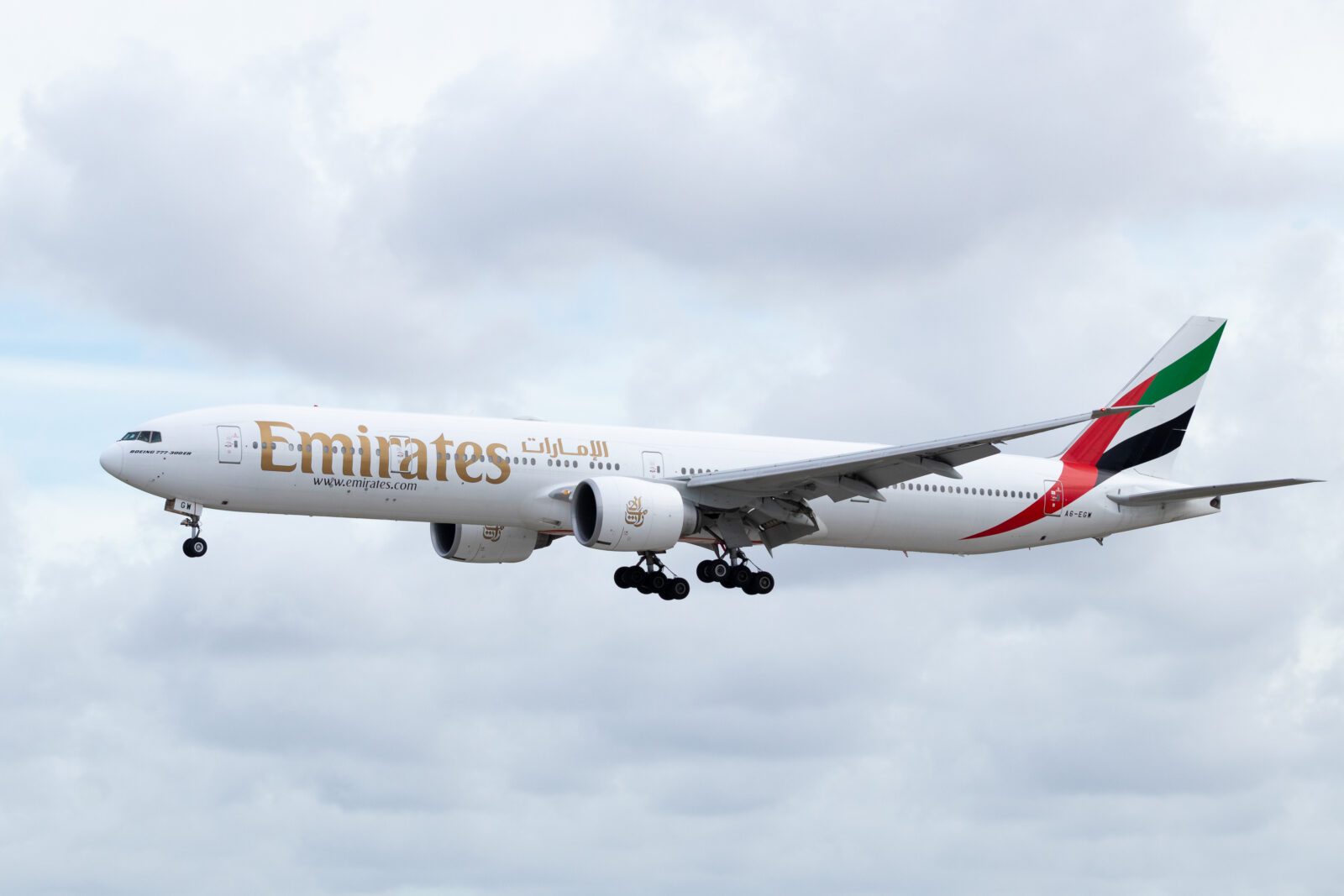
The embattled Persian Gulf mega airline Emirates has just created a travel insurance product that largely mimics the protections offered under Europe’s famous EU-261 passenger rights regulations… There is, however, one very significant difference. To take advantage of the Emirates insurance protections, you have to pay extra for them.
Emirates has been frantically working on its new insurance offering in a bid to lure back passengers who rebooked their travels away from the Middle East due to the ongoing security situation that began on February 28, when the U.S. and Israel launched a joint military campaign against Iran.
Last week, Sir Tim Clark, the longtime president of Emirates, revealed that the Dubai-based carrier planned to offer passengers all manner of ‘incentives’ to convince them that it was still worth flying to Dubai or using the city as a transit stop for flights further afield.
Sir Tim, who is credited with turning Emirates into the largest airline in the world by international passenger numbers, said the airline had various ideas up its sleeve to lure back passengers, short of discounting tickets… something that isn’t possible due to the high jet fuel prices caused by the Iran conflict.
One of those ideas was offering reassurances to passengers that should their flight be cancelled or significantly delayed due to airspace closures or other conflict-related issues, the airline would put them up in hotels for the duration of the delay, and find other means to get them to their destination, including paying other airlines to fly its own passengers.
On Wednesday, the details of this idea were made public, with Emirates announcing that it was launching the “world’s most comprehensive travel insurance,” which includes rebooking passengers on another airline when Emirates’ flights aren’t available, including due to conflict-related issues.
What’s interesting, though, is that these protections are already afforded to passengers traveling with Emirates from a European Union country, under the bloc’s EU-261 rights.
EU-261 is, perhaps, best known for its generous delay compensation, in which passengers can claim up to €600 per person for a significant delay within the airline’s control. Even when airlines aren’t liable to pay this compensation, and the delay is completely outside of their control, they still owe passengers a duty of care.
This duty of care includes:
- Providing refreshments commensurate with the length of the delay.
- Hotel accommodation for overnight delays.
- Transportation to and from the place of accommodation.
- Rebooking on an alternative flight at the earliest opportunity – including on another airline if that is the best available first alternative.
Emirates is obliged to offer this level of assistance for passengers traveling from Europe (and similarly from the United Kingdom under the country’s own passenger rights laws), but on flights elsewhere within its network, Emirates has no legal obligation.
The United Arab Emirates once studied the idea of introducing its own EU-261-style laws, but decided against it, leaving it to airlines to decide what level of care they should offer delayed passengers
In most cases, Emirates will pay for hotel accommodation for significantly delayed passengers, but this is not legally enforceable. Emirates says hotel accommodation, even for lengthy delays, will now become a standard policy provided by the airline, but rebooking on another airline will likely require passengers to obtain its new insurance product.
Along with the rebooking guarantee, the insurance also offers medical cover for conflict-related incidents, which is not something that airlines working under the EU-261 mandate have to provide.
Commenting on the new insurance product, Sir Tim said that the airline wanted to address a gap in the market where normal insurance policies normally become next to useless during times of conflict.
Sir Tim says travel demand remains strong, although Emirates’ First Class suites are currently flying with an occupancy rate half that of its pre-conflict era. Nonetheless, the airline remains confident that demand will bounce back as soon as the security situation becomes more stable.
When airspace over the Middle East was suddenly shuttered on February 28, tens of thousands of passengers across the region suddenly found themselves stranded in foreign countries with no idea of how they were going to get home.
Authorities in the UAE quickly stepped up, telling hotels to extend stays for all guests and finding accommodation for passengers who had been in transit. Hotel bills were completely covered by the government, taking a huge weight off the minds of stressed travelers.
In the UAE, limited flights were able to resume within days, operating repatriation services to get tourists back home. In Qatar, the authorities were forced to bus thousands of passengers into neighboring Saudi Arabia, where they were then able to get on flights back to their home countries.
Want to see more stories like this? Add PYOK as a preferred source on Google, and we'll show up more often in your searches and Google News.
Add PYOK as a Preferred Source