




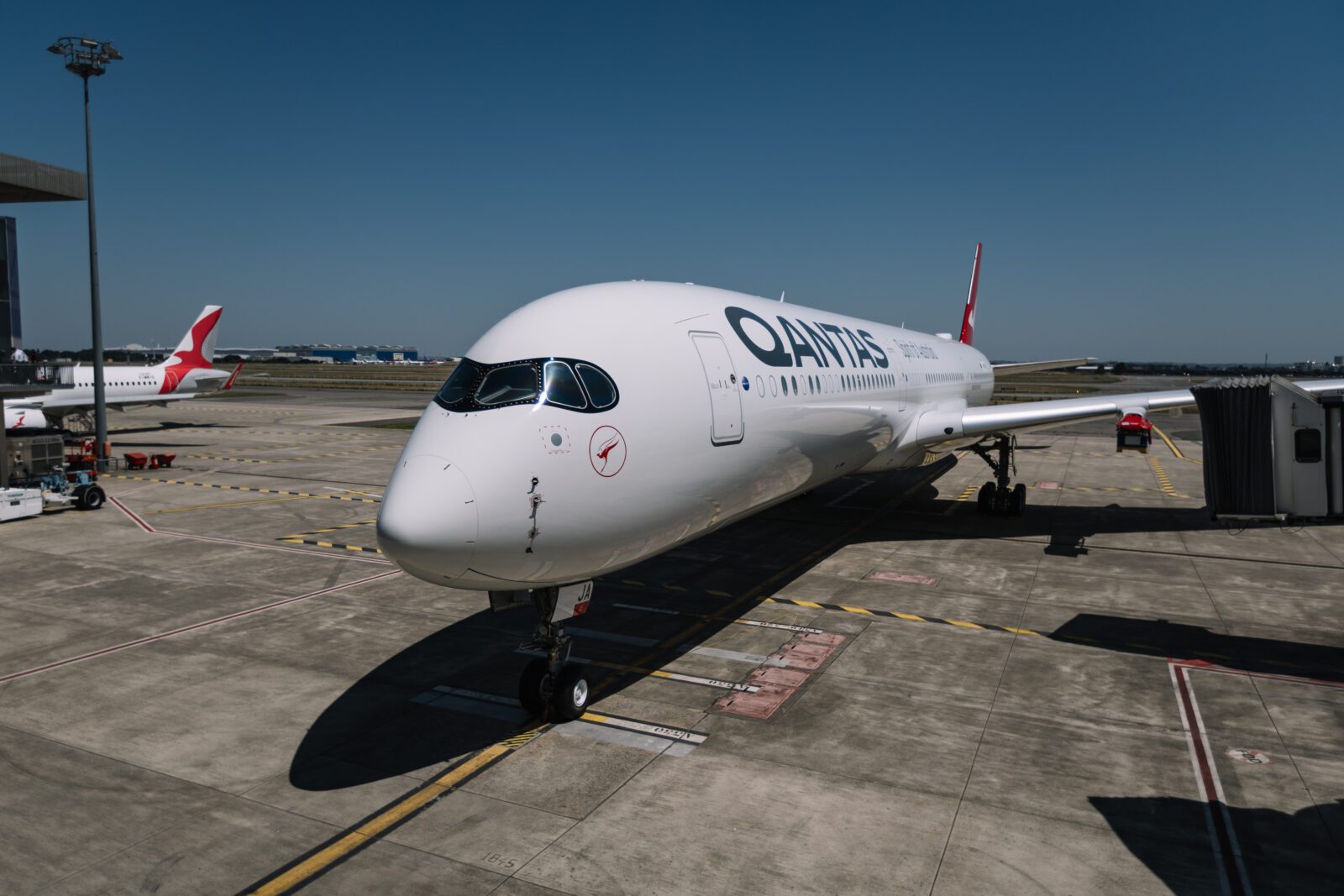
London has just been named as the first-ever ultra-long-haul destination to connect to Sydney, Australia, with 22-hour non-stop flights. If all now goes to plan, Australian flag carrier, Qantas plans to launch the bum-numbing service in October 2027, using specially adapted Airbus A350-1000 aircraft.
The announcement was made on Wednesday at the Airbus headquarters in Toulouse, France, where Qantas executives, including CEO Vanessa Hudson, had gathered to reveal the first A350-1000ULR in full Qantas livery.

In the hours preceding the announcement, rumors swirled that New York would pip London to the crown of becoming Qantas’ inaugural Project Sunrise route. In the end, however, those rumors proved unreliable.
Instead, New York will become the second Project Sunrise route, although the exact launch date won’t be announced until next year.
The Project Sunrise flight between Sydney and London Heathrow will operate alongside Qantas’ existing non-stop flight from Perth, and a connecting service from Sydney to London via Singapore, as Qantas realizes that not all passengers can face the possibility of spending the best chunk of an entire day locked in a metal tube.
The airline’s own research suggests that pre-Iran conflict, demand for Project Sunrise flights was being primarily driven by premium passengers in First and Business Class, with around 68% of existing passengers saying they would likely choose a non-stop ultra-long-haul flight over a connecting service.
Perhaps unsurprisingly, that demand dropped to just 53% of Economy Class passengers, although sentiment towards booking non-stop flights has risen sharply since the Iran conflict started. Around 80% of premium passengers would now consider a non-stop 22-hour flight over connecting through the Middle East, while 63% of Economy Class passengers said they would also sooner fly non-stop.
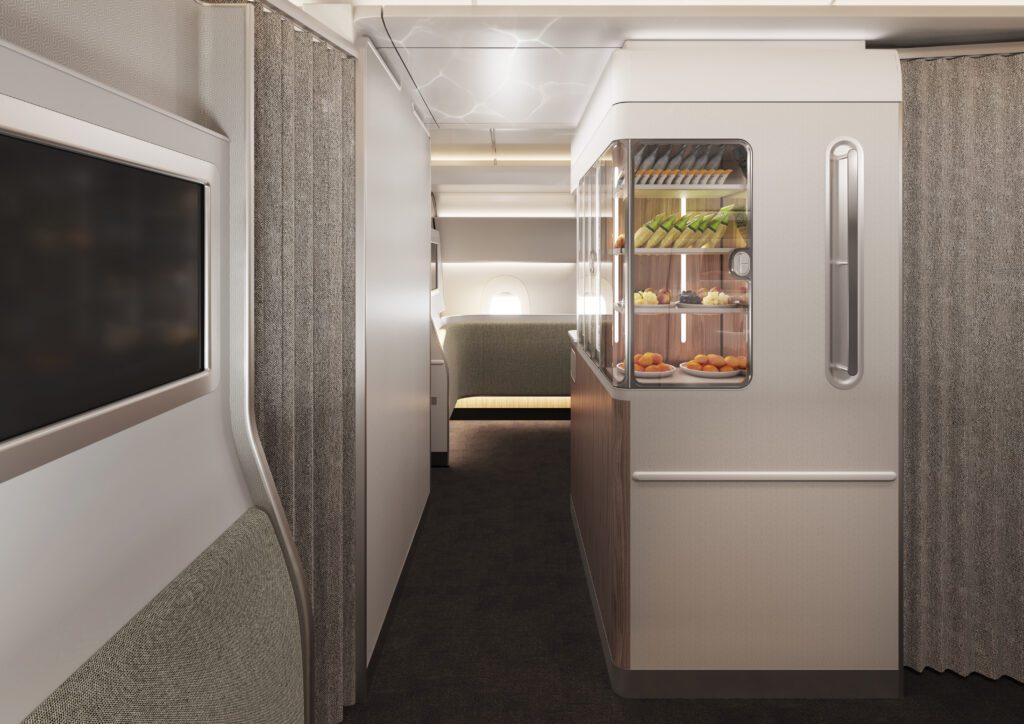
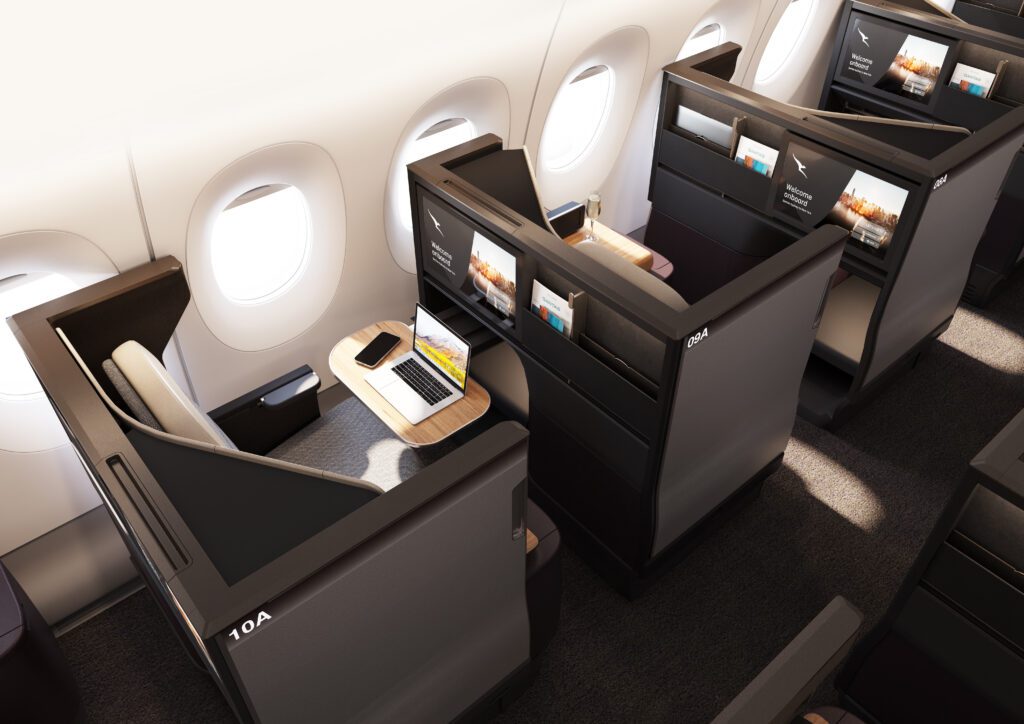
Years in the making, Project Sunrise first made waves in 2019 when Qantas completed special research flights using its Boeing 787-9 Dreamliner to see if non-stop flights from Australia’s east coast to New York were even possible.
The Dreamliners were able to fly the entire 16,200-kilometre distance on these research flights because there was less than a quarter of the plane’s normal capacity on board and no cargo. In order to make these flights commercially feasible, however, Qantas needed a new aircraft.
The airline pitted two options against one another: The yet to be certified Boeing 777X or a specially adapted variant of the Airbus A350-100, which would have an additional fuel tank fitted to allow it to operate these grueling long flights.
It didn’t take long for Qantas to decide that the Airbus A350-1000 was the better option of the two, although the choice was made before the airline even fully committed to the project.
It wasn’t until 2022 that Qantas finally gave the go-ahead for Project Sunrise to be put into action, at which point the airline ordered its first 12 Airbus A350-1000 jets, which feature an additional 20,000 litre rear centre fuel tank.
At the time, Qantas had hoped to take delivery of the first of these planes in 2025, but given various supply chain issues and a backlog in production that has plagued Airbus for years, that timeline shifted quite significantly.
By late last year, Qantas reported that it planned to take delivery of its first Project Sunrise A350 in late 2026. The aircraft would then be used for crew training and certification work before commencing commercial operations in early 2027.

Unfortunately, there is now a new delay reported, and Qantas is unlikely to get its hands on the first of these airplanes until April 2027, which has pushed the launch date to October 2027.
Qantas plans to take delivery of six A350-1000ULRs by 2030, at which point, the airline will only actually be operating two ultra-long-range flights from Sydney to London and New York. The other aircraft will replace some Boeing 787-9 Dreamliners on existing routes, like Perth to London, allowing the Dreamliners to be redeployed to new destinations or existing routes, replacing older aircraft.
The bad news is that Melbourne is being excluded from Qantas’ Project Sunrise plans. The airline plans to operate a ‘dual hub’ strategy for these planes, with them being based in Sydney (for flights to London and New York) and Perth (which will operate non-stop flights to London, Paris, Rome, and Johannesburg).
In order to prepare for the arrival of its Project Sunrise A350s, Qantas has sent some of its pilots to train with British Airways, which has operated the aircraft type since 2019. In the next few months, some pilots will also train at Cathay Pacific.
Despite being a relatively small fleet, the A350s will require a lot of crew to operate them. In total, Qantas will have more than 360 pilots and 1,200 cabin crew trained to operate the Project Sunrise aircraft by the time the 12th A350ULR arrives.