



An EasyJet plane had climbed to just 20 meters above the ground as it reached the very end of the runway during a botched takeoff from London Luton Airport, a new report by aircraft accident investigators has revealed.
According to the Aircraft Accidents Investigation Branch of the UK’s Civil Aviation Authority, the pilots of EasyJet flight to Malaga, Spain, had forgotten that they had calculated the takeoff using the full length of the runway when they instead took off from an intersection that cut off 211 from the runway length.
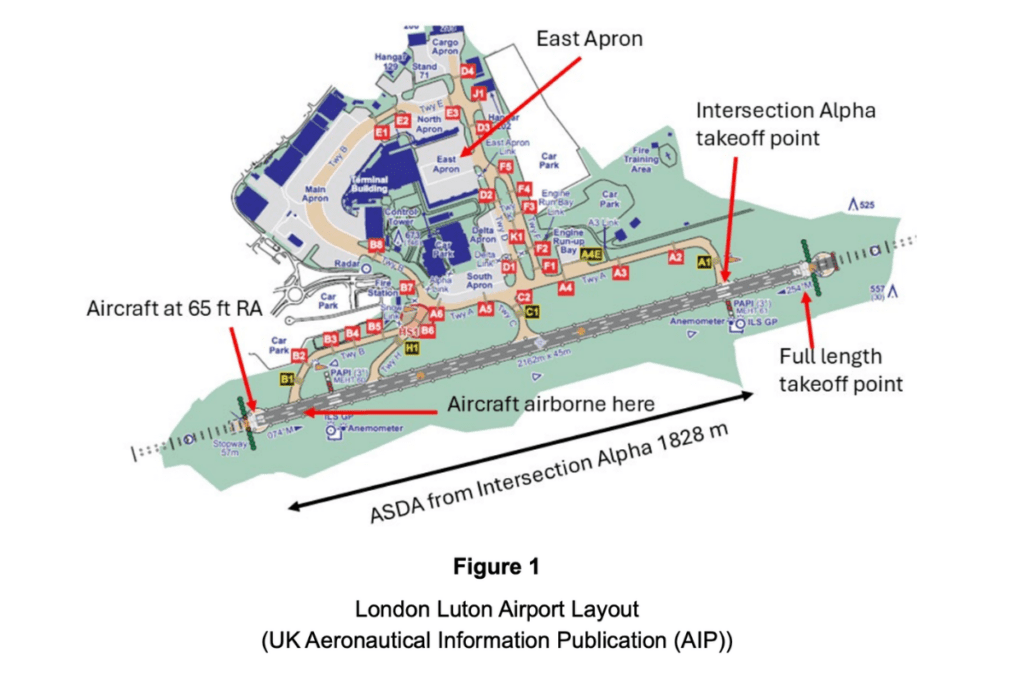
Although the incident took place on June 13, 2025, details are only now coming to light after the AAIB published a bulletin describing what went wrong.
According to the report, the pilots of the EasyJet Airbus A320 were used to departing from the intersection of Runway 25 at Luton Airport, but on the day in question, they decided to use the full runway length because the plane, with 180 passengers on board, was heavier than normal.
The pilots input the takeoff calculation into the cockpit computer for a takeoff roll that made full use of the 1,982-meter runway, and then gained clearance to push back from the gate. As they were taxiing to the runway, air traffic control then asked the pilots whether they would be able to use the intersection, known as ‘Alpha,’ to depart from.
The Captain went ahead and said this was possible, without realizing that he had already had a conversation with the First Officer over the need to take off using the full runway length.
They lined up, carried out their final checks, and then departed without realizing their mistake. Even after takeoff and as the aircraft whooshed over the end of the runway at an altitude of just 20 meters, the pilots were none the wiser to their mistake.
In fact, it wouldn’t be until much later that day that the pilots came to know of what had happened, when the airline’s Flight Data Monitoring (FDM) system registered a ‘post-flight event’ which was automatically triggered when the algorithm noticed the low height of the aircraft at the runway threshold.
The Captain received a call from his boss who asked him about the “questionable runway length remaining” at the point of takeoff, and it was only then that he remembered that they had meant to takeoff using the full runway length, rather than departing from intersection Alpha.
Both pilots said they were well rested and didn’t believe that fatigue was a factor, but rather, they were so used to departing from intersection Alpha that it had become muscle memory.
Even when the pilots of another flight asked air traffic control to use the full runway length, this didn’t trigger the pilots to realize their mistake, because using intersection Alpha was so ingrained in their minds for departures from the airport.
Accident investigators approached the aircraft manufacturer, Airbus, to run the numbers on whether an engine issue could have resulted in a catastrophic accident, and, thankfully, it was concluded that even if the plane had suffered a single engine failure during takeoff, it would still have been able to clear any obstacles at the end of the runway.
Before this incident, EasyJet did not require pilots to record the intersection to be used when calculating takeoff performance, with pilots instead relying on memory. EasyJet has since changed its takeoff calculation procedures in an attempt to “trap this takeoff performance error.”