



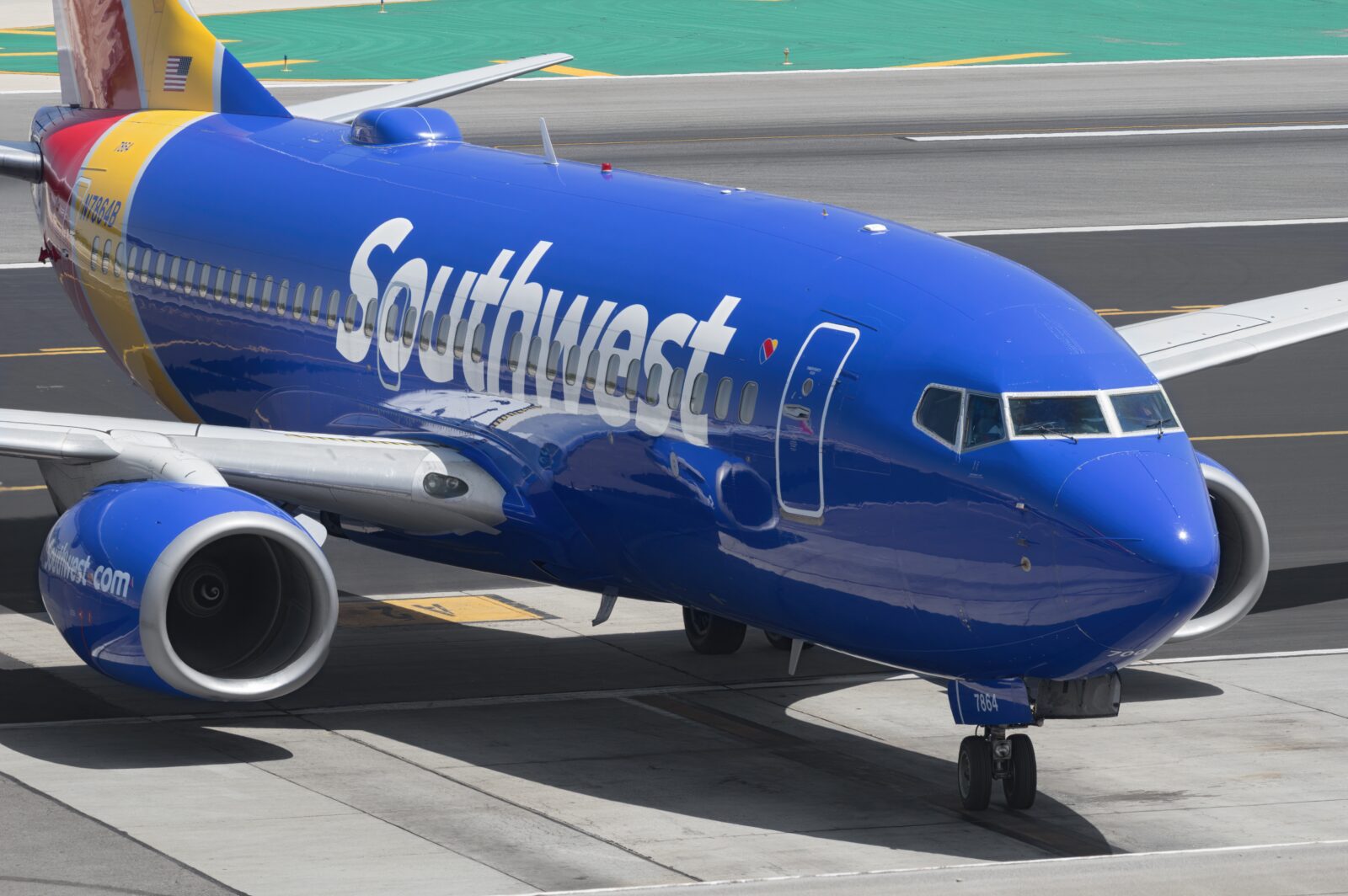
Southwest Airlines has reversed its flight attendant jumpseat-only policy, which banned non-rev employees from other parts of the business from using a spare jumpseat when all the normal passenger seats on a flight were taken.
The policy was introduced in March following a long campaign from the TWU 556 union, which represents flight attendants at the Dallas-based airline, who argued that banning anyone apart from flight attendants and pilots from using spare jumpseats was necessary to enhance safety.
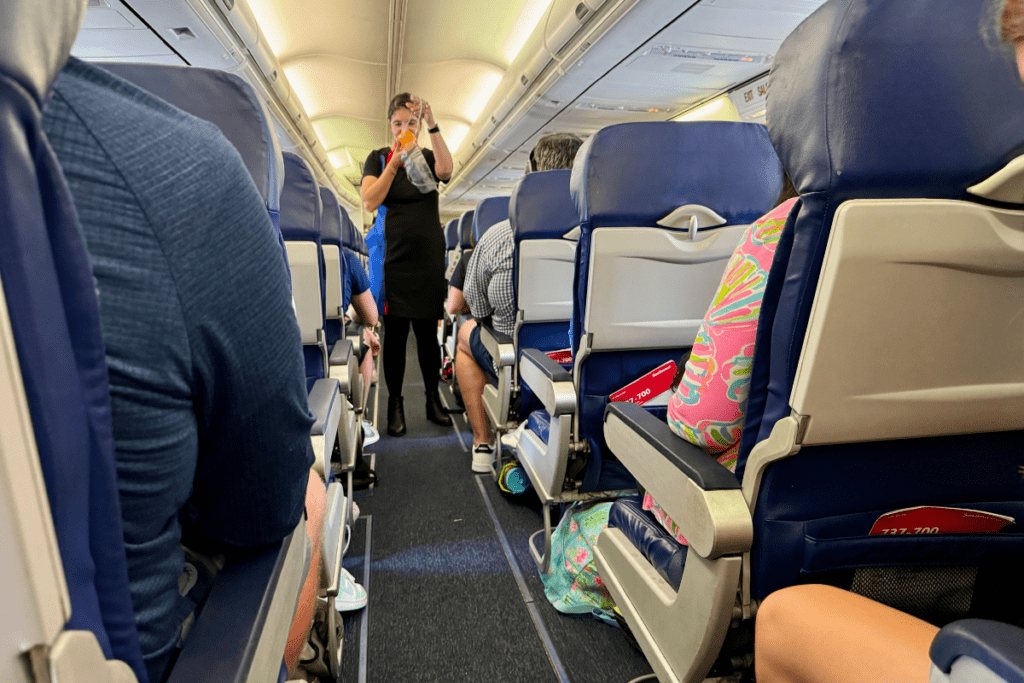
Free or deeply discounted flights are one of the best perks of working for an airline, but non-revving, as it is known in the airline industry, is based on a strict space-available basis.
If a flight is fully booked, non-rev airline employees will hang around the gate until the very last moment in the hope that a regular passenger doesn’t show up.
If all the regular passengers do show up on schedule, then non-revs are cast aside and left to figure out another way to get to their destination. There is, though, one last opportunity to get on board: Using a spare jumpseat by one of the cabin doors.
Depending on the length of the flight, sitting in a jumpseat as a non-rev passenger is either a minor inconvenience or an incredibly uncomfortable marathon slog. But if a flight is fully booked, it’s the jumpseat or nothing.
Southwest Airlines has long allowed employees from across the company to sit in a spare flight attendant jumpseat, but for several years, the TWU 556 urged the airline to change this policy, saying non-crew jumpseaters disrupt the in-flight duties of flight attendants and could be a detriment to safety, especially in the case of an evacuation.

The AMFA 18 union, which represents Southwest Airlines mechanics, however, challenged the policy, pointing to a specific article in their contract which states: “Employees covered by this Agreement will be treated no less favorably than other Employee groups in prioritizing space available access to jumpseats.”
The mechanics union was set to go to arbitration this week over the issue, but before the hearing could take place, Southwest Airlines reversed the policy, not just for AMFA 18 members, but for every employee group at the carrier.
In an attempt to keep flight attendants happy about the policy reversal, Southwest Airlines is introducing a mandatory Computer-Based Training module for any employee who wants to be considered for a jumpseat when non-revving.
The short module will cover how the harness on a flight attendant jumpseat works, best practices for how they should be around flight attendants, and what to do in case of an emergency evacuation.
Unfortunately, this CBT module has done little to quell the temper of the flight attendant union, which has made it clear that it isn’t happy about jumpseats being open to all non-revving policies.
The union does, though, claim this isn’t about trying to secure jumpseats for its members ahead of other employees, especially given the fact that nearly a third of all flight attendants at Southwest commute to work by air.
Rather, the union claims its position is “about safety for everyone on the airplane.”
“Flight Attendants are aviation’s first responders in the cabin, trained and recurrently qualified in emergency procedures, evacuations, and cabin safety,” the union said. “We know that an aircraft is safest when every person occupying a jumpseat has the required level of training and operational familiarity that Flight Attendants do.”
Jumpseat policies can vary massively from one airline to the next. At some carriers, even non-employee non-rev passengers are allowed to occupy a spare jumpseat if there’s no other seat available, whereas at Persian Gulf carriers like Emirates, even the mere thought of opening up a spare jumpseat for a non-rev employee is a non-starter.