


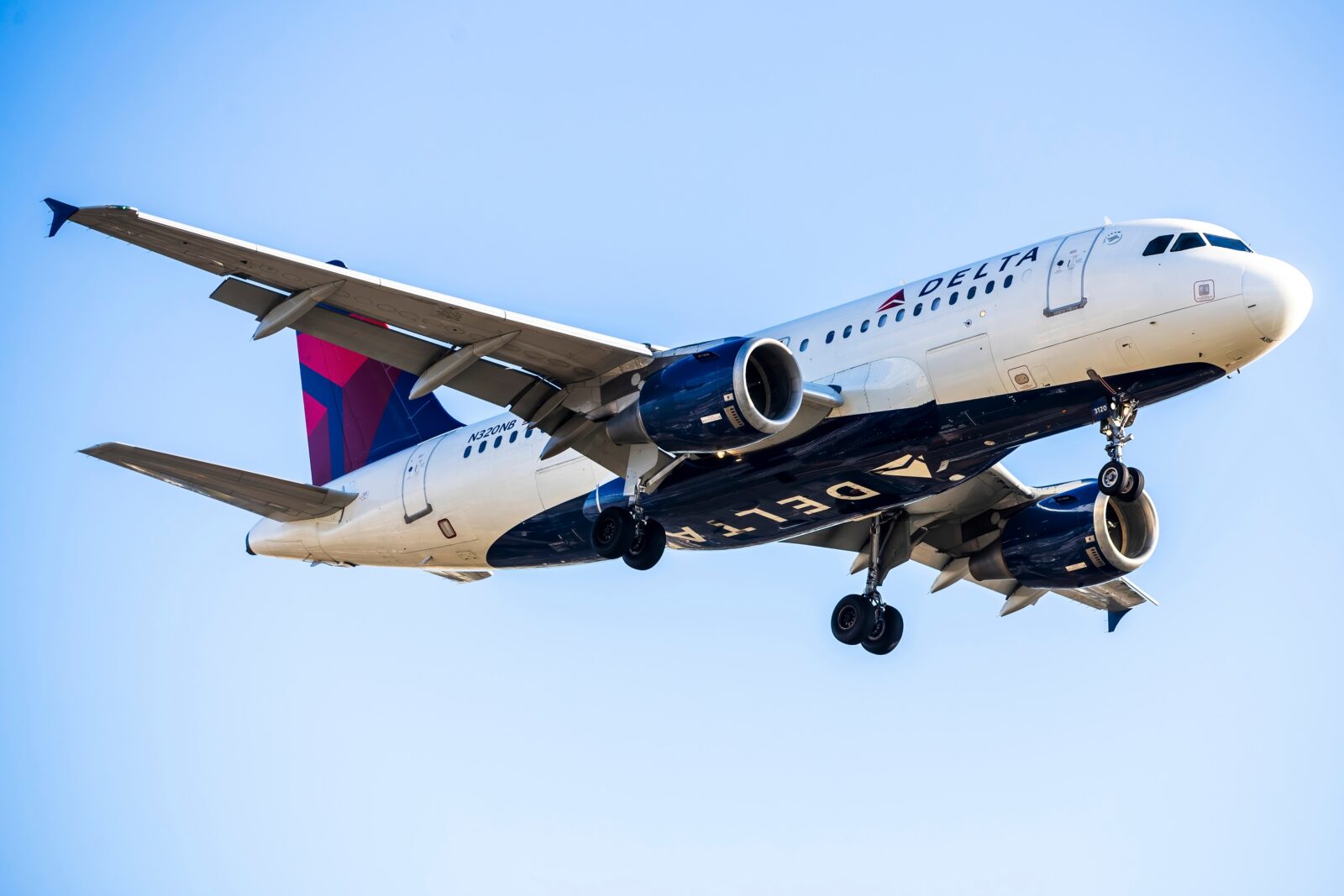
The quick-thinking pilots of a Delta Air Lines Airbus A319 with 129 passengers and six crew members on board averted catastrophe as it was coming into land at Boston Logan International Airport (BOS) on Saturday morning after air traffic controllers cleared an American Airlines to take off in its path.
The incident involves the following two flights:
- Delta Air Lines flight DL-2351 from Dallas to Boston operated by a 25-year-old Airbus A319 (registration: N328NB)
- American Airlines flight AA-3161 from Boston to Charlotte operated by a nine-year-old Boeing 737 (registration: N316PF)
At the time of the near miss, at around 11:35 am on June 20, flights arriving at Boston Logan were landing on Runway 33L, which is the airport’s longest runway at 10,083 feet. Meanwhile, departures were taking off from Runway 27, which intersects with Runway 33L, around 2,300–2,600 feet from the threshold of Runway 33L.
As Delta flight 2351 was approaching Boston Logan, the airport tower controller issued instructions to the pilots of American Airlines flight 3161 to line up on Runway 27 and then wait for further clearance to take off.
— JonNYC (@xJonNYC) June 20, 2026
Just moments later, the pilots of Delta flight 2351 checked in with the tower controller. The controller gave the pilots clearance to land on Runway 33L, and the pilots lined up for final approach.
The controller then issued instructions to the pilots of three other flights from Jazz Aviation, which operates flights on behalf of Air Canada Express, JetBlue, and Republic Airways, which operates American Eagle regional flights.
Without taking a breath, the controller then returned to American Airlines flight 3161, giving the pilots clearance to take off from Runway 27, an audio recording of air traffic obtained by aviation insider JonNYC reveals.
— JonNYC (@xJonNYC) June 20, 2026
The pilots acknowledged the instruction, repeating it back to the controller. For whatever reason, it took the pilots of American Airlines flight 3161 around 40 seconds to power up the engines and start speeding along the runway for takeoff.
At this point, Delta flight 2351 was on top of the threshold of Runway 33L, mere feet from touching down. The pilots suddenly noticed the American Airlines aircraft barreling down the runway from their right, and quickly initiated a go-around, climbing more than 2,000 feet in just a couple of seconds.
Incredibly, the air traffic controller then says to the pilots of American Airlines flight 3161: “American, where are you going?” The controller then gets checked by a pilot on the frequency who informs him that he had cleared them for takeoff.
Thankfully, the pilots of Delta flight remained cool-headed throughout the entire incident and were directed to loop back around and then land without incident on the second attempt.
In a statement, a spokesperson for Delta Air Lines told us: “As nothing is more important than safety, the flight crew of Delta flight 2351 followed established procedures in coordination with Air Traffic Control and performed a go-around on approach into Boston Logan and landed safely.”
The airline said that a cockpit alert system warned the pilots of “potential traffic,” which gave them the heads up of what was unfolding.
The alert system that Delta is referring to is likely TCAS, which stands for Traffic Collision Avoidance System. If that is the case, it’s lucky that it worked in this incident, as TCAS is primarily designed to avoid mid-air collisions, and its effectiveness is inhibited at very low altitudes.
Other alert systems that could have provided enhanced awareness of what was happening on the ground at Boston Logan include Honeywell’s SmartRunway and SmartLanding systems.
What’s interesting, however, is that despite massive investment in runway-incursion monitoring systems at major U.S. airports, the controller had no idea of the potentially catastrophic situation that was unfolding until alerted by the Delta pilots.
Want to see more stories like this? Add PYOK as a preferred source on Google, and we'll show up more often in your searches and Google News.
Add PYOK as a Preferred Source