



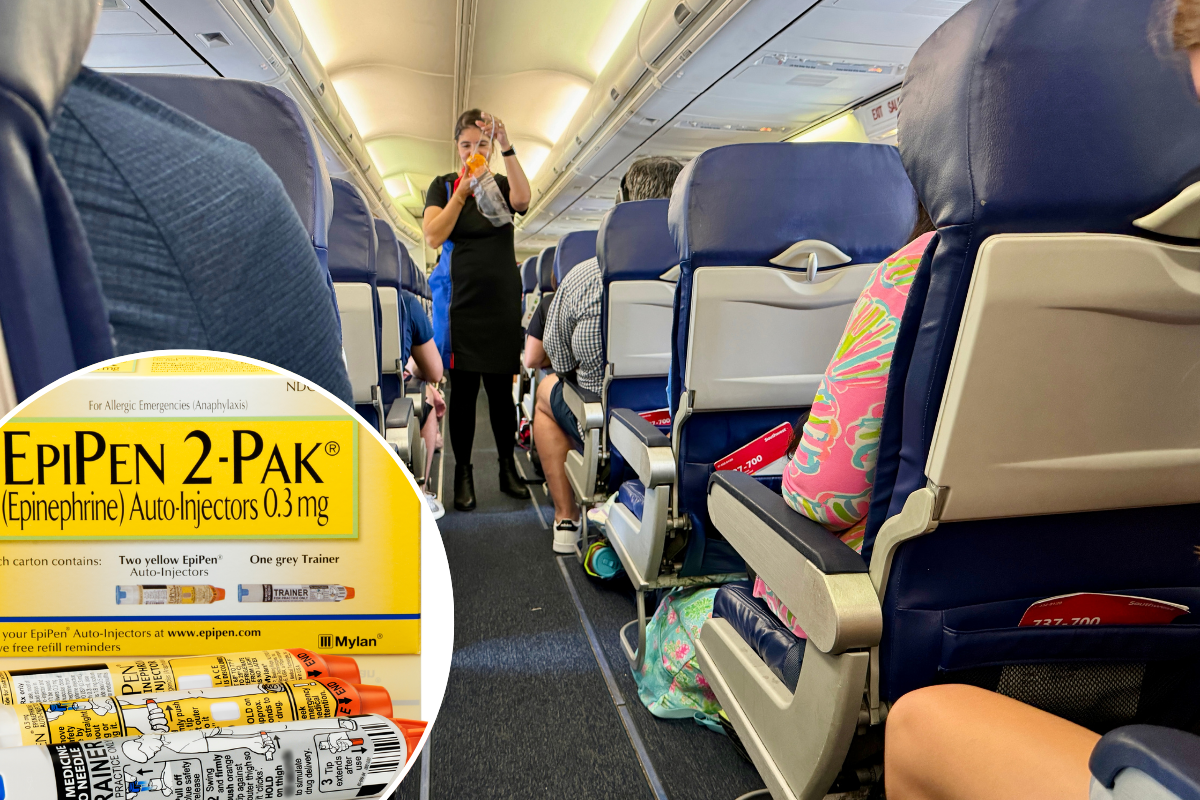
A new petition has been filed with the Federal Aviation Administration (FAA), urging the agency to force commercial U.S. passenger airlines to stock life-saving epinephrine autoinjectors or nasal sprays in their First Aid kits due to fears that allergy sufferers could otherwise die without access to this medication.
Epinephrine is the primary first-line treatment for life-threatening anaphylactic shock, quickly reversing the effects of a serious allergic reaction that can cause a sufferer’s airway to narrow to the point that they become asphyxiated and die from lack of oxygen.
Under existing FAA rules, U.S. airlines are only required to carry two single-dose vials of epinephrine, which must be administered intramuscularly via a syringe that needs to be drawn up by a qualified healthcare professional.
Most airlines do not train flight attendants in how to draw and administer a syringe of epinephrine, and in the event of a passenger medical emergency involving anaphylactic shock, airline crews are reliant on there being an off-duty doctor or nurse who is able and willing to help.
Campaigners have long feared that without a change to these rules, the luck of airlines up to this point will run out: a severe allergy sufferer will suffer an anaphylactic shock and won’t have access to their own epinephrine autoinjector. Flight attendants will page for a doctor or nurse, but there won’t be a qualified healthcare professional amongst the passengers. Without rapid treatment, the victim will tragically die.
The Youth Food Allergy Policy Coalition is hoping that its new petition is enough to convince the FAA to change the rules, forcing airlines to carry epinephrine autoinjectors, which are widely known by the brand name EpiPen.
“Syringes require significant training, and hygienic medical equipment is not readily available on aircraft to properly administer epinephrine doses. These conditions make epinephrine administration difficult and time-sensitive in real-world conditions, especially when an allergic reaction requires immediate intervention,” the charity says in its petition.
EpiPens and other similar epinephrine autoinjectors and nasal sprays require little to no training to administer, allowing any bystander to deliver a life-saving shot of epinephrine to an allergy sufferer in severe anaphylactic shock.
Ideally, the Youth Food Allergy Policy Coalition would like to see airlines carry as many as four autoinjectors on every airplane:
- 2 x adult doses.
- 2x pediatric doses.
One of the biggest problems facing the airline industry, however, is the sheer cost of buying epinephrine autoinjectors. Brand-name EpiPens retail for up to $700 each and need to be replaced every 18 months. Nasal sprays, commonly marketed under the brand name Neffy, cost just as much but can last up to 30 months before needing to be replaced.
In 2023, three U.S. Senators wrote to the then-FAA administrator, Michael Whitaker, urging the agency to force airlines to carry epinephrine autoinjectors because they claimed only ‘good fortune’ had so prevented passengers from dying from a mid-flight anaphylactic shock.
The FAA didn’t make any changes as a result of this petition, but under the provisions of the FAA Reauthorization Act of 2024, the agency is required to carry out a review of medications that must be included in an airline’s First Aid kit.
In particular, the FAA is required to specifically study medications that can be “practicably administered” to treat an anaphylactic shock.
Despite not being required by law to stock epinephrine autoinjectors in their onboard First Aid kits, some U.S. carriers do already go above and beyond the rules. In 2024, for example, Southwest Airlines announced that it would stock generic epinephrine autoinjectors in its First Aid kits, alongside Narcan spray that can quickly reverse the effects of an opioid overdose.


“Campaigners,” in a campaign paid for by the people who make EpiPens, who want to make sure that every commercial aircraft has one of these expensive devices, and has a new one at every expiration date.
If you need an EpiPen, carry an EpiPen.
The cost of these epipens are why it will never happen.