



New York JFK won’t get any new flights at peak hours after the Federal Aviation Administration (FAA) announced that it would extend so-called use it or lose it High Density Rules at the infamously congested airport.
JFK is one of only three fully ‘slot-controlled’ airports in the United States, alongside LaGuardia (LGA) and Washington Reagan National Airport (DCA).
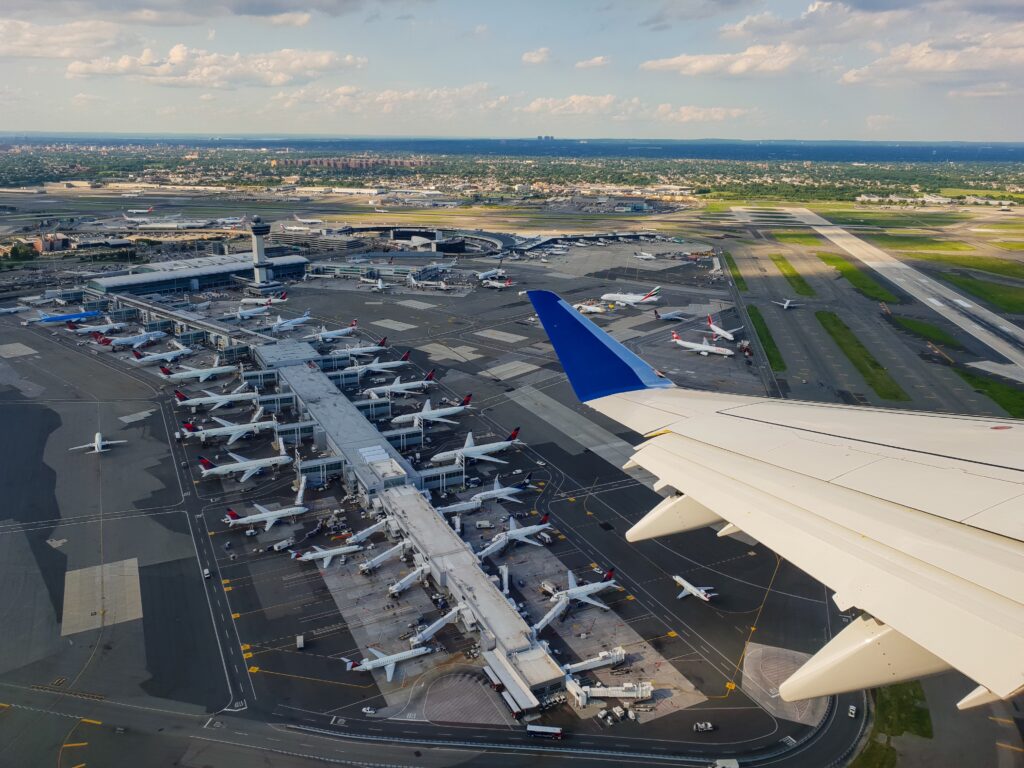
What this means is that airlines can’t just start a new service to and from the airport whenever they choose, but must first obtain a pair of so-called ‘slots’ denoting specific takeoff and landing times.
Slots are used at airports where capacity is so constrained that allowing unregulated growth would, in the FAA’s words, create “regular and significant flight delays,” and infrastructure improvements to increase capacity are not feasible in the near term.
Slots controls are relatively common in parts of Europe, but in the United States, the FAA takes a far more ‘hands-off’ approach, preferring, instead, to manage delays caused by airport congestion through guidance or temporary measures agreed in coordination with airlines.
For example, airports like Chicago O’Hare (ORD), Los Angeles (LAX), Newark Liberty (EWR), and San Francisco (SFO) are all busy and slot-constrained, but access is controlled by the airport operator rather than at a federal government level.
That’s not the case at New York JFK, which has been designated a Level 3 High-Density airport for most of the last two and a half decades.
The High Density Rules were first introduced in April 2000, effectively limiting the number of takeoffs and landings at peak hours due to capacity constraints. The FAA then experimented with lifting the rules in January 2007, but some airlines quickly increased their schedules and rescheduled other flights to peak hours.
Within months, delays at New York JFK were worse than ever, and by October 2007, was having serious conversations with airlines about how to reduce congestion. By January 2008, the FAA reimposed slot restrictions.
Over the years, the FAA has extended the restrictions, most recently in May 2024.
The restrictions were set to expire in the next few months but have now been extended until October 2028.
The rules limit airport operations to 81 takeoffs and landings per hour within the slot-controlled peak hours, which extend from 6:00 am to 10:59 pm daily. Airlines that have acquired one of these slots must abide by a ‘use it or lose it’ rule.
That means that airlines must operate a flight within a designated slot pairing at least 80% of the time. If they fail to meet this quota, the slot can be awarded to a rival airline.
“The reasons for retaining the Order have not changed appreciably since its initial issuance,” the FAA said in its order renewing the restrictions. “The FAA has determined that the operational limitations imposed by this Order remain necessary.”
“Without the operational limitations imposed by the Order, FAA expects severe congestion-related delays would occur at JFK with ripple effects at other airports throughout the National Airspace System.”
Airlines won’t get a say in this decision, with the FAA determining that it would be both impractical and against the public interest to open this order up to public comment.
Like at other slot-controlled airports around the world, airlines are allowed to trade and lease their allocated slots to other carriers with the FAA’s approval. Airlines that can’t meet the 80% ‘use it or lose it’ threshold due to factors outside of their control are also able to apply for an exemption so that they don’t risk losing their slot.
Last month, FAA administrator Bryan Bedford suggested that coveted takeoff and landing slots once owned by Spirit Airlines at LaGuardia International Airport should go to another low-cost carrier or be forfeited.
Slot allocations at LaGuardia generally take place once per year, and airlines have to bid to acquire a slot or slots. There are a variety of factors considered in this allocation system, including historical slot usage and a minimum slot usage agreement.
This kind of allocation process can sometimes favor airlines that already have a significant presence at an airport, but Bedford has suggested that the FAA will prioritize a low-cost airline in its allocation process of the Spirit slots.
Want to see more stories like this? Add PYOK as a preferred source on Google, and we'll show up more often in your searches and Google News.
Add PYOK as a Preferred Source