



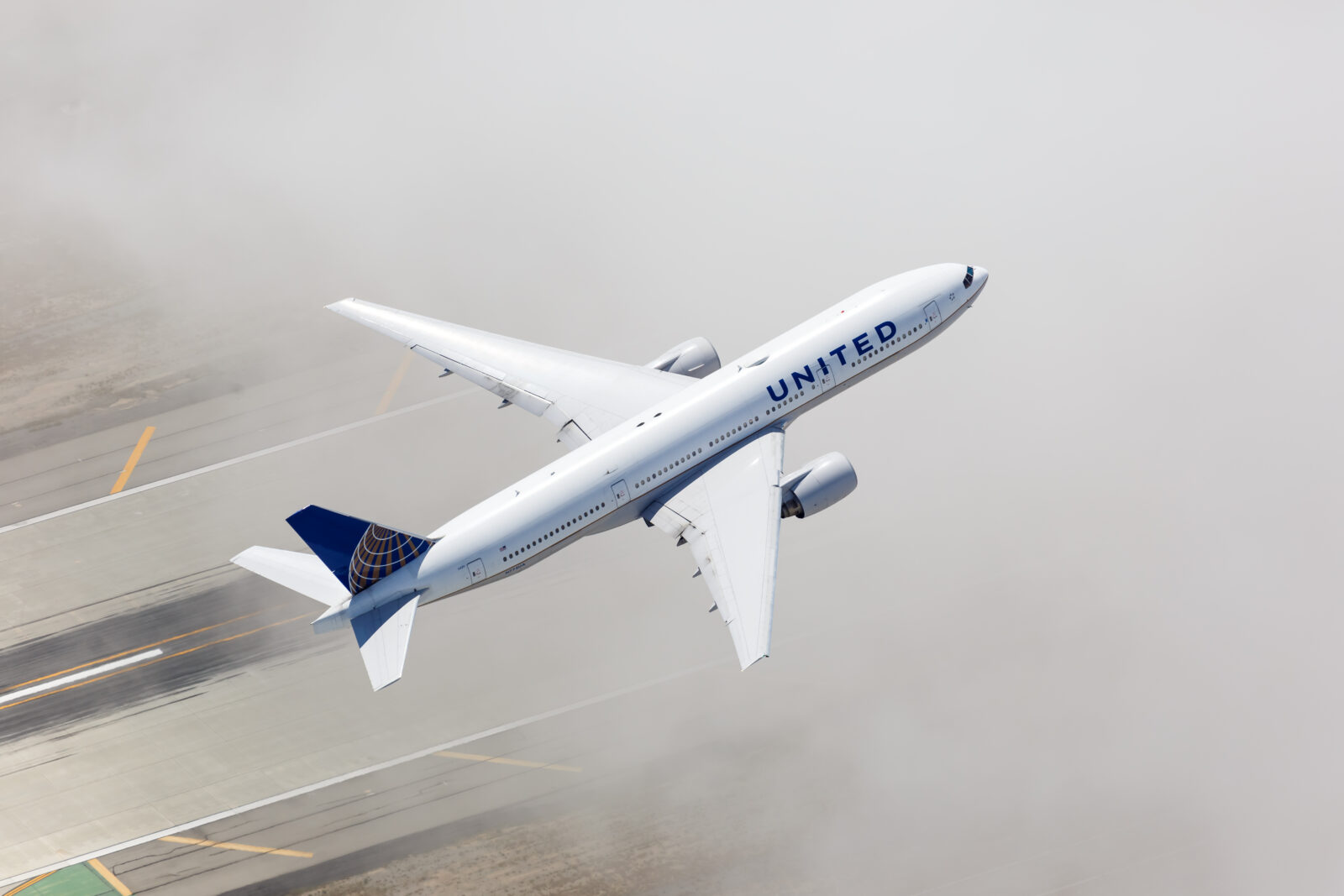
United Airlines is making passengers on a 13-hour flight from Tokyo to Washington Dulles endure a flight experience from around four decades ago: No seatback screens, no in-flight Wi-Fi, and no in-seat chargers.
It’s not like this is some sort of retro-inspired experience that passengers signed up for. Rather, the 27-year-old Boeing 777-200 being used for this flight suffered a technical problem before departure, which couldn’t be fixed in Tokyo.
Pouring one out for my fellow homies on UA804
by u/7fingersDeep in unitedairlines
“They just made an announcement – no IFE, no WiFi, and no in-seat power!” wrote a passenger on United flight UA-804, which departed Tokyo Haneda at 10:14 am on May 18.
“13 hours just gonna zip right by after all my personal devices die,” the passenger continued in a post on Reddit.
The flight time for this ultra-long transpacific flight is normally completed within around 12 hours, but once you factor in taxi times, then 13 hours is very realistic.
Of course, when it comes to technical defects, there are two very different distinctions in the airline industry. There are system-critical issues that need to be remedied before the plane is legally allowed to take off, and then there’s everything else.
The former is sometimes referred to as the MEL, which stands for ‘Minimum Equipment List’: Essentially, a very complicated list of everything that has to be working on a plane for it to be considered airworthy.
There are certain items in the passenger cabin that are in the MEL, but a working in-flight entertainment system and Wi-Fi definitely isn’t one of them.
In this type of situation, an airline is in a tricky situation. They can either delay the flight and risk people missing tight connections and onward travel arrangements in the hope that the problem can be fixed, or press ahead with the flight, even if the experience is going to be less than ideal.
When these kinds of issues occur at an outstation, the chances of getting the defect resolved are even less likely, so it’s normally a case of getting the plane back to the airline’s own hub.
In the case of a faulty IFE system, which is likely connected to the in-seat power and potentially the Wi-Fi, all an engineer at an outstation is going to be able to do is turn it off and reboot it, just like you might at home with your computer.
If that fails, then hard luck.
That appears to be exactly what happened aboard United flight 804 on Monday. Not a great look for an airline whose chief executive lobbied the Trump administration in the hope of acquiring rival American Airlines with the intent of creating the world’s most premium airline.
That’s not to say that United hasn’t done a great job in improving its in-flight experience in recent years, and, let’s be honest, these kinds of technical hiccups can happen on any airline you fly with.
That’s why I always suggest passengers have a backup plan to keep themselves entertained and charged. My typical in-flight survival kit looks something like this:
- An iPad loaded up with downloaded content from my favorite streaming services. Even if I intend to use the seatback screen, I’ll still have my iPad as a backup.
- A book which will probably go unread but is always there, just in case.
- A reliable and fully charged power bank. Although the rules around power banks are changing, some airlines still let you use them to charge your other devices.
- Some USB converter plugs so you can use a USB-A socket with a USB-C charging wire.
- An eyeshade just in case the cabin lights malfunction and can’t be switched off, or end up flickering the entire night, or if the automatic window shades on the Boeing 787 Dreamliner decide to stop working.
- Snacks. Even if I don’t intend to eat them. You never know if there’s going to be a catering issue that could leave you very hungry by the end of a long-haul flight.
- Good quality headphones and earplugs that will block out the sound of even the loudest crying baby.
As you can see, my survival kit is really quite simple, but if you’re traveling with friends, you might consider throwing in a pack of playing cards in your bag, or perhaps downloading some audiobooks for the journey.
Want to see more stories like this? Add PYOK as a preferred source on Google, and we'll show up more often in your searches and Google News.
Add PYOK as a Preferred Source

I always bring along a book or magazine on long flight.
Oh those poor people. The miitary does it every day!!!!
In the 70s, as an Army officer, I did exactly that six times across the Pacific in 707s and stretch DC-8s. Oh the horror!
I’m sure it’s yours would have preferred that they sit on the ground for a few more hours while they fixed it and you much later to their destination, right?
Have the complainants considered reading their book, or are they illiterate?
So just like I did in the late 70s, and 80s…