



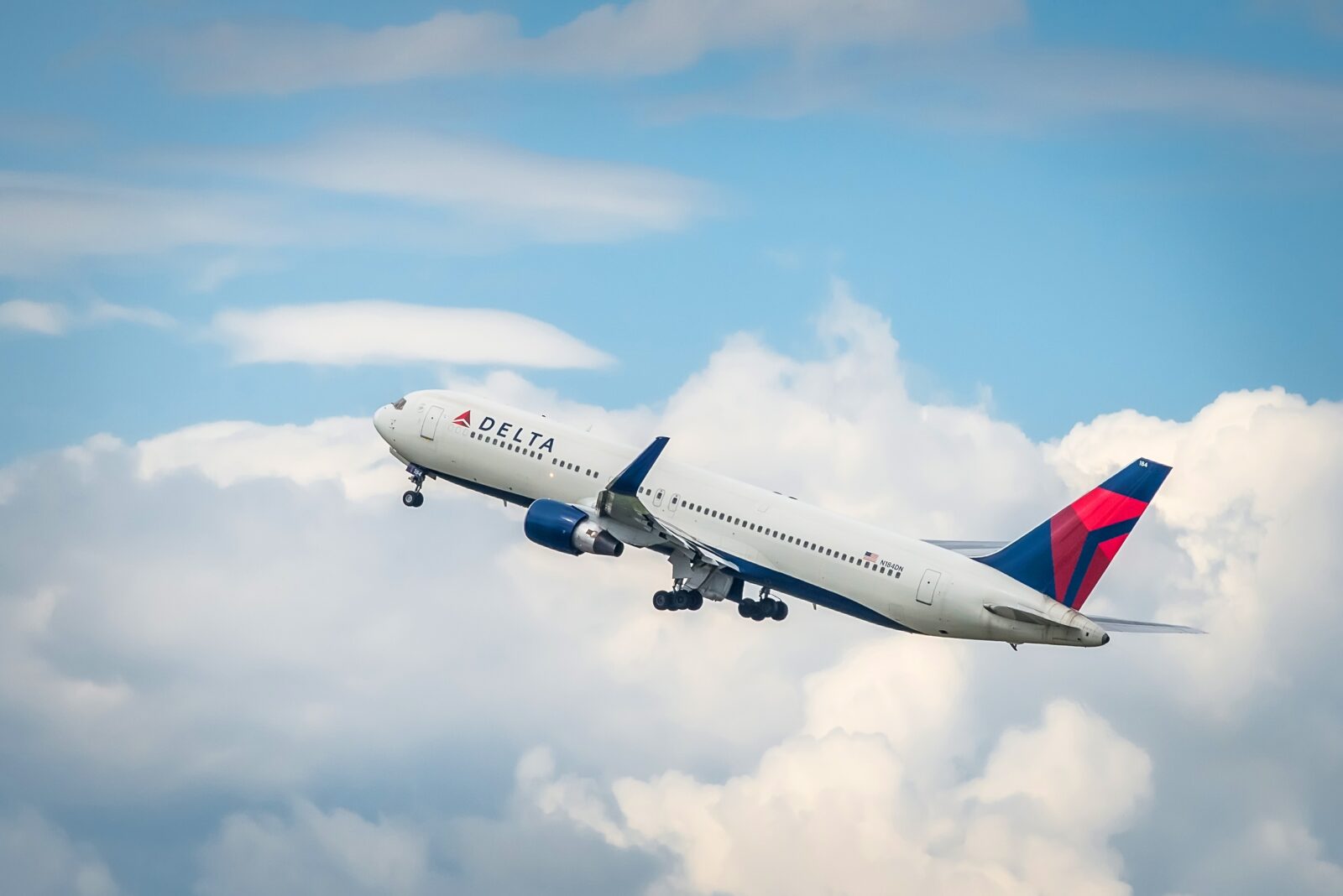
Delta Air Lines has warned in a leaked internal memo that customer satisfaction on one of its most important routes is plummeting, and the carrier believes one reason could be that crew aren’t giving timely updates during delays… an issue that is currently plaguing the route.
The route in question is Delta’s cash cow transcontinental service between New York JFK and Los Angeles, which it operates up to 11 times per day, but which it faces stiff competition from American Airlines, JetBlue, and United Airlines on flights to Newark.
According to the leaked memo, which has been posted by trusted aviation insider JonNYC on X, customer satisfaction, measured by Net Promoter Score (NPS), is running 9.2 points below the mainline domestic score on the JFK to LAX leg, while NPS on the LAX-JFK sector has fallen a disappointing 12.7 points below the average.
The Net Promoter Score labels passengers as ‘promoters,’ ‘passives,’ and ‘detractors.’ If you’ve ever been asked how likely you are to recommend an airline on a scale of 1 to 10, then you have taken part in an NPS survey.
How an NPS score is calculated
Customers are asked to rate how likely they would recommend an airline to their friends or family on a scale of 0 to 10.
- 0 = Not very likely at all
- 10 = Very likely to recommend
If you score a 9 or 10, then you are considered a ‘Promoter.’ If you score a 7 or 8, then you are a ‘Passive.’ And if you score 0 through 6, then you are a ‘detractor.’
To get the NPS score, the total percentage of Promoters is calculated, and then the percentage of detractors is subtracted from that score.
The average NPS score for the airline industry is typically between +35 and +45. However, before Southwest radically changed its strategy, it was reported that the Dallas-based carrier once boasted an exceptional NPS score of +71.
Ordinarily, however, airlines do not publish their NPS figures due to the commercial sensitivity of this data. Instead, they will highlight how many points the NPS has risen in response to a specific investment or initiative.
NPS has become increasingly important for the aviation industry as it allows airlines to quietly test whether customer investments are worth the money, or, conversely, whether they can make cutbacks without customers noticing in terms of satisfaction levels.
In the case of important routes like JFK to LAX, where there is a lot of competition, NPS is also a good signal of whether an airline risks losing market share to a rival.
The memo to Delta pilots explains: “We’d like to take a moment to talk about JFK–LAX and LAX-JFK – two of the most important markets we serve and routes that consistently carry high expectations – from our customers, from Delta and from all of us who operate it. Together, JFK–LAX–JFK represents one of the top revenue markets in Delta’s system and stands as the largest domestic market in the U.S. by seat capacity.”
Delta
— JonNYC (@xJonNYC) May 28, 2026
This is out there, not authenticated in any way at this juncture. I tend to -assume- that at the very least it’s patched together from some stuff. Always a chance it’s fake.
“Team,
We’d like to take a moment to talk about JFK–LAX and LAX-JFK – two of the most…
“In addition, this route carries a high level of visibility, with a significant presence of high-profile customers, business travelers, and social media influencers. Customer experiences on these flights are often shared widely and in real time, further amplifying the impact of every interaction. Recent data show that this route operates at a higher risk for delays compared to much of the domestic network. Just as important to note: many of these delays are not driven by pilot performance or flight deck decision making – they’re largely due to factors outside your direct control.”
The memo seems to suggest that the core problem is delays experienced on this route, which JonNYC suggests could, at least partly, be down to the ageing Boeing 767s that Delta deploys on these routes.
But without a quick fix to this issue, given that brand new Airbus A321neo aircraft have been delayed entering into service on these routes because of certification issues with the lay-flat Business Class seats designed for these airplanes, those delays could continue for some time.
The memo, therefore, suggests that pilots should be doing more to suggest delays to passengers.
“The best way our pilots can help is simple: Remain focused, as you always are, on Delta’s Impactful Behaviors – Greet Me, Recognize Me, Be Kind to Me, and Inform Me – to ensure every customer interaction is kind, attentive, appreciative, and informative. In particular, it’s proven that our NPS scores improve significantly during a service disruption or delay when our pilots provide timely updates and engage positively with our customers.”
“You’re not alone: Know you’ve got support from the CPO team, particularly when the operation starts getting complicated. If you’d like to discuss this path in more depth, our doors are open, and we’re happy to answer any questions,” the memo concludes.
In fact, Delta probably isn’t far wrong. Customer satisfaction has been proven time and time again to be affected by a lack of information during delays, so while some work is needed behind the scenes to improve Delta’s operational reliability, providing frequent updates during a delay situation could go some way to edge NPS scores up on these routes.


Not meant to defend DL’s obvious issue(s), but DL definitely has more than the 3 JFK-LAX flights refered to in the article.
A random google check on a Friday reveals 11 DL flights, followed by 8 flights on a typically slower Saturday.
Sadly, this is the consequence of assigning MX needy aging 767-300’s & a dysfunctional pilot contract.
Asking the pilots to suck to the pax can’t hurt but it definitely won’t measurably help DL’s operational decline….
Much as I appreciate a kind word from the cockpit I much prefer a timely push and departure.