



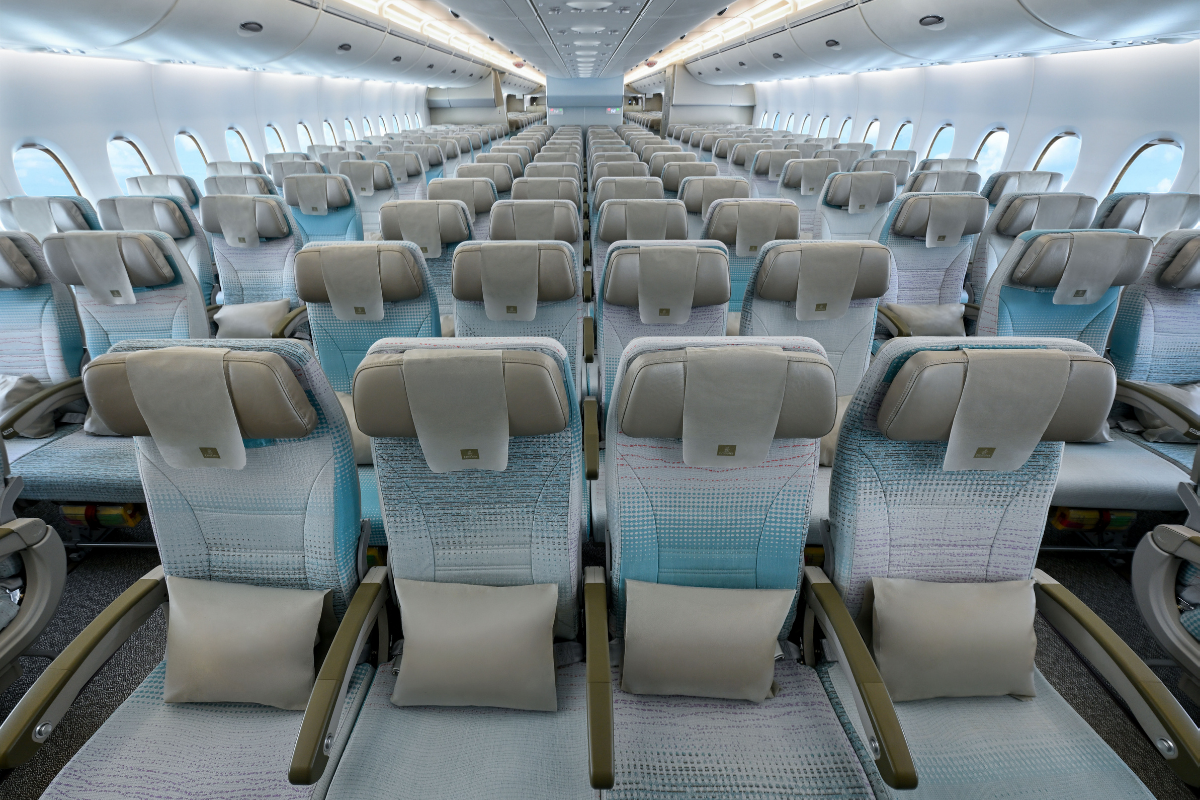
Emirates is bidding farewell to the densest configuration of its flagship Airbus A380 superjumbo, a plane that was able to carry 615 passengers across its two decks, with a whopping 557 standard Economy seats stretching across the entire Main Deck and more than half of the Upper Deck.
We’ve known for a few months that Emirates was planning to reconfigure its so-called ‘Two Class’ Airbus A380s by adding a Premium Economy cabin – and because Premium Economy seats take up more room than a standard Economy seat, the total capacity is dropping.
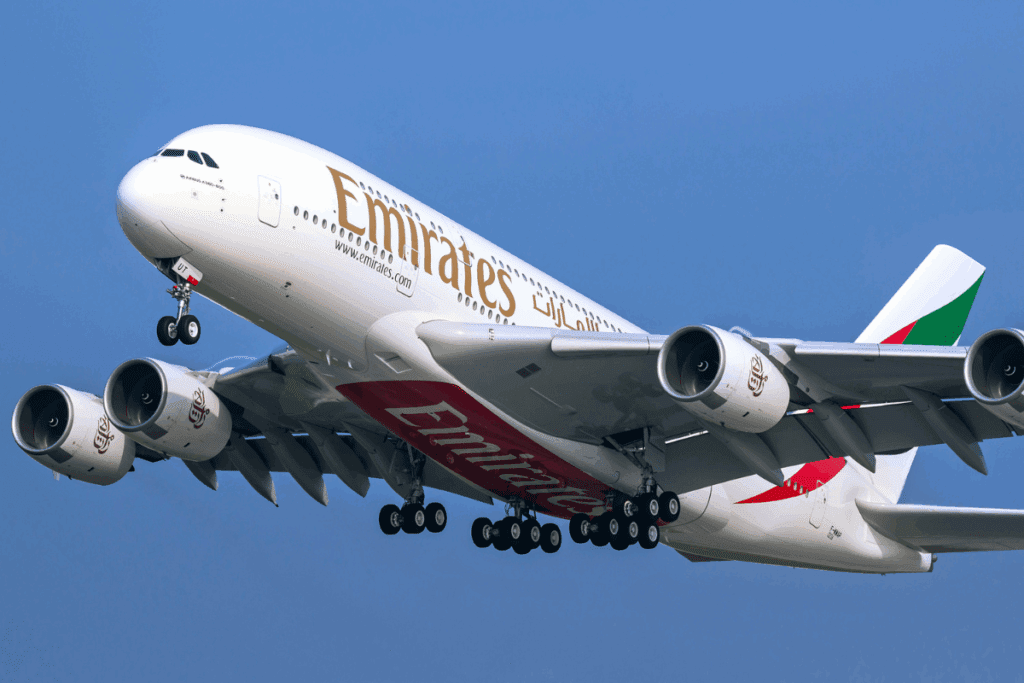
Now, the first of the reconfigured ‘Two Class’ A380s (registration: A6-EUX) has left the hangar and has been busy operating the Dubai to Birmingham route over the past few days.
The aircraft was taken out of service in late February for an extensive nose-to-tail refit in what Emirates has described as a “defining milestone” in a multi-billion-dollar retrofit program of hundreds of planes across its fleet.
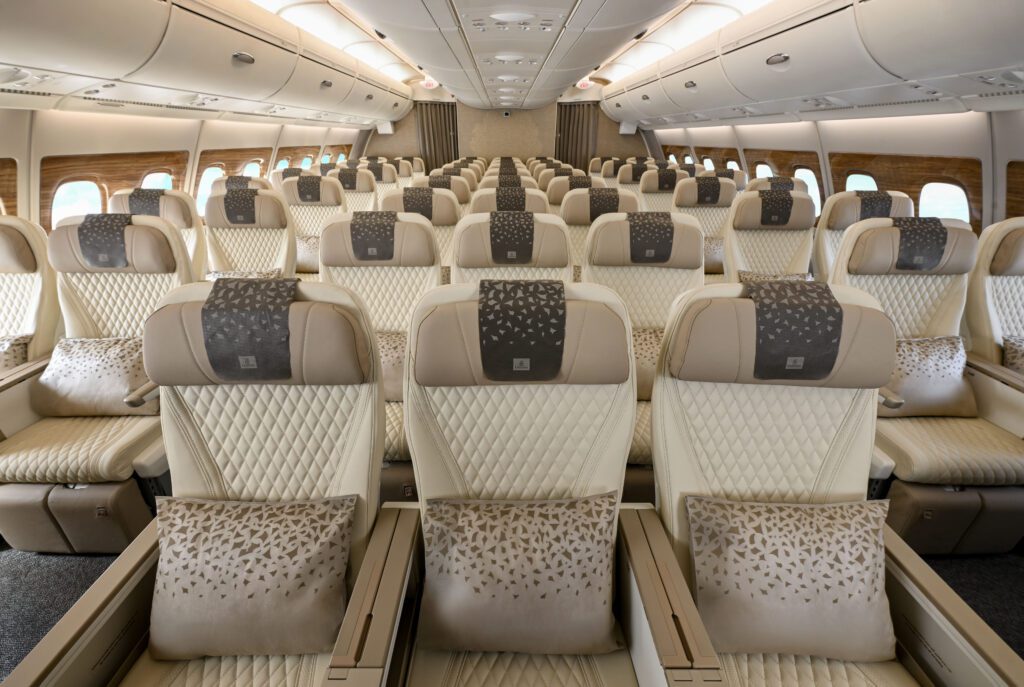
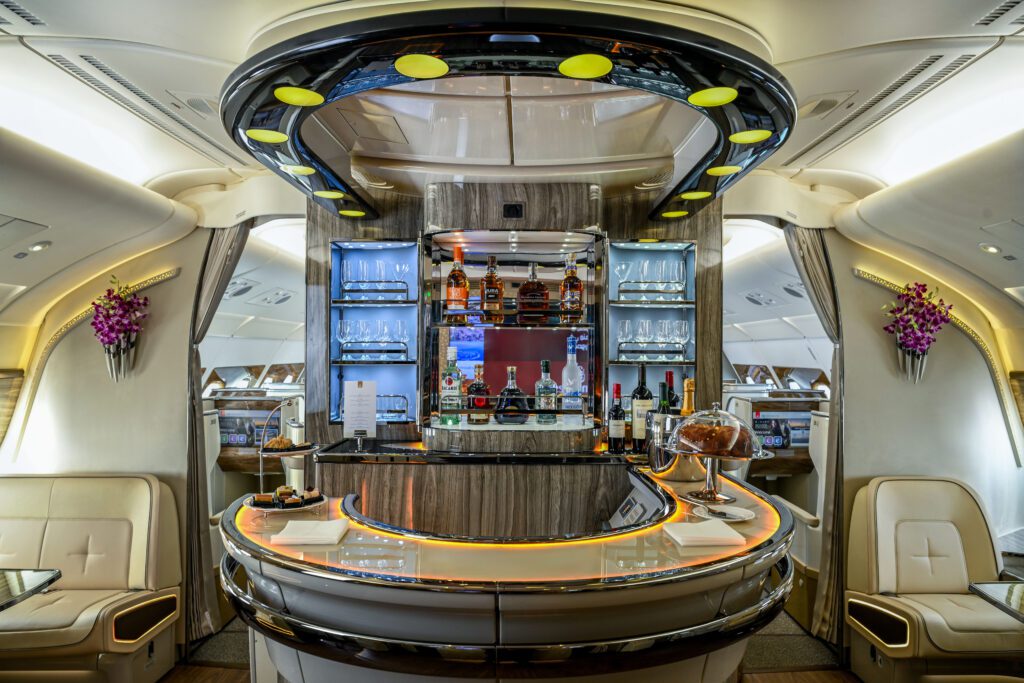
The aircraft now has more Business Class seats, a new Premium Economy cabin, and renovated standard Economy seats:
- Business Class: The cabin size has increased from 58 to 76 Business Class seats at the rear of the Upper Deck of the A380.
- Premium Economy: A totally new cabin for this aircraft featuring 56 Premium Economy recliners situated forward of the U1 door on the Upper Deck.
- Economy: Has shrunk from 557 seats to 437 seats, occupying the entire Main Deck.
Until now, Emirates has been installing its Premium Economy cabin on the Main Deck of the A380 in a 2-4-2 configuration. This will be the first time that Emirates has installed Premium Economy on the Upper Deck, and, given the narrower width of the fuselage, it will be configured in a 2-3-2 layout.
Emirates now operates nine different configurations of A380 – Some feature a First Class cabin, Business Premium Economy, and Economy, others just have First Class, Business, and Economy.
Meanwhile, there are also different configurations for A380s that have the crew rest facilities built into a pod on the Main Deck of the aircraft, while others have more seats because the crew rest bunks are underneath the Main Deck.
Emirates operated 15 Two Class A380s, which were the densest configuration of the A380 ever to grace the skies, despite the fact that the aircraft was certified to carry a maximum of 853 passengers in an all-Economy layout.
There are now 14 Two Class A380s left in the fleet, although the plan is for all of these to be configured with a Premium Economy cabin and an enlarged Business Class cabin.
Emirates was incredibly late to the Premium Economy craze, having only started to install these seats on a very small number of seats in 2022.
Until that point, Emirates’ long-serving President Sir Tim Clark had publicly voiced his concerns that Premium Economy would cannibalize Business Class, with premium travelers choosing to trade down rather than up.
It was a rare moment in Clark’s storied career that he proved to be wrong. Premium Economy has proven to be a huge hit, and Emirates quickly realized that the cabin was being filled with passengers who would otherwise have traveled in standard Economy.
As a result, Emirates very quickly adjusted its plans for Premium Economy and laid out plans to equip more and more airplanes with this upgraded cabin.
Surprisingly, however, Emirates remains the only major Persian Gulf airline to have a Premium Economy cabin, with Etihad and Qatar Airways still shunning this product.
In July, however, Emirates will face some competition from Riyadh Air, which is launching its debut flight between Riyadh and London Heathrow with brand new Boeing 787 Dreamliners that will feature a Premium Economy cabin.
Want to see more stories like this? Add PYOK as a preferred source on Google, and we'll show up more often in your searches and Google News.
Add PYOK as a Preferred Source