



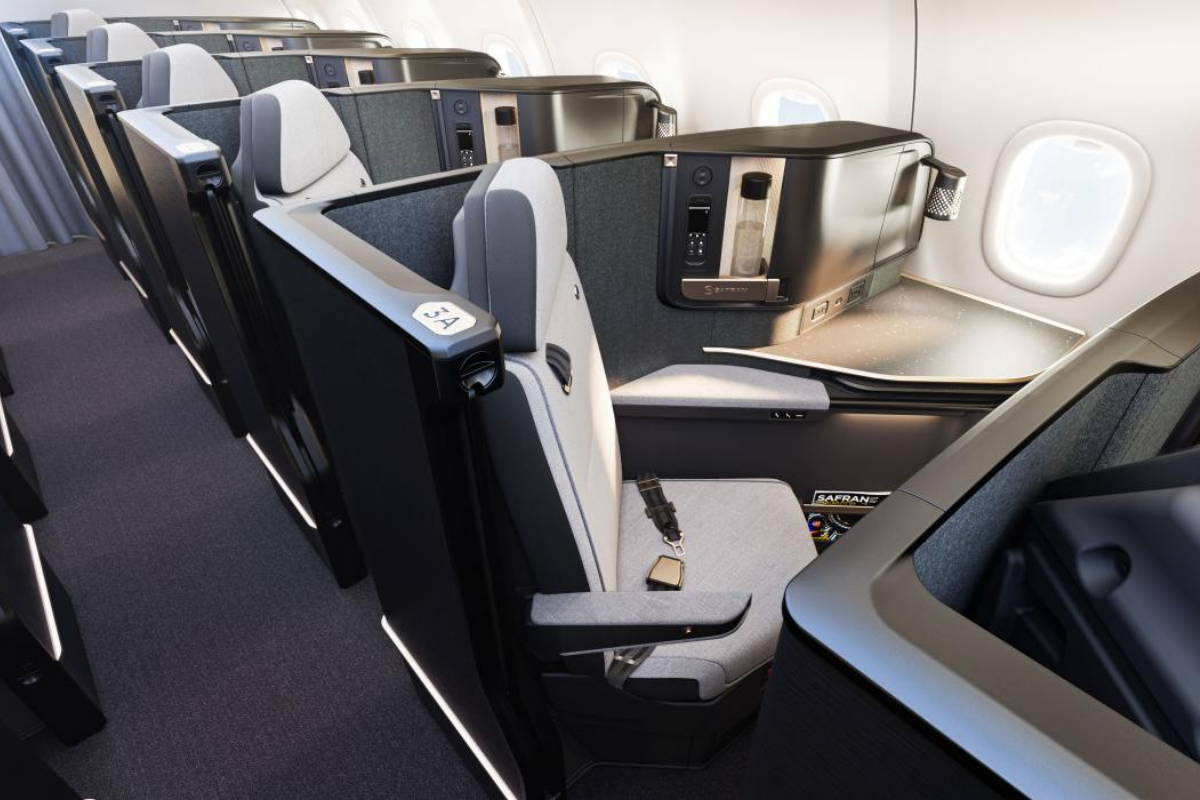
Delta Air Lines is reportedly drawing up plans to abandon its flagship lie-flat Business Class seat, which was to be featured on new Airbus A321neo narrow-body planes used to replace an ageing fleet of Boeing 757s on transcontinental flights, such as Los Angeles to New York JFK.
The issue appears to be ongoing and increasingly lengthy certification issues with the brand-new Business Class seats, which Delta doesn’t think can be resolved in the near future.
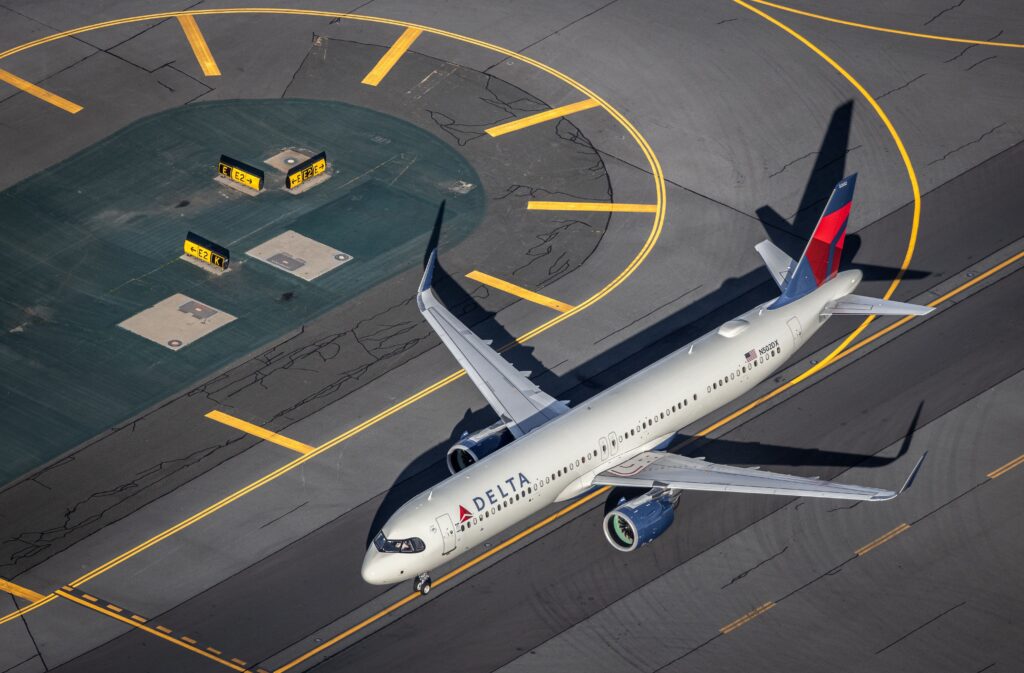
Just like American and United Airlines have been doing in recent months, Delta plans to introduce a new fleet of fuel-efficient Airbus A321neo narrowbody aircraft that will be deployed on premium, longer-range domestic flights.
Airlines know that lie-flat Business Class seats are a prerequisite for passengers on these routes, but seat manufacturers have limited options for premium seats on narrowbody aircraft that balance passenger comfort with the most efficient cabin layout.
American Airlines and United have opted for Business Class seats in a so-called herringbone design, which face towards the aisle of the airplane. These seats offer a full lie-flat experience in a very efficient layout, but they do make for a tight squeeze for passengers and are generally regarded as a downgrade compared to lie-flat seats on a widebody aircraft.
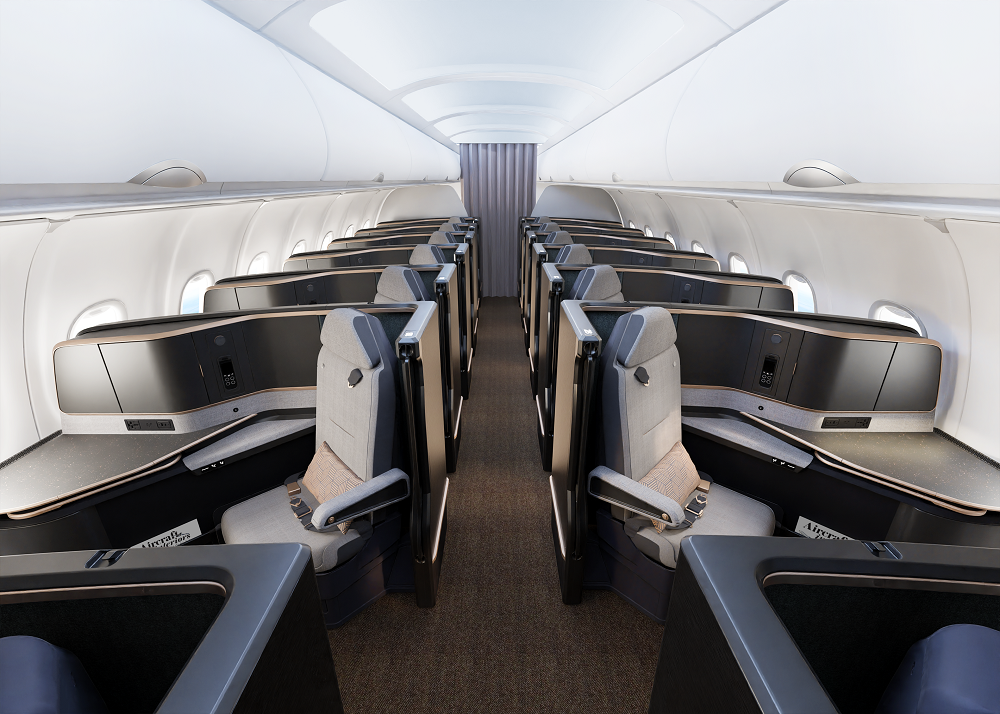
Meanwhile, Delta opted for a new seat designed and built by the French aerospace giant Safran, which features a reverse herringbone layout, meaning that passengers face towards the windows.
The Safran Vue seat, as it is known, was first unveiled in 2022 and features enclosed suites with all-aisle access and sliding privacy doors at every seat.
Safran describes the suites as having “excellent privacy” with no eye contact possible between passengers when seated – a significant advantage over the herringbone seats picked by American and United.
Delta took delivery of its first A321neo, which was meant to feature the Safran Vue seat in 2024, but the plane had to be put immediately into long-term storage because the Business Class seat still hadn’t been certified by safety regulators at the Federal Aviation Administration (FAA).
Now, two years later, the certification process remains on hold, and Delta is temporarily reconfiguring some of these planes with a staggering 44 Business Class recliners to be deployed on shorter domestic flights.
If this rumor is to be believed, Delta will abandon the the Safran Vue seat for their narrowbody fleet and go with the Thompson Vantage Solo seat
— JonNYC (@xJonNYC) June 1, 2026
With no indication of when the certification process might be concluded, trusted aviation insider JonNYC reports on rumors that Delta is now seriously considering ditching the Safran Vue seat.
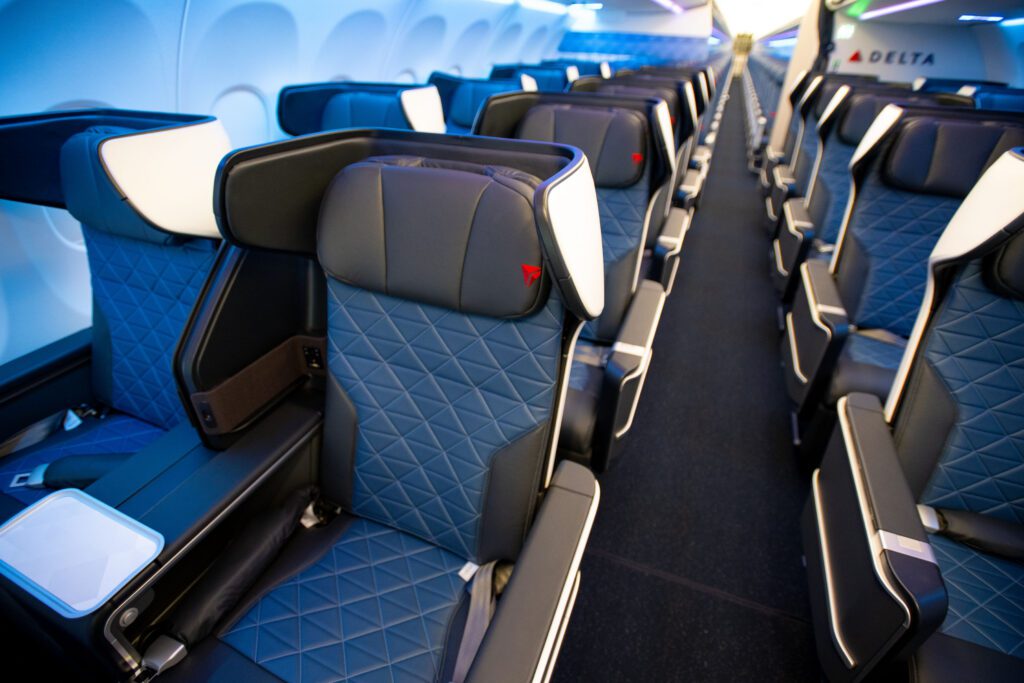
Unfortunately, that means that Delta would likely have to pick the same herringbone design used by American and United Airlines, as well as JetBlue, because these seats have already been certified by the FAA.
The final decision will come down to whether Delta reasonably believes that the Safran Vue seat will ever be certified, because the reverse herringbone design would give it a significant long-term advantage over its arch rivals.
What is perhaps so perplexing is why seat certification is proving so difficult in the United States at the moment.
In contrast, Rome-based ITA Airways has been able to deploy a reverse herringbone Business Class seat on its Airbus A321neo aircraft after European aviation safety regulators approved the product.
The European Aviation Safety Agency (EASA) also certified Lufthansa’s bespoke Allegris Business Class seats on the Airbus A350, whereas the deployment of the same seats on Boeing 787 Dreamliners was delayed by many months because it was up to the FAA to approve the seats on a U.S. manufactued airplane.
And while most of the Allegis seats have now been certified by the FAA, there are still four seats that can’t be occupied on Boeing 787s due to ongoing certification concerns.
For now, Delta remains tight-lipped on the fate of the Safran Vue seat.