



Over One Third of Airline Passengers Don’t Know They Have to Leave Everything Behind During an Emergency Evacuation

- The International Air Transport Association says it will lobby for lockable overhead bins if passenger behavior doesn't change, as fears grow that people could die in an emergency evacuation slowed down by people stopping to retrieve their personal belongings.
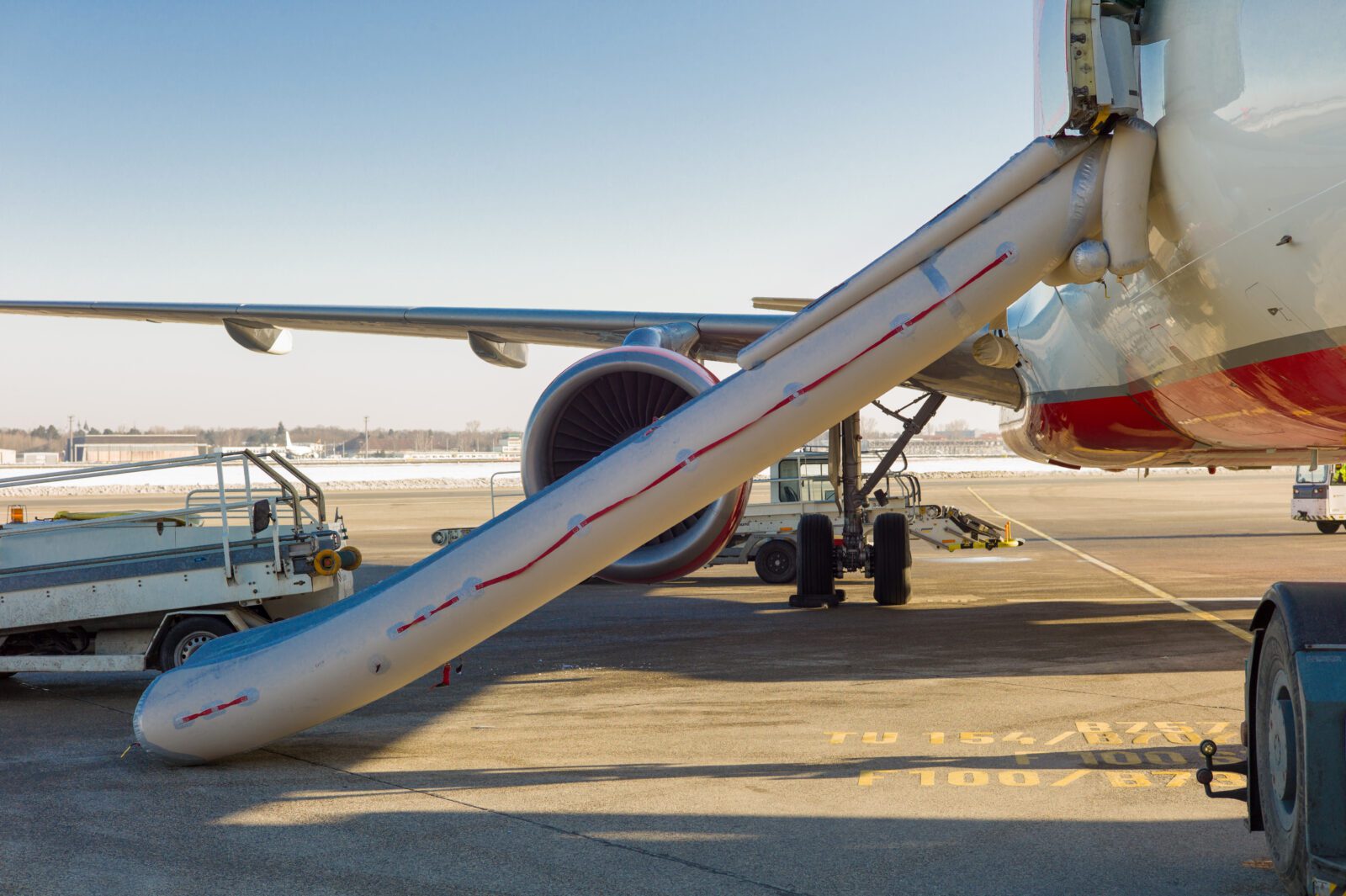
New research by a major airline trade body has revealed that more than one-third of passengers don’t realize that they are meant to leave everything behind in the event of an emergency evacuation.
The International Air Transport Association (IATA), which represents the vast majority of global air carriers, launched a major study earlier this year to investigate the psychology behind why passengers not only risk their own lives, but the lives of other people, by stopping to retrieve their luggage during emergency evacuations.
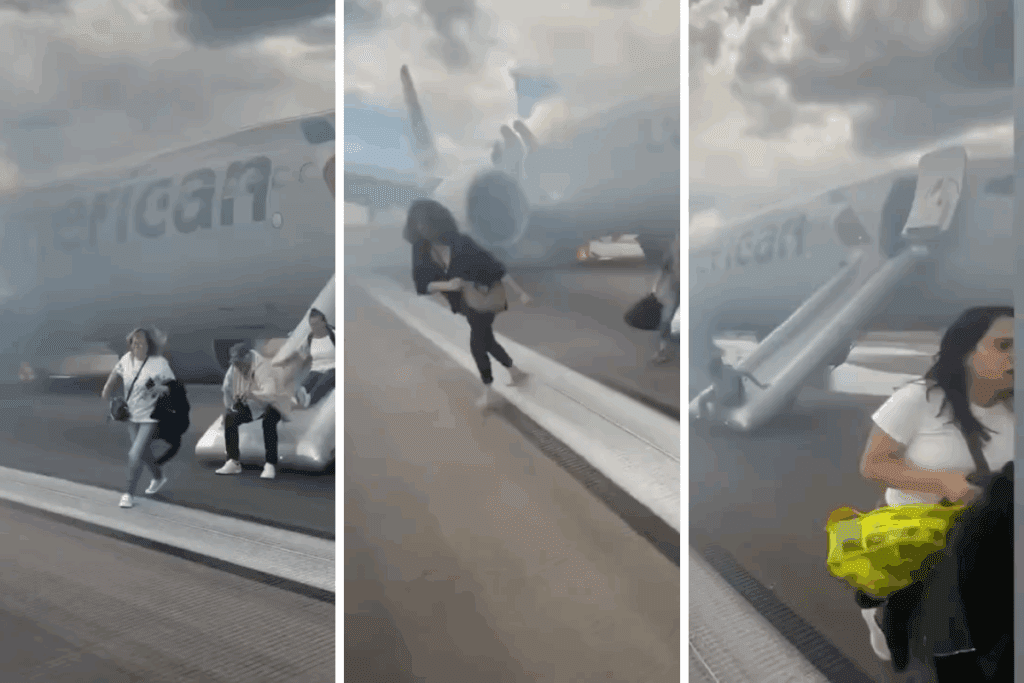
While the messaging on this issue has been clear for many years, with airlines repeatedly urging passengers to leave everything behind in the case of an evacuation, we are seeing more and more examples of passengers doing the exact opposite in real-life examples that have occurred around the world.
In order to close the gap between what people are meant to do in an evacuation and what they actually do, IATA has now launched a global information campaign and is urging its member airlines to make use of the resources it has developed to further educate their customers.
IATA sees this as a last-ditch attempt to change passenger behavior in the same way that governments leaned heavily on public service announcements to convince car passengers to buckle their seatbelts on every trip in the 1990s.
If, however, passenger behavior doesn’t dramatically change, IATA says it will start campaigning for the introduction of lockable overhead bins, which would be secured shut during taxi, takeoff, and landing, and would only be released once the plane was safely at the gate.
This is by no means a new concept. In fact, back in 2018, the Royal Aeronautical Society, which is credited as being “the world’s only professional body dedicated to the aerospace community,” urged aircraft manufacturers to develop remotely lockable overhead bins.
RAeS explained in its specialist paper, ‘Emergency Evacuation of Commercial Passenger Aeroplanes,’ that a new generation of overhead bins which can store more cags than ever before, along with a push by airlines to move passengers towards hand-luggage only fares, had exacerbated the issue to the point that action had to be taken.
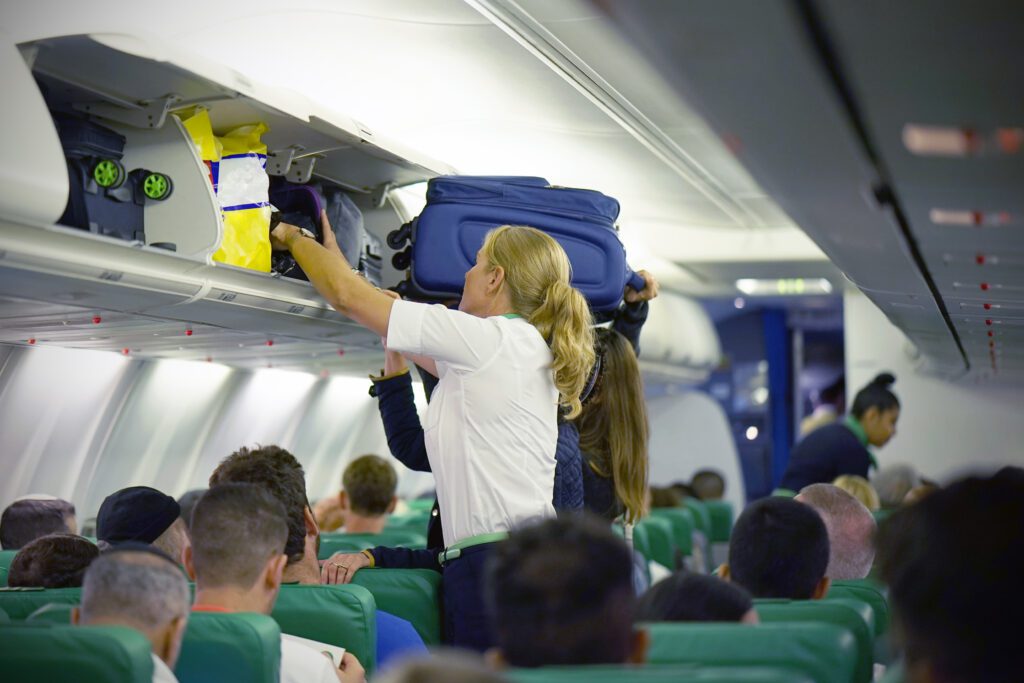
The recommendation fell on deaf ears, and no manufacturer has, so far, developed an overhead bin that can be locked by the crew during critical stages of the flight.
The fact that IATA is even potentially considering the option of lockable overhead bins is a massive development, given that the organization is focused on representing the interests of airlines, which doesn’t always go hand in hand with advocating for massive retrofit programs that would cost its members hundreds of millions of dollars.
But ignore the reports that you may read, which suggest that lockable overhead bins are on the way. For now, at least, there’s no evidence that the industry is yet ready to move in this direction, and if it were to do so, a massive amount of work would be required for this concept to become a reality.
In the meantime, IATA is pursuing its “Save a Life, Not a Bag” campaign, which warns that in an emergency, “every second counts.”
Unfortunately, simply educating passengers about what they are meant to do in an emergency won’t necessarily change how they behave should an evacuation occur.
Further research by RAeS discovered that up to 75% of passengers would ignore crew members to leave their bags behind if they believed there was no immediate risk to their own safety. And even if they did think there was a risk to their safety, around 35% of passengers said they would still stop to retrieve their luggage.
Researchers discovered that one reason passengers are so adamant about retrieving their luggage in an evacuation is that they don’t trust airlines to return their belongings, or because they believe it would be a “hassle” to replace their belongings.
These findings have been backed up by IATA, which discovered passengers would be more inclined to leave their luggage behind if they had their essentials on their person in an evacuation.
Late last year, the Federal Aviation Administration (FAA) sent what is known as a “Safety Alert to Operators’ or SAFO to U.S. commercial airlines, urging them to take action to ensure passenger compliance with evacuation rules.
While the FAA stopped short of mandatory action, the agency pushed airlines to implement a slew of recommendations, which include:
- A thorough review of emergency evacuation procedures, crew training, commands, and emergency announcements to press home to passengers that they must leave all hand baggage behind.
- Update pre-flight safety briefings to make it clear to passengers what to do in an emergency, using standardized and concise messaging to make it clear that hand luggage must be left behind with no exceptions.
- Display posters and other visual content in airport terminals, demonstrating appropriate evacuation behavior and consequences of non-compliance with crewmember commands.
The FAA also provides more details on how airlines are expected to educate passengers, telling carriers that they should use messaging that appeals to “collective responsibility” and which normalizes expected behavior that everyone leaves their luggage behind.
For example, the FAA suggests that airlines use slogans like: “Help everyone get out safely—leave your bags.” The agency also recommends that airlines use pictures and symbols that properly convey the message across language barriers.
Want to see more stories like this? Add PYOK as a preferred source on Google, and we'll show up more often in your searches and Google News.
Add PYOK as a Preferred Source

On US airlines I typically see only a mention or a quick reminder to leave your bag behind. United shows a flip sign during the safety video. The others I believe just mention it. They should follow Japanese airlines – show the impact in the safety video itself – such as animated videos of people unable to move because of someone trying to carry bag – or worse taking video during evacuation. They also show how to properly use the slide including where to look and how to jump onto the slide.
I’m taking my things. Get over it. Many others will too even if they say they wouldn’t.
Sociopaths like you should be permanently banned from flying. You’re willing to potentially kill other people so you can keep your bag, That’s truly sick.
The problem is airlines are too cheap to provide compensation. If I need to evacuate and im able, ill get my$3k macbook pro from my laptop bag with me. No way AA will do anything, i will get 2k miles for evacuating.
@Frank and @Don’t Care are prime examples of the “it’s all about me” trend in so-called civilization today. Deliberately endangering the safety of other passengers in an evacuation is reprehensible conduct, plain and simple.
The problem with lockable bins is that it will slow down idiots trying to figure out how to open them, thus adding to, not reducing, the time to evacuate. Surely IATA realizes this. Passengers have to be educated to not even think about trying to retrieve personal items. It’s also why I always keep my wallet, phone, and passport in pockets during flight, as that greatly simplifies post-evacuation scenarios. Everything else is easily replaceable (and data is backed up in the cloud, so the physical laptop itself is not needed).