



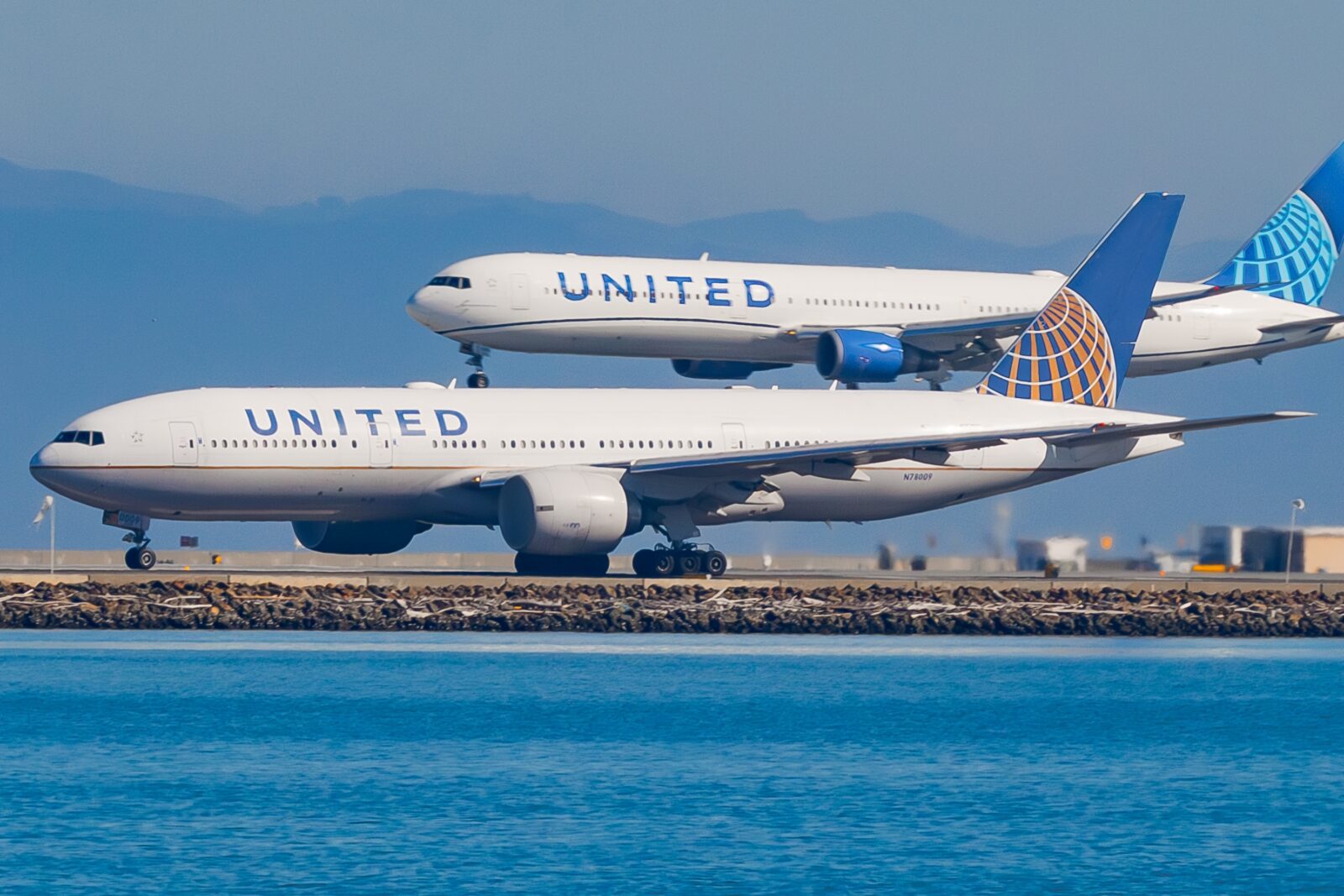
- The FAA is partially easing its ban on parallel landings at San Francisco International Airport, raising the maximum arrival rate to 42 planes per hour under a new staggered approach system.
- Why the FAA banned SFO’s iconic side-by-side landings in the first place, tied to January 2025’s fatal Washington DCA midair collision.
- Why SFO’s runways are too close together to meet the FAA’s own safety standard for independent parallel approaches.
- Why the new staggered system still hasn’t actually been used yet, days after taking effect.
- How the restrictions have already triggered a ground delay program with waits of up to 93 minutes.
San Francisco International Airport (SFO) will be allowed to increase the number of planes that can land per hour after the Federal Aviation Administration (FAA) partially rolled back restrictions banning the parallel landings that had become an iconic site at the Bay Area airport.
The FAA imposed the restrictions at the end of March, reducing the number of flights that could land in any given hour from a maximum of 54 to just 36.
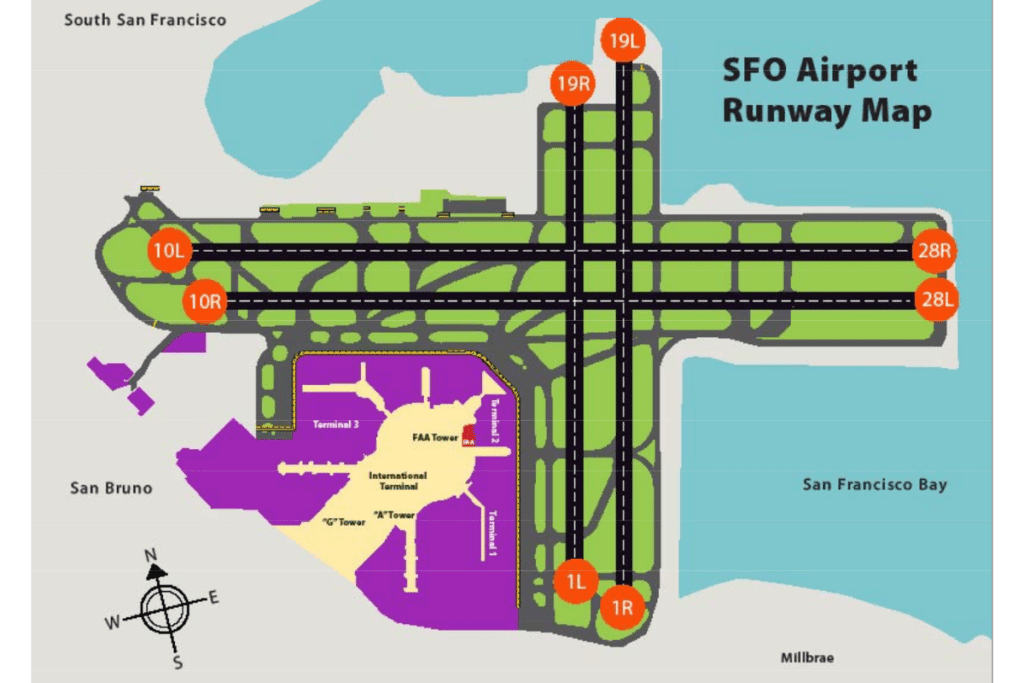
SFO has two pairs of parallel runways – One pair runs from North to South and are known as Runways 1L/1R and 19R/19L, and the second pair runs from East to West and are known as Runways 10L/10R and 28R/28L.
Until March, it was common to see planes landing side-by-side when approaching the airport from San Francisco Bay and landing on Runway 28R/28L.
San Francisco Airport had already been dealing with capacity restraints as a result of a major repaving project taking place on the North to South Runways, but then the FAA banned the parallel landing visual approach on the East to West Runways.
The reason was part of a broader safety crackdown stemming from the fatal mid-air collision between a military Blackhawk helicopter and an American Airlines regional jet on approach to landing at Washington National Airport in January 2025. The pilot of the Blackhawk had relied on visual separation, so a review of these rules by the FAA in the aftermath of this accident was ordered.
On Wednesday, however, the FAA “slightly revised” these restrictions, according to a spokesperson for the airport, permitting a staggered approach rather than a single-file approach. This revision will increase the maximum landing rate to 42 planes per hour.
“While this will not fully restore the arrival rate we had when true side-by-side landings were permitted, this is nonetheless a step in the right direction,” commented SFO spokesperson Doug Yakel.
As per previously established FAA rules, the new staggered approach will only be allowed when weather conditions permit. When the airfield is under low visibility conditions due to rain, then the single-file approach must be adopted.
The reason for this is that the true side-by-side and staggered approaches are only managed by visual separation between the pilots of different aircraft. FAA rules allow visual separation approaches in low visibility conditions when the runways are at least 4,300 feet apart, but SFO’s runways are only 750 feet apart.
Even when SFO was allowed to operate with parallel landings, this was only possible due to an FAA exemption.
Given that San Francisco is one of United’s largest hubs and its primary West Coast base for long-haul trans-Pacific flights, the airline welcomed the FAA’s staggered-landing revision.
The airline noted that it had been “working closely with them [the FAA] to increase landing rates at SFO that safely make the best use of the airport’s capacity.”
Unfortunately, SFO hasn’t actually been able to make use of the staggered approach system yet. On both Wednesday and Thursday, low visibility conditions meant the airport had to continue using the single-file landing approach on Runways 28R/28L.
The FAA has imposed a ground delay program due to capacity issues with a maximum published delay of up to 93 minutes.
Want to see more stories like this? Add PYOK as a preferred source on Google, and we'll show up more often in your searches and Google News.
Add PYOK as a Preferred Source